
Table of Contents
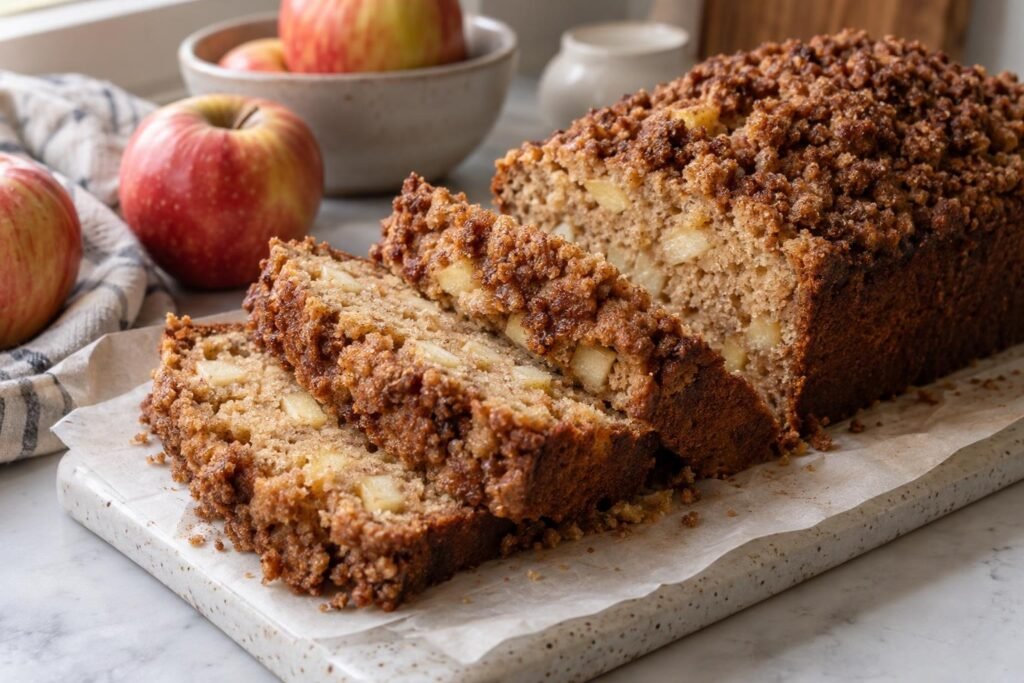
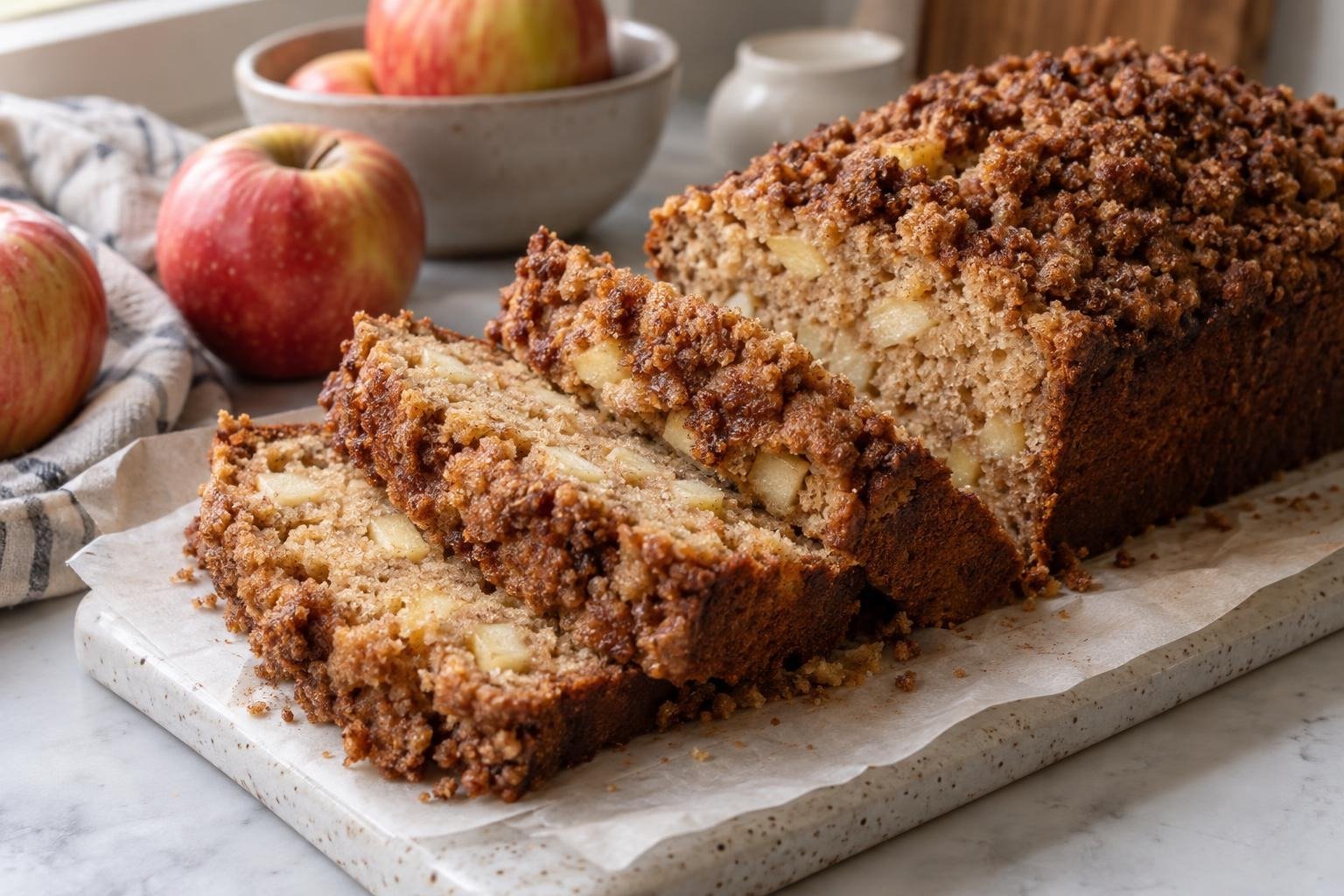
A crisp cinnamon streusel, golden edges, and soft apple-studded slices give this apple cinnamon loaf cake plenty of contrast without turning it into a soggy fruit brick. Finely diced tart apples distribute fresh flavor through the buttery crumb, while brown sugar adds caramel depth. The loaf is substantial enough for thick slices, yet tender enough to serve as either an afternoon cake or a simple dessert.
I use a 9 x 5-inch light-colored metal pan so the batter has enough room to rise and the center can bake through before the crust becomes too dark. Creaming properly softened butter with the sugar builds the loaf’s aeration, while sour cream contributes moisture without the excess liquid of applesauce. The reliable doneness cues are a firm center, a clean split along the top, and moist crumbs rather than glossy batter on a tester.
What Makes this Apple Cake So Frickin’ Good
- Creaming room-temperature butter with both sugars traps small air pockets, giving this relatively heavy apple batter enough lift for a tender, even crumb.
- Sour cream supplies fat, acidity, and controlled moisture, helping the cake stay soft while supporting the baking soda and limiting excess gluten development.
- Apples cut into 1/4-inch dice soften within the loaf’s baking time and remain suspended more evenly than large chunks, which can create wet pockets or drag down the center.
- A 9 x 5-inch metal loaf pan gives the batter enough surface area for steady heat penetration, reducing the chance of an overbrowned crust surrounding an underbaked middle.
- The streusel uses melted butter rather than softened butter, creating defined cinnamon crumbs that stay on top instead of dissolving into the batter.
Ingredient Notes for Apple Cinnamon Loaf Cake for Thick, Tender Slices
- Apples: Choose firm, tart baking apples such as Granny Smith or Pink Lady. Peel, core, and cut them into 1/4-inch dice so they soften evenly. Blot especially juicy pieces before weighing because surface moisture can produce gummy streaks.
- All-purpose flour: Flour supplies the starch and protein needed to support the apples. Weigh it for accuracy, and reserve the separate streusel quantity rather than taking it from the cake flour after mixing begins.
- Unsalted butter: The cake butter must be pliable at about 65°F, not shiny or partially melted, so it can hold air during creaming. Melted butter is used separately in the streusel to bind crisp clusters.
- Brown and granulated sugars: Brown sugar brings moisture and caramel flavor, while granulated sugar supports aeration and a lighter crumb. Packing brown sugar into a cup can be inconsistent, so weight is particularly useful here.
- Sour cream: Full-fat sour cream contributes acidity, richness, and moisture without thinning the batter. Full-fat plain Greek yogurt can replace it by weight, although its tang may be slightly more pronounced.
- Leaveners: Baking powder provides the main lift, while baking soda reacts with the sour cream and brown sugar. Measure both level because excess leavener can make the loaf rise rapidly and then sink.
- Ground cinnamon: Cinnamon appears in both the batter and streusel, giving the loaf layered spice rather than concentrating all the flavor on the surface. Fresh, fragrant cinnamon produces the clearest apple-cinnamon profile.
- Eggs: Large room-temperature eggs emulsify more readily with creamed butter. Cold eggs can seize the fat into small lumps, reducing aeration and making the batter look curdled.
Baking Tips Worth Knowing
- Use a 9 x 5-inch metal loaf pan rather than glass or a smaller pan. Metal transfers heat more predictably, and the larger footprint lets the center set before the edges become dry.
- Dice the apples to a consistent 1/4 inch and weigh them after peeling and coring. Oversized pieces release moisture into isolated pockets and can interfere with the loaf’s structure.
- Judge softened butter by texture rather than time on the counter. It should accept a fingertip indentation while remaining cool, matte, and able to hold its shape.
- Stop folding as soon as the flour disappears and the apples are distributed. Continued mixing develops gluten, pushing the crumb from tender and sliceable toward rubbery.
- Check the loaf in more than one spot near the center because a tester can pass through an apple piece and appear wetter than the surrounding cake. Look for opaque crumbs, never translucent batter.
Ingredients for Apple Cinnamon Loaf Cake
- 45 g all-purpose flour (For the cinnamon streusel, about 6 tablespoons, spooned and leveled.)
- 50 g light brown sugar (For the cinnamon streusel, about 1/4 cup packed.)
- 3 g ground cinnamon (For the cinnamon streusel, about 1 teaspoon.)
- 1 g fine sea salt (For the cinnamon streusel, about 1/8 teaspoon.)
- 30 g unsalted butter (For the cinnamon streusel, 2 tablespoons, melted and cooled slightly.)
- 225 g all-purpose flour (For the cake, about 1 3/4 cups plus 1 tablespoon, spooned and leveled.)
- 6 g baking powder (About 1 1/2 teaspoons, measured level.)
- 2 g baking soda (About 1/2 teaspoon, measured level.)
- 3 g fine sea salt (About 1/2 teaspoon.)
- 5 g ground cinnamon (About 2 teaspoons.)
- 115 g unsalted butter (1/2 cup, softened to about 65°F and still matte, not melted.)
- 160 g light brown sugar (About 3/4 cup packed.)
- 50 g granulated sugar (1/4 cup.)
- 2 large eggs eggs (About 100 g without shells, at room temperature.)
- 120 g full-fat sour cream (1/2 cup, at room temperature.)
- 5 ml pure vanilla extract (1 teaspoon.)
- 250 g firm tart apples (About 2 medium apples, peeled, cored, cut into 1/4-inch dice, and blotted dry.)
How to Make Apple Cinnamon Loaf Cake
- STEP 1). Prepare the oven and loaf pan Position a rack in the center of the oven and heat it to 350°F. Lightly grease a 9 x 5-inch light-colored metal loaf pan, then line the long sides and bottom with parchment, leaving two overhanging handles. Grease the exposed short sides. Avoid a smaller 8 1/2 x 4 1/2-inch pan because this batter and streusel need the larger pan’s capacity and broader surface for reliable center doneness.
- STEP 2). Make the cinnamon streusel In a medium bowl, whisk together the 45 g flour, 50 g brown sugar, 3 g cinnamon, and 1 g salt until no hard sugar lumps remain. Pour in the 30 g melted butter and stir with a fork until the mixture forms irregular crumbs ranging from sandy bits to small peas. Set the bowl aside at room temperature while mixing the cake. The crumbs will firm slightly as the butter cools.
- STEP 3). Combine the cake’s dry ingredients In a second medium bowl, whisk the 225 g flour, baking powder, baking soda, salt, and cinnamon for about 30 seconds. This disperses the small amounts of leavener before they meet the wet ingredients. Prepare the peeled apples now, cutting them into consistent 1/4-inch dice. Blot the pieces with a clean towel if they look wet, then keep them nearby so the finished batter is not left standing.
- STEP 4). Cream the butter and sugars Place the softened 115 g butter, 160 g brown sugar, and 50 g granulated sugar in a large bowl or stand mixer bowl. Beat with the paddle attachment or an electric hand mixer on medium speed for 3 to 4 minutes, scraping the bowl halfway through. Stop when the mixture looks lighter, slightly increased in volume, and fluffy around the edges. Proper aeration here supports the apples and reduces a dense bottom layer.
- STEP 5). Add the eggs, sour cream, and vanilla Beat in the eggs one at a time on medium-low speed, mixing for about 30 seconds after each and scraping the bowl so no slick butter remains at the bottom. Add the sour cream and vanilla, then mix on low just until mostly smooth. The mixture may look slightly curdled after the sour cream, which is acceptable. All ingredients should be near room temperature to maintain the butter emulsion and trapped air.
- STEP 6). Fold the batter and fill the pan Add the dry ingredients to the butter mixture and fold with a flexible spatula until only a few flour streaks remain. Add the diced apples and continue folding just until evenly distributed and no dry pockets remain; the batter will be thick and scoopable. Transfer it to the prepared pan, pressing it into the corners without compacting it. Level the top, then scatter the streusel evenly across the surface without pressing the crumbs into the batter.
- STEP 7). Bake until the center is fully set Bake on the center rack for 60 to 70 minutes, rotating the pan after 45 minutes if the oven browns unevenly. Loosely tent the top with foil if the streusel becomes dark before the center is done. The loaf is ready when the top feels firm, the central split looks dry, and a skewer inserted beside that split returns with moist crumbs but no glossy batter. An instant-read thermometer should register about 200°F to 205°F in the center.
- STEP 8). Cool, release, and slice Set the pan on a wire rack and cool the loaf in the pan for 15 minutes. Run a thin knife along the unlined short sides, then lift the cake out using the parchment handles. Place it directly on the rack and cool for at least 1 hour 45 minutes before slicing. Cutting while hot compresses the tender crumb and can make fully baked apple pockets look gummy. Use a serrated knife and a gentle sawing motion for clean, thick slices.
Storage and Freezing
- Storage: Keep the completely cooled loaf in an airtight container at room temperature for up to 2 days. Place a sheet of parchment beneath the loaf to keep the streusel from sticking.
- Refrigeration: For storage up to 5 days, refrigerate the tightly wrapped loaf. Let individual slices stand at room temperature for 20 to 30 minutes before serving so the butter-softened crumb loses its chill.
- Freezing: Wrap the whole cooled loaf or individual slices in plastic wrap, then place in an airtight freezer bag.
- Freeze for up to 2 months.
- Thawing: Thaw wrapped slices at room temperature for 1 to 2 hours, or thaw the wrapped whole loaf overnight in the refrigerator before bringing it to room temperature.
- Serving: For the cleanest cuts, slice only after the loaf is fully cool. Briefly warm a slice in a 300°F oven for 5 to 7 minutes if you prefer a softer crumb and more fragrant cinnamon aroma.
Frequently Asked Questions
What loaf pan size is best for apple cinnamon loaf cake?
A 9 x 5-inch light-colored metal loaf pan with about an 8-cup capacity is the correct size for this formula. It gives the thick batter and streusel enough headroom while exposing sufficient surface area to the oven’s heat.
A smaller 8 1/2 x 4 1/2-inch pan may overflow or produce an overbrowned exterior before the middle sets. Dark pans can also brown the edges faster, so begin checking earlier if that is the only pan available.
How do I know when the center of an apple loaf cake is done?
The center should feel firm under light pressure, and the natural split across the top should look dry rather than shiny. Insert a thin skewer beside the split in two places; it should emerge with a few moist, opaque crumbs but no streaks of wet batter.
Apple pieces can make a tester look damp, so confirm the surrounding crumb as well. An internal temperature of about 200°F to 205°F provides an additional cue, but the visual and tactile signs still matter.
Why does apple cinnamon loaf cake sink in the middle?
A sunken center usually points to an underbaked middle, excess leavener, too much apple moisture, or opening the oven before the structure has set. Large apple chunks can also create heavy wet pockets that weaken the crumb around them.
Measure the leaveners level, blot juicy apples, and keep the dice near 1/4 inch. Bake in the specified pan until the center is firm and the tester shows moist crumbs instead of glossy batter, then cool the loaf gradually.
Which apples hold their shape in a cinnamon loaf cake?
Firm, tart varieties such as Granny Smith and Pink Lady hold their shape and balance the sweet brown sugar crumb. Apples that are crisp when raw are generally less likely to collapse into watery pockets during the loaf’s relatively long bake.
Peel and core the apples before weighing 250 g, then cut them into even 1/4-inch dice. Very soft or mealy apples can disappear into the batter and contribute more loose moisture than structure.
Can I make this apple cinnamon loaf cake ahead of serving?
Preparing the loaf one day ahead works well because the crumb remains moist and the cinnamon flavor has time to settle. Cool it completely before enclosing it so trapped steam does not soften the streusel or make the surface sticky.
Store the unsliced loaf airtight at room temperature and cut it shortly before serving. For a longer schedule, freeze the cooled loaf for up to 2 months, thaw it while wrapped, and bring it to room temperature before slicing.
More Ridiculously Delicious Desserts to Try
- Brown Butter Banana Loaf Cake with Soft, Tender Crumb
- Cranberry Orange Loaf Cake with Bright Citrus Flavor
- Small-Batch Vanilla Cake in a Loaf Pan with Tender Slices
- Lemon Loaf Cake with a Tender Citrus Crumb
- Moist Lemon Pound Cake with a Tender Crumb and Lemon Glaze
Apple Cinnamon Loaf Cake for Thick, Tender Slices
Ingredients
Equipment
Method
- Position a rack in the center of the oven and heat it to 350°F. Lightly grease a 9 x 5-inch light-colored metal loaf pan, then line the long sides and bottom with parchment, leaving two overhanging handles. Grease the exposed short sides. Avoid a smaller 8 1/2 x 4 1/2-inch pan because this batter and streusel need the larger pan’s capacity and broader surface for reliable center doneness.
- In a medium bowl, whisk together the 45 g flour, 50 g brown sugar, 3 g cinnamon, and 1 g salt until no hard sugar lumps remain. Pour in the 30 g melted butter and stir with a fork until the mixture forms irregular crumbs ranging from sandy bits to small peas. Set the bowl aside at room temperature while mixing the cake. The crumbs will firm slightly as the butter cools.
- In a second medium bowl, whisk the 225 g flour, baking powder, baking soda, salt, and cinnamon for about 30 seconds. This disperses the small amounts of leavener before they meet the wet ingredients. Prepare the peeled apples now, cutting them into consistent 1/4-inch dice. Blot the pieces with a clean towel if they look wet, then keep them nearby so the finished batter is not left standing.
- Place the softened 115 g butter, 160 g brown sugar, and 50 g granulated sugar in a large bowl or stand mixer bowl. Beat with the paddle attachment or an electric hand mixer on medium speed for 3 to 4 minutes, scraping the bowl halfway through. Stop when the mixture looks lighter, slightly increased in volume, and fluffy around the edges. Proper aeration here supports the apples and reduces a dense bottom layer.
- Beat in the eggs one at a time on medium-low speed, mixing for about 30 seconds after each and scraping the bowl so no slick butter remains at the bottom. Add the sour cream and vanilla, then mix on low just until mostly smooth. The mixture may look slightly curdled after the sour cream, which is acceptable. All ingredients should be near room temperature to maintain the butter emulsion and trapped air.
- Add the dry ingredients to the butter mixture and fold with a flexible spatula until only a few flour streaks remain. Add the diced apples and continue folding just until evenly distributed and no dry pockets remain; the batter will be thick and scoopable. Transfer it to the prepared pan, pressing it into the corners without compacting it. Level the top, then scatter the streusel evenly across the surface without pressing the crumbs into the batter.
- Bake on the center rack for 60 to 70 minutes, rotating the pan after 45 minutes if the oven browns unevenly. Loosely tent the top with foil if the streusel becomes dark before the center is done. The loaf is ready when the top feels firm, the central split looks dry, and a skewer inserted beside that split returns with moist crumbs but no glossy batter. An instant-read thermometer should register about 200°F to 205°F in the center.
- Set the pan on a wire rack and cool the loaf in the pan for 15 minutes. Run a thin knife along the unlined short sides, then lift the cake out using the parchment handles. Place it directly on the rack and cool for at least 1 hour 45 minutes before slicing. Cutting while hot compresses the tender crumb and can make fully baked apple pockets look gummy. Use a serrated knife and a gentle sawing motion for clean, thick slices.
Notes
- Use a 9 x 5-inch metal loaf pan rather than glass or a smaller pan. Metal transfers heat more predictably, and the larger footprint lets the center set before the edges become dry.
- Dice the apples to a consistent 1/4 inch and weigh them after peeling and coring. Oversized pieces release moisture into isolated pockets and can interfere with the loaf’s structure.
- Judge softened butter by texture rather than time on the counter. It should accept a fingertip indentation while remaining cool, matte, and able to hold its shape.
- Stop folding as soon as the flour disappears and the apples are distributed. Continued mixing develops gluten, pushing the crumb from tender and sliceable toward rubbery.
- Check the loaf in more than one spot near the center because a tester can pass through an apple piece and appear wetter than the surrounding cake. Look for opaque crumbs, never translucent batter.



