Position a rack in the center of the oven and heat it to 350°F. Lightly grease a 9 x 5-inch light-colored metal loaf pan, then line the long sides and bottom with parchment, leaving two overhanging handles. Grease the exposed short sides. Avoid a smaller 8 1/2 x 4 1/2-inch pan because this batter and streusel need the larger pan’s capacity and broader surface for reliable center doneness.
In a medium bowl, whisk together the 45 g flour, 50 g brown sugar, 3 g cinnamon, and 1 g salt until no hard sugar lumps remain. Pour in the 30 g melted butter and stir with a fork until the mixture forms irregular crumbs ranging from sandy bits to small peas. Set the bowl aside at room temperature while mixing the cake. The crumbs will firm slightly as the butter cools.
In a second medium bowl, whisk the 225 g flour, baking powder, baking soda, salt, and cinnamon for about 30 seconds. This disperses the small amounts of leavener before they meet the wet ingredients. Prepare the peeled apples now, cutting them into consistent 1/4-inch dice. Blot the pieces with a clean towel if they look wet, then keep them nearby so the finished batter is not left standing.
Place the softened 115 g butter, 160 g brown sugar, and 50 g granulated sugar in a large bowl or stand mixer bowl. Beat with the paddle attachment or an electric hand mixer on medium speed for 3 to 4 minutes, scraping the bowl halfway through. Stop when the mixture looks lighter, slightly increased in volume, and fluffy around the edges. Proper aeration here supports the apples and reduces a dense bottom layer.
Beat in the eggs one at a time on medium-low speed, mixing for about 30 seconds after each and scraping the bowl so no slick butter remains at the bottom. Add the sour cream and vanilla, then mix on low just until mostly smooth. The mixture may look slightly curdled after the sour cream, which is acceptable. All ingredients should be near room temperature to maintain the butter emulsion and trapped air.
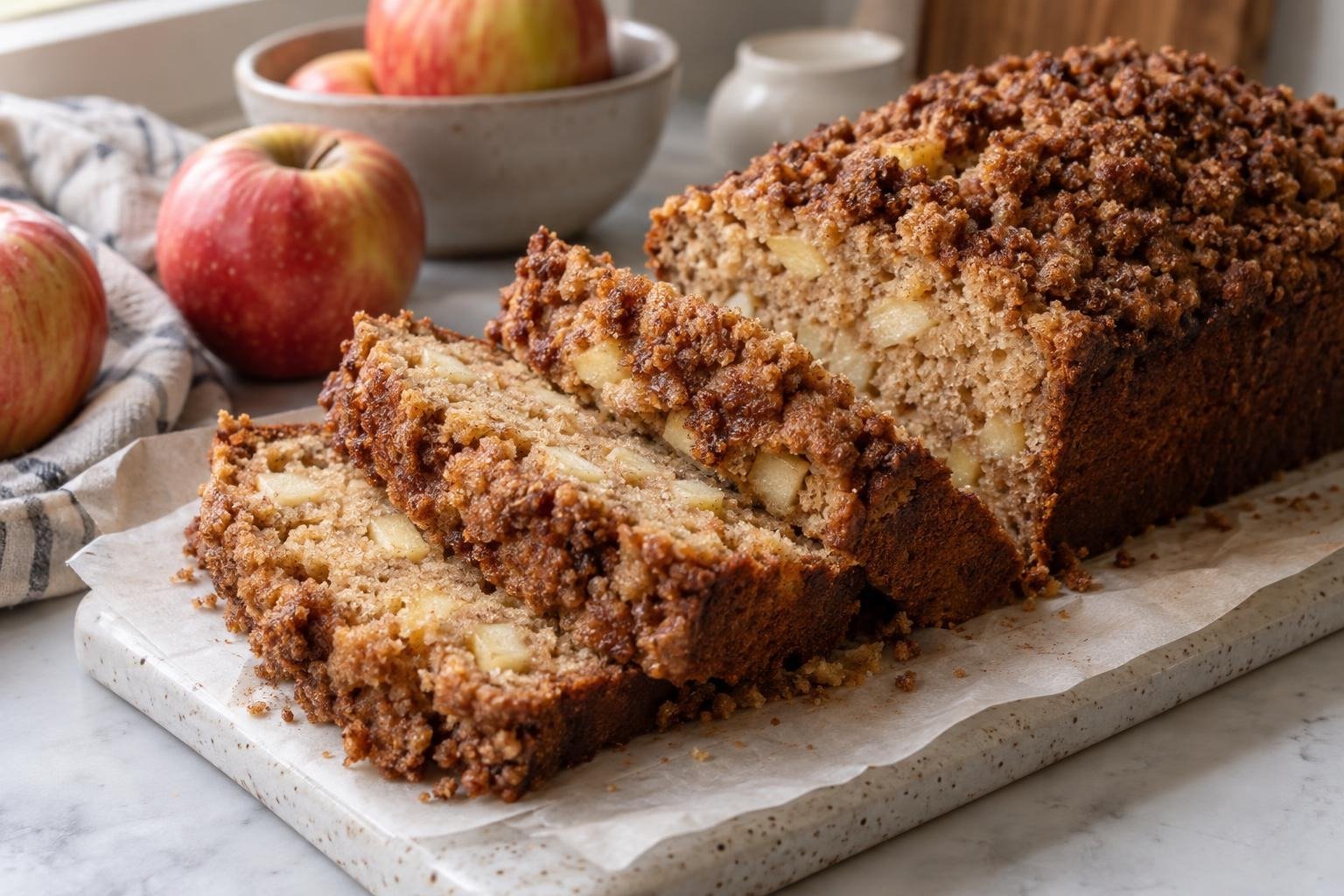
Add the dry ingredients to the butter mixture and fold with a flexible spatula until only a few flour streaks remain. Add the diced apples and continue folding just until evenly distributed and no dry pockets remain; the batter will be thick and scoopable. Transfer it to the prepared pan, pressing it into the corners without compacting it. Level the top, then scatter the streusel evenly across the surface without pressing the crumbs into the batter.
Bake on the center rack for 60 to 70 minutes, rotating the pan after 45 minutes if the oven browns unevenly. Loosely tent the top with foil if the streusel becomes dark before the center is done. The loaf is ready when the top feels firm, the central split looks dry, and a skewer inserted beside that split returns with moist crumbs but no glossy batter. An instant-read thermometer should register about 200°F to 205°F in the center.
Set the pan on a wire rack and cool the loaf in the pan for 15 minutes. Run a thin knife along the unlined short sides, then lift the cake out using the parchment handles. Place it directly on the rack and cool for at least 1 hour 45 minutes before slicing. Cutting while hot compresses the tender crumb and can make fully baked apple pockets look gummy. Use a serrated knife and a gentle sawing motion for clean, thick slices.