

Table of Contents
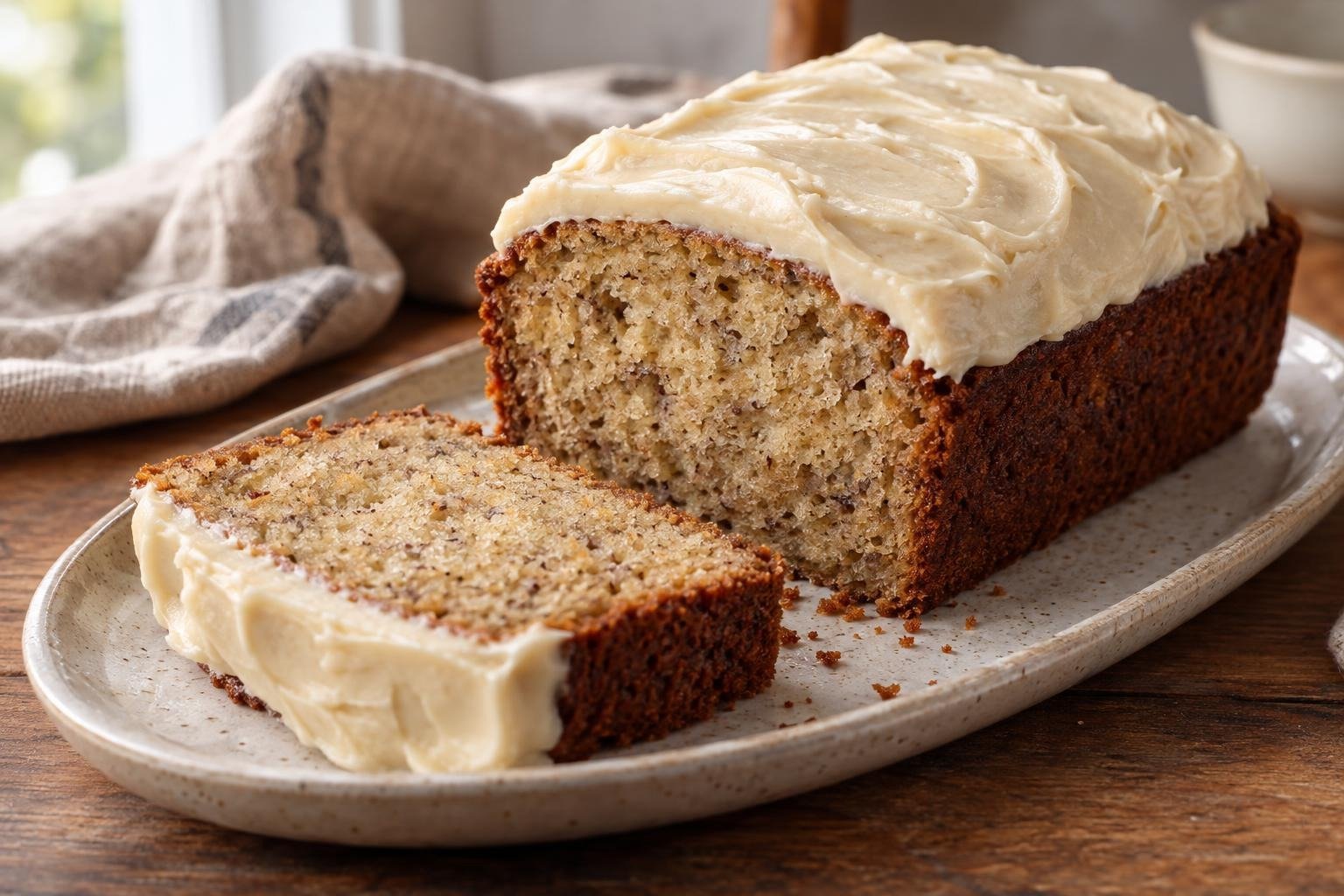
Toasty hazelnut aromas, a deeply golden crust, and a soft banana-packed crumb give this brown butter banana loaf cake its unmistakably cozy character. Browning the butter adds roasted milk-solid flavor that balances the sweet fruit and brown sugar, while a tangy cream cheese frosting keeps each slice firmly in dessert territory. The finished crumb is moist and fine rather than gummy, with enough structure to cut into tidy slices.
I use a melted-butter mixing method because it develops flavor without whipping excess air into this moisture-rich batter. The brown butter must cool until lukewarm before it meets the eggs, and the flour is folded only until the last dry streak disappears. A properly baked loaf will rise into a gently rounded top, feel resilient at the center, and release a tester with moist crumbs rather than shiny batter. Complete cooling is nonnegotiable before frosting or slicing.
What Makes this Banana Cake So Ridiculously Good
- Browning the butter concentrates its toasted milk solids, giving the banana cake a nutty, caramel-like depth without extracts or artificial flavoring.
- Very ripe mashed bananas supply sweetness, moisture, and pectin, which helps the crumb remain tender while still holding a clean slice.
- Brown sugar attracts and retains moisture, while its mild molasses flavor reinforces both the browned butter and ripe banana.
- Sour cream contributes acidity and fat, supporting baking soda activity while softening the flour proteins that can otherwise make a loaf rubbery.
- Cooling the brown butter before mixing and limiting flour agitation prevent greasy separation, excessive aeration, and unnecessary gluten development.
Ingredient Notes for Brown Butter Banana Loaf Cake with Soft, Tender Crumb
- Unsalted butter: Butter is browned separately for the cake and frosting so each portion can be handled correctly. Watch the milk solids rather than relying only on time, and scrape every flavorful brown speck from the pan.
- Ripe bananas: Use heavily spotted bananas that mash easily and smell distinctly fruity. Weigh the peeled fruit after mashing because banana size varies and excess puree can produce a damp, sunken center.
- Light brown sugar: Its molasses supports moisture retention and complements the toasted butter. Break up firm lumps before mixing so the sugar disperses evenly through the batter.
- All-purpose flour: This supplies enough protein and starch to support the substantial banana puree. Weigh it whenever possible, then fold gently to avoid a tough or tunneled crumb.
- Sour cream: Full-fat sour cream adds acidity, richness, and tenderness without making the batter runny. Full-fat plain Greek yogurt may be used in the same weight, although its tang will be slightly more noticeable.
- Eggs: Room-temperature eggs emulsify more readily with the cooled brown butter. Add them one at a time and whisk until the mixture looks cohesive before incorporating the dry ingredients.
- Cream cheese: Use full-fat brick-style cream cheese rather than spreadable tub cheese. It provides the firm body needed for a frosting that stays on the loaf instead of slipping down the sides.
- Powdered sugar: Sifting removes hard lumps and helps the frosting become smooth with minimal beating. Excessive beating can warm and loosen cream cheese frosting.
- Leaveners: Baking powder supplies dependable lift, while baking soda responds to the sour cream and bananas. Measure both level because excess leavener can cause a dramatic rise followed by a collapsed center.
My Baking Tips
- Use a light-colored metal pan for predictable heat transfer. Dark metal can overbrown the crust before the center finishes, while glass usually requires different timing and handling.
- Measure exactly 340 g of peeled, mashed banana. Adding an extra banana may sound harmless, but the additional water and fruit solids can overwhelm the cake structure and leave the middle gummy.
- Cool the browned butter until lukewarm before adding eggs. Hot fat can partially cook the eggs, while cold, firm butter will not combine smoothly with the banana mixture.
- Begin checking the loaf at 55 minutes, but trust physical cues rather than the clock alone. A cracked top is normal; movement beneath the crack or shiny batter on the tester means the center needs longer.
- Do not frost a loaf that retains any warmth. Residual heat softens the cream cheese and brown butter, causing the frosting to become greasy, loose, or absorbed into the crust.
Ingredients for Brown Butter Banana Loaf Cake
- 170 g unsalted butter (For the cake, 3/4 cup, cut into pieces)
- 240 g all-purpose flour (2 cups, spooned and leveled if measuring by volume)
- 1 tsp baking powder (4 g, measured level)
- 1/2 tsp baking soda (2.5 g, measured level)
- 3/4 tsp fine sea salt (For the cake)
- 340 g very ripe bananas (About 1 1/2 cups mashed, weighed after peeling)
- 180 g packed light brown sugar (About 3/4 cup plus 2 tablespoons)
- 2 large eggs (About 100 g without shells, at room temperature)
- 60 g full-fat sour cream (1/4 cup, at room temperature; full-fat plain Greek yogurt may be used by weight)
- 2 tsp pure vanilla extract (For the cake)
- 57 g unsalted butter (For the frosting, 1/4 cup, cut into pieces)
- 113 g full-fat brick-style cream cheese (4 ounces, softened but still cool)
- 120 g powdered sugar (1 cup, sifted)
- 1/4 tsp fine sea salt (For the frosting)
- 1 tsp pure vanilla extract (For the frosting)
- 15 g whole milk (1 tablespoon, use only as needed for consistency)
How to Make Brown Butter Banana Loaf Cake
- STEP 1). Brown and cool the cake butter Place the 170 g cake portion of butter in a small, light-colored saucepan over medium heat. Melt it, then cook for 5 to 8 minutes, swirling frequently as it foams and crackles. Remove the pan when the milk solids are chestnut brown and the butter smells nutty, before any specks turn black. Immediately scrape the butter and browned solids into a large mixing bowl. Cool for about 15 minutes, until lukewarm but still fluid.
- STEP 2). Prepare the oven and loaf pan While the brown butter cools, position an oven rack in the center and heat the oven to 350°F or 175°C. Lightly grease a 9 x 5 inch metal loaf pan, then line its long sides and bottom with parchment, leaving enough overhang to lift out the cake. Grease the parchment lightly. Set the pan on a flat baking sheet only if it feels unstable, but do not use an insulated sheet that will slow bottom browning.
- STEP 3). Combine the dry ingredients In a medium bowl, whisk the flour, baking powder, baking soda, and 3/4 teaspoon salt for at least 30 seconds. Break apart any compacted flour or leavener with the whisk. Even distribution matters in this thick banana batter because isolated baking soda can leave bitter spots, while poorly dispersed leavening may create uneven tunnels or a lopsided rise. Set the dry mixture beside the prepared pan.
- STEP 4). Mix the banana batter Whisk the mashed bananas and brown sugar into the lukewarm brown butter until glossy and mostly uniform. Add the eggs one at a time, whisking thoroughly after each, then whisk in the sour cream and vanilla. Add the dry ingredients and use a flexible spatula to fold from the bottom and sides just until no visible flour remains, about 20 to 25 folds. The batter should be thick, cohesive, and slowly pourable, with small banana flecks but no oily separation.
- STEP 5). Bake and cool the loaf completely Scrape the batter into the prepared pan and smooth the top without pressing out air. Bake for 55 to 65 minutes, rotating once after 40 minutes. If the top becomes deeply brown before the center is set, cover it loosely with foil. The loaf is done when the center springs back, a skewer emerges with moist crumbs but no wet batter, and the top does not wobble. Cool in the pan for 20 minutes, then lift onto a rack and cool for at least 2 hours.
- STEP 6). Make the frosting and finish the cake Brown the 57 g frosting butter in the cleaned saucepan over medium heat for 4 to 6 minutes, using the same chestnut-brown visual cue. Transfer it to a bowl and cool until opaque and soft, about 15 minutes. Beat the cream cheese briefly until smooth, then beat in the brown butter, sifted powdered sugar, salt, and vanilla on low speed. Add milk only if needed for a spreadable consistency. Frost the completely cool loaf, then slice with a clean serrated knife.
Storage and Freezing
- Storage: Refrigerate the frosted loaf in an airtight container for up to 4 days. Do not leave cream cheese frosting at room temperature for more than 2 hours.
- Freezing: Freeze unfrosted or frosted individual slices in a single layer until firm, then wrap tightly and place in a freezer-safe container for up to 2 months.
- Thawing: Thaw wrapped slices overnight in the refrigerator to limit condensation on the crumb and frosting.
- Serving: For the softest crumb and fullest brown butter aroma, let refrigerated slices stand at room temperature for 20 to 30 minutes before serving.
Frequently Asked Questions
What loaf pan size is best for brown butter banana loaf cake?
A 9 x 5 inch metal loaf pan with approximately 8-cup capacity gives this batter enough room to rise while allowing the center to bake through. The batter should sit comfortably below the rim before baking.
A smaller 8 1/2 x 4 1/2 inch pan may be too full and can produce an overbrowned exterior or underbaked center. Avoid dividing the batter or changing pans unless you are prepared to adjust baking time and monitor doneness closely.
Why does brown butter banana loaf cake sink in the middle?
A sunken middle usually points to excess banana, inaccurate leavener, overmixing, or a center that was removed before its starches and egg proteins had set. Opening the oven repeatedly during the early rise can also release heat too quickly.
Weigh the mashed fruit, measure level teaspoons, and fold only until the flour disappears. Before removing the loaf, check that the center springs back and that a skewer shows moist crumbs without glossy batter.
How ripe should bananas be for banana loaf cake?
Choose bananas with heavily speckled or mostly brown skins, soft flesh, and a pronounced fruity aroma. Their starches have converted into sugars, so they mash smoothly and contribute stronger banana flavor without leaving firm pieces in the crumb.
Avoid bananas that smell fermented, contain leaking liquid, or show mold. If the fruit is ripe but still slightly lumpy, mash it thoroughly with a fork before weighing 340 g for the batter.
Which ingredient substitutions work in this brown butter banana loaf cake recipe?
Full-fat plain Greek yogurt can replace the sour cream by weight because it contributes similar acidity, protein, and body. Its sharper tang may remain slightly more noticeable after baking, but the batter consistency should stay appropriately thick.
Other changes are less dependable in this formula. Spreadable cream cheese can make the frosting loose, and reducing the brown sugar changes both moisture retention and structure. Use the specified butter, flour, eggs, and brick-style cream cheese for the intended result.
How do I know when banana loaf cake is fully baked?
Look for a gently rounded, deeply golden top and a center that springs back when touched lightly. Insert a thin skewer through the central crack into the deepest part of the loaf. It should emerge with a few moist crumbs, not wet or shiny batter.
The crack itself can remain slightly soft, so check beneath it rather than judging the surface alone. If the crust is dark but the tester is wet, cover loosely with foil and continue baking in 5-minute intervals.
Your Next Baking Obsession Starts Here
- Chocolate Loaf Cake with Soft, Tender Crumb
- Cranberry Orange Loaf Cake with Bright Citrus Flavor
- Lemon Loaf Cake with a Tender Citrus Crumb
- Moist Lemon Pound Cake with a Tender Crumb and Lemon Glaze
Brown Butter Banana Loaf Cake with Soft, Tender Crumb
Ingredients
Equipment
Method
- Place the 170 g cake portion of butter in a small, light-colored saucepan over medium heat. Melt it, then cook for 5 to 8 minutes, swirling frequently as it foams and crackles. Remove the pan when the milk solids are chestnut brown and the butter smells nutty, before any specks turn black. Immediately scrape the butter and browned solids into a large mixing bowl. Cool for about 15 minutes, until lukewarm but still fluid.
- While the brown butter cools, position an oven rack in the center and heat the oven to 350°F or 175°C. Lightly grease a 9 x 5 inch metal loaf pan, then line its long sides and bottom with parchment, leaving enough overhang to lift out the cake. Grease the parchment lightly. Set the pan on a flat baking sheet only if it feels unstable, but do not use an insulated sheet that will slow bottom browning.
- In a medium bowl, whisk the flour, baking powder, baking soda, and 3/4 teaspoon salt for at least 30 seconds. Break apart any compacted flour or leavener with the whisk. Even distribution matters in this thick banana batter because isolated baking soda can leave bitter spots, while poorly dispersed leavening may create uneven tunnels or a lopsided rise. Set the dry mixture beside the prepared pan.
- Whisk the mashed bananas and brown sugar into the lukewarm brown butter until glossy and mostly uniform. Add the eggs one at a time, whisking thoroughly after each, then whisk in the sour cream and vanilla. Add the dry ingredients and use a flexible spatula to fold from the bottom and sides just until no visible flour remains, about 20 to 25 folds. The batter should be thick, cohesive, and slowly pourable, with small banana flecks but no oily separation.
- Scrape the batter into the prepared pan and smooth the top without pressing out air. Bake for 55 to 65 minutes, rotating once after 40 minutes. If the top becomes deeply brown before the center is set, cover it loosely with foil. The loaf is done when the center springs back, a skewer emerges with moist crumbs but no wet batter, and the top does not wobble. Cool in the pan for 20 minutes, then lift onto a rack and cool for at least 2 hours.
- Brown the 57 g frosting butter in the cleaned saucepan over medium heat for 4 to 6 minutes, using the same chestnut-brown visual cue. Transfer it to a bowl and cool until opaque and soft, about 15 minutes. Beat the cream cheese briefly until smooth, then beat in the brown butter, sifted powdered sugar, salt, and vanilla on low speed. Add milk only if needed for a spreadable consistency. Frost the completely cool loaf, then slice with a clean serrated knife.
Notes
- Use a light-colored metal pan for predictable heat transfer. Dark metal can overbrown the crust before the center finishes, while glass usually requires different timing and handling.
- Measure exactly 340 g of peeled, mashed banana. Adding an extra banana may sound harmless, but the additional water and fruit solids can overwhelm the cake structure and leave the middle gummy.
- Cool the browned butter until lukewarm before adding eggs. Hot fat can partially cook the eggs, while cold, firm butter will not combine smoothly with the banana mixture.
- Begin checking the loaf at 55 minutes, but trust physical cues rather than the clock alone. A cracked top is normal; movement beneath the crack or shiny batter on the tester means the center needs longer.
- Do not frost a loaf that retains any warmth. Residual heat softens the cream cheese and brown butter, causing the frosting to become greasy, loose, or absorbed into the crust.



