Table of Contents
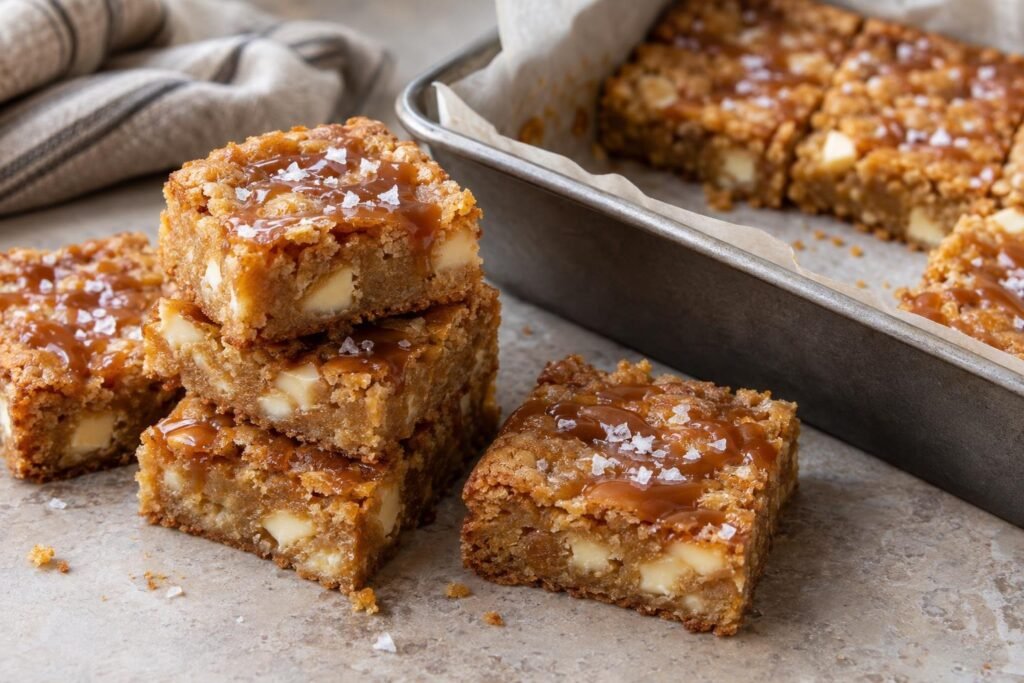
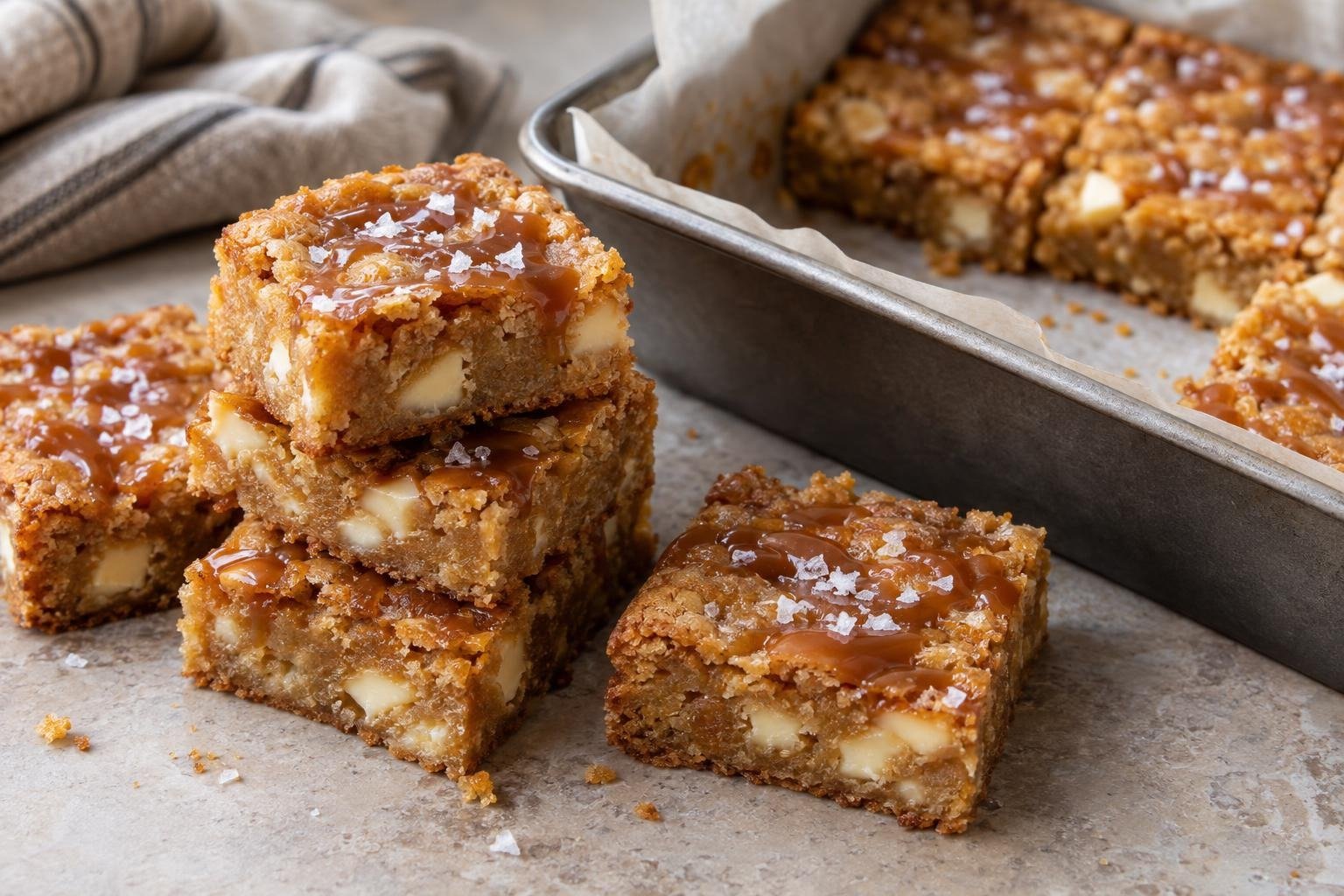
Glossy caramel ribbons, pockets of creamy white chocolate, and a pinch of flaky salt run through these salted caramel blondies. The edges bake to a deep golden brown while the center stays soft and dense, with a rich vanilla-brown sugar crumb that is sturdy enough to slice without turning cakey.
I use a 23 x 33 cm light-colored metal pan so the batter bakes evenly before the edges become hard. The batter should fall from the spatula in thick ribbons, and the finished center should look set and slightly puffed rather than wet. A full room-temperature cooling period followed by a short chill firms the caramel and fat, which is the real trick to producing clean, bakery-style squares.
This Is Why You’ll Love these Bars
- The 23 x 33 cm metal pan gives the batter enough surface area to bake through while maintaining a soft center and evenly browned edges.
- Melted butter and brown sugar produce a dense, chewy crumb without incorporating the excess air that could make the blondies cakey.
- A controlled flour-to-fat ratio gives the caramel enough structure to stay suspended instead of sinking into a greasy bottom layer.
- White chocolate is limited to 115 grams, so it creates creamy pockets without overwhelming the brown sugar and salted caramel flavors.
- Cooling at room temperature and briefly chilling the slab allows the butter, chocolate, and caramel to firm before slicing.
Ingredient Notes for Salted Caramel Blondies Baked as Soft Bars
- Granulated sugar: This forms the base of the wet caramel. Combine it with the measured water before heating, and avoid stirring once it begins boiling because agitation can encourage crystallization.
- Heavy cream: Cream loosens the cooked sugar into a pourable caramel. Use cream with at least 35 percent milk fat and warm it before adding it to reduce splattering and sudden seizing.
- Unsalted butter: Butter enriches both the caramel and blondie crumb. Melting the batter butter limits aeration, supporting a dense bar rather than a cake-like texture.
- Light brown sugar: Brown sugar supplies moisture, molasses flavor, and chew. Pack it only when using the volume measure. Dark brown sugar may be used gram for gram for a stronger molasses flavor and slightly softer crumb.
- Eggs: Three large eggs provide protein and enough moisture to bind the flour and sugar. Room-temperature eggs incorporate more smoothly into melted butter without making the mixture look curdled.
- All-purpose flour: Flour gives the soft caramel-heavy batter its structure. Weigh it when possible, and fold only until the last dry streaks disappear to avoid a firm, bready crumb.
- White chocolate: Chopped white chocolate or good-quality white chocolate wafers create creamy pockets throughout the bars. Avoid confectionery coating, which contains different fats and can leave a waxy texture.
Baking Tips Worth Knowing
- Choose a light-colored metal pan. Dark metal can set and brown the edges before the caramel-rich center has finished baking, while glass changes the heating rate and prolongs carryover cooking.
- Let the caramel reach medium amber before adding the cream. Pale caramel tastes mostly sweet, but very dark caramel can become bitter and overpower the vanilla and white chocolate.
- Keep concentrated caramel away from the pan edges when layering. Exposed sugar can become hard and sticky where it directly contacts the hot metal.
- Check the blondies at 27 minutes. A toothpick coated in shiny liquid batter means they need more time, while several moist, defined crumbs indicate a soft but safely baked center.
- For the neatest presentation, chill the fully cooled slab before cutting and clean the knife after every pass. For a softer serving texture, let the cut bars stand at room temperature for 15 minutes.
Ingredients for Salted Caramel Blondies
- 150 g granulated sugar (About 3/4 cup, for the caramel)
- 30 g water (2 tablespoons, for the caramel)
- 60 ml heavy cream (1/4 cup, at least 35 percent milk fat, warmed)
- 42 g unsalted butter (3 tablespoons, cubed, for the caramel)
- 3 g fine sea salt (1/2 teaspoon, for the caramel)
- 227 g unsalted butter (1 cup, melted and cooled for 5 minutes)
- 300 g packed light brown sugar (About 1 1/2 cups)
- 150 g large eggs (3 large eggs, at room temperature)
- 10 ml pure vanilla extract (2 teaspoons)
- 290 g all-purpose flour (About 2 1/3 cups, spooned and leveled if not weighed)
- 2 g baking powder (1/2 teaspoon)
- 3 g fine sea salt (1/2 teaspoon, for the batter)
- 115 g white chocolate (About 2/3 cup chopped chocolate or wafers)
- 2 g flaky sea salt (About 1/2 teaspoon, for finishing)
How to Make Salted Caramel Blondies
- STEP 1). Prepare the oven and pan Position a rack in the center of the oven and heat it to 175°C. Lightly grease a 23 x 33 cm light-colored metal baking pan, then line the bottom and two long sides with parchment, leaving enough overhang to lift the slab later. Set the pan on a heat-safe work surface. Measure every ingredient before starting, since the caramel moves quickly once it reaches the correct amber color.
- STEP 2). Cook and cool the salted caramel Combine the granulated sugar and water in a small heavy-bottomed saucepan. Cook over medium heat without stirring, swirling the pan gently only if the color develops unevenly. After 7 to 10 minutes, the syrup should be a clear medium amber and smell toasted, not burned. Remove it from the heat and carefully whisk in the warm cream, followed by the 42 grams butter and 3 grams salt. Cool for 15 minutes, until thickened but still pourable.
- STEP 3). Mix the butter, sugar, and eggs Place the melted, slightly cooled butter and brown sugar in a large mixing bowl. Whisk for about 45 seconds, breaking up every sugar lump; the mixture should look glossy and cohesive but not aerated. Add the eggs one at a time, whisking until each disappears before adding the next, then mix in the vanilla. Stop when the mixture falls from the whisk in thick ribbons. Vigorous extended whisking would introduce unnecessary air and encourage a cakier crumb.
- STEP 4). Fold in the dry ingredients and chocolate In a medium bowl, whisk the flour, baking powder, and 3 grams fine sea salt until evenly distributed. Add the dry mixture to the wet ingredients in two additions, folding with a flexible spatula and scraping the bottom and sides after each addition. When only a few flour streaks remain, fold in the white chocolate. Stop as soon as the batter is uniform. It should be thick, glossy, and spreadable, with no pockets of dry flour.
- STEP 5). Layer the batter and bake Spread half the batter evenly in the prepared pan, pushing it into the corners with the spatula. Spoon about two-thirds of the caramel over the surface, keeping most of it 1 cm away from the pan edges. Cover with the remaining batter, then dot with half the reserved caramel and make four or five shallow swirls. Bake for 27 to 32 minutes. The edges should be golden and set, while a tester in the center should show moist crumbs but no fluid batter.
- STEP 6). Cool, chill, and slice cleanly Set the pan on a wire rack and cool the blondies completely for 90 minutes without cutting them; the center continues to set as the sugar, butter, and chocolate cool. Refrigerate the pan for 30 minutes, then lift out the slab using the parchment. Warm the remaining caramel only until spoonable and drizzle it over the top, then add the flaky salt. Cut into 24 bars with a long sharp knife, wiping the blade clean with a warm damp cloth after every cut.
Storage and Freezing
- Storage: Keep the sliced blondies in an airtight container at room temperature for up to 3 days. Separate stacked layers with parchment to protect the caramel topping.
- Refrigeration: Refrigerate for up to 6 days if the room is warm. Bring the bars to room temperature for about 15 minutes before serving so the crumb and caramel soften.
- Freezing: Freeze undrizzled or fully finished bars in a single layer until firm, then wrap them individually and place them in a freezer-safe container for up to 2 months.
- Thawing: Unwrap and thaw the bars at room temperature for 1 to 2 hours. Unwrapping prevents condensation from collecting against the surface.
Frequently Asked Questions
How do you tell when salted caramel blondies are done?
The edges should be set and golden, and the center should look slightly puffed rather than glossy or fluid. A gentle press near the center should meet soft resistance without leaving batter on your finger.
Insert a tester away from a caramel ribbon. It should collect several moist crumbs, not raw batter. Testing directly through caramel can make a fully baked blondie appear underdone.
Why did my salted caramel blondies turn out cakey?
A cakey texture usually comes from incorporating too much air or adding excess flour. Whisk the butter and sugar only until smooth, then mix the eggs until the batter is cohesive rather than foamy.
Weigh the flour and fold just until the dry streaks disappear. Baking too long also removes the moisture that supports a dense, chewy crumb, so begin checking at 27 minutes.
What ingredient substitutions work in this salted caramel blondies recipe?
Dark brown sugar can replace light brown sugar gram for gram, producing a deeper molasses flavor and a slightly softer crumb. Chopped real white chocolate and white chocolate wafers are interchangeable at the same weight.
Heavy cream should not be replaced with milk because its extra water and lower fat content can make the caramel thin or cause it to seize. Use unsalted butter so the total salt remains controlled.
Can I make salted caramel blondies ahead of serving?
These bars suit advance preparation because their crumb and caramel need time to set. Bake them the day before, cool them completely, and store the unsliced slab covered at room temperature.
For clean portions, chill the slab for 30 minutes before cutting. Let the finished bars stand at room temperature for about 15 minutes before serving so the crumb feels soft rather than refrigerator-firm.
How do you cut salted caramel blondies cleanly?
Allow the pan to cool for 90 minutes, then refrigerate it for 30 minutes before lifting out the slab. Cutting while warm drags melted chocolate and caramel through the crumb, leaving ragged edges.
Use a long sharp knife and press straight down instead of sawing. Wipe the blade with a warm damp cloth and dry it after every cut so each portion has defined sides.
More Ridiculously Delicious Brownies & Bars
- Cranberry Orange Blondies with Tart Cranberries
- White Chocolate Raspberry Blondies with Homemade Texture
- Maple Pecan Blondies with Homemade Texture
- Brown Butter Blondies with Chewy Centers
- Banana Blondies with a Soft, Rich Center
Salted Caramel Blondies Baked as Soft Bars
Ingredients
Equipment
Method
- Position a rack in the center of the oven and heat it to 175°C. Lightly grease a 23 x 33 cm light-colored metal baking pan, then line the bottom and two long sides with parchment, leaving enough overhang to lift the slab later. Set the pan on a heat-safe work surface. Measure every ingredient before starting, since the caramel moves quickly once it reaches the correct amber color.
- Combine the granulated sugar and water in a small heavy-bottomed saucepan. Cook over medium heat without stirring, swirling the pan gently only if the color develops unevenly. After 7 to 10 minutes, the syrup should be a clear medium amber and smell toasted, not burned. Remove it from the heat and carefully whisk in the warm cream, followed by the 42 grams butter and 3 grams salt. Cool for 15 minutes, until thickened but still pourable.
- Place the melted, slightly cooled butter and brown sugar in a large mixing bowl. Whisk for about 45 seconds, breaking up every sugar lump; the mixture should look glossy and cohesive but not aerated. Add the eggs one at a time, whisking until each disappears before adding the next, then mix in the vanilla. Stop when the mixture falls from the whisk in thick ribbons. Vigorous extended whisking would introduce unnecessary air and encourage a cakier crumb.
- In a medium bowl, whisk the flour, baking powder, and 3 grams fine sea salt until evenly distributed. Add the dry mixture to the wet ingredients in two additions, folding with a flexible spatula and scraping the bottom and sides after each addition. When only a few flour streaks remain, fold in the white chocolate. Stop as soon as the batter is uniform. It should be thick, glossy, and spreadable, with no pockets of dry flour.
- Spread half the batter evenly in the prepared pan, pushing it into the corners with the spatula. Spoon about two-thirds of the caramel over the surface, keeping most of it 1 cm away from the pan edges. Cover with the remaining batter, then dot with half the reserved caramel and make four or five shallow swirls. Bake for 27 to 32 minutes. The edges should be golden and set, while a tester in the center should show moist crumbs but no fluid batter.
- Set the pan on a wire rack and cool the blondies completely for 90 minutes without cutting them; the center continues to set as the sugar, butter, and chocolate cool. Refrigerate the pan for 30 minutes, then lift out the slab using the parchment. Warm the remaining caramel only until spoonable and drizzle it over the top, then add the flaky salt. Cut into 24 bars with a long sharp knife, wiping the blade clean with a warm damp cloth after every cut.
Notes
- Choose a light-colored metal pan. Dark metal can set and brown the edges before the caramel-rich center has finished baking, while glass changes the heating rate and prolongs carryover cooking.
- Let the caramel reach medium amber before adding the cream. Pale caramel tastes mostly sweet, but very dark caramel can become bitter and overpower the vanilla and white chocolate.
- Keep concentrated caramel away from the pan edges when layering. Exposed sugar can become hard and sticky where it directly contacts the hot metal.
- Check the blondies at 27 minutes. A toothpick coated in shiny liquid batter means they need more time, while several moist, defined crumbs indicate a soft but safely baked center.
- For the neatest presentation, chill the fully cooled slab before cutting and clean the knife after every pass. For a softer serving texture, let the cut bars stand at room temperature for 15 minutes.