
Table of Contents
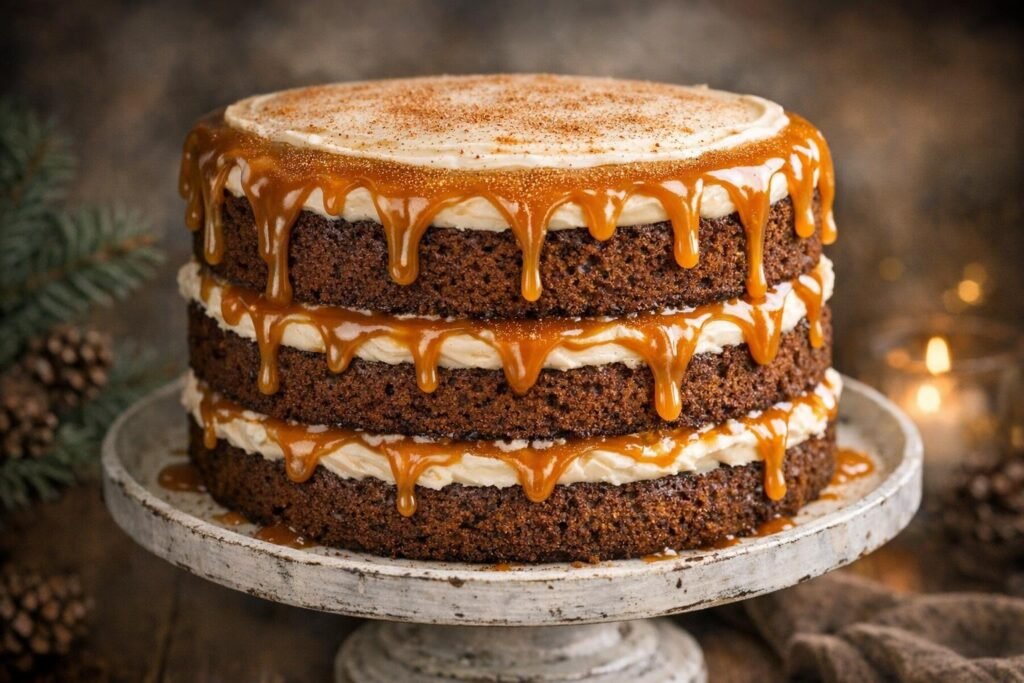
The first whiff of this gingerbread caramel layer cake recipe wakes up every sense with cinnamon, ginger, and the sultry pull of real caramel. Picture three plush spiced cake layers, every one tender as gingerbread should be, each brushed with silky, slightly salted caramel. To balance the sweetness, I use a tangy cream cheese frosting that always slices clean, no slumping, even at room temp. The secret is dark molasses and brown sugar for that unbeatable gingerbread base, combined with just the right touch of black pepper for a little edge. Stacking and decorating this cake is deeply satisfying: there's plenty of gooey caramel between the layers, and it drips down beautifully when you slice in. If your holidays need a centerpiece cake that smells like December and truly delivers on every bite, this one’s your new tradition.

Why This Cake Is Ridiculously Delicious
- Warm winter spices meet real caramel: Using ground ginger, cinnamon, allspice, clove, and black pepper creates a gingerbread cake that’s anything but bland. Caramel sauce isn’t just a drizzle, it soaks into each layer, infusing the cake with deep flavor.
- Molasses and brown sugar keep it plush: The molasses brings moisture and chew, while dark brown sugar supplies rich taste and keeps these layers fresh for days, making this cake ideal for making ahead.
- Cream cheese frosting brings balance: The tangy, not-too-sweet cream cheese frosting works double duty, it tames all that caramelized sugar and creates a beautifully sturdy stack for clean slicing.
- Structural layers for confident stacking: I bake three 8-inch layers to create height, presence and a strong crumb. That makes assembly straightforward, even when you’re going for dramatic caramel drips on the finished cake.
- Make-ahead friendly and festive: The gingerbread cake stays moist, and both the caramel and frosting are fridge-stable, so you can prep over a couple days and decorate just before your party, or steal a slice with coffee on day three without regret.
Ingredient Notes for Gingerbread Caramel Layer Cake
- All-purpose flour: The backbone of the cake, giving just enough structure for tall, stable layers without making them tough. Sift before measuring for best results.
- Dark brown sugar: Not just for sweetness but for depth, its higher molasses content keeps the cake richly flavored and moist.
- Unsulphured dark molasses: Essential for real gingerbread character. Avoid blackstrap, which can be overwhelmingly bitter here.
- Warm spices (ginger, cinnamon, allspice, cloves, black pepper): Each spice is measured for complexity, don’t skip the pepper, as it sharpens the ginger and isn’t hot in the finished cake.
- Large eggs: Emulsify the batter and contribute both structure and tenderness. Room temperature eggs blend best.
- Whole milk: Hydrates the batter and helps the cake bake up plush. Don’t swap for low fat unless you love a drier crumb.
- Unsalted butter: Creamed with sugar for a light, fluffy base; always soften fully for even mixing.
- Cream cheese: Use full-fat block style for the frosting or it won’t whip up thick and spreadable.
- Powdered sugar: Gives the frosting its silky finish. Sift to avoid lumps.
- Salted caramel sauce: Homemade or high-quality store-bought. Needs to be thick but pourable, with a balance of sweet and salty.
A Few Good Things to Know
- Bring ingredients to room temperature: Softened butter and room temp eggs and dairy ensure your batter emulsifies smoothly for a plush, even crumb.
- Don’t overmix after adding dry ingredients: Once the flour goes in, mix just until homogeneous to prevent a tough, dense cake.
- Chill layers before stacking: Cool, slightly firmed cakes are easier to handle, stack, and fill, especially important when you’re working with creamy frosting and liquid caramel.
- Use a frosting dam for clean layers: Applying a ring of frosting at the edge of each layer prevents caramel leaks and creates sharp, professional slices.
- Wipe your knife between cake slices: For bakery-grade presentation, wipe the blade between cuts to keep those caramel and frosting layers crisp and photo-worthy.
My Best Tips for Stacking and Decorating a Gingerbread Caramel Layer Cake
When working with multiple moist cake layers, caramel, and cream cheese frosting, a few key stacking and decorating decisions keep everything gorgeous and easy to serve.
- Chill your cakes before assembly: Cool the layers completely, then chill for 30-60 minutes before stacking. Firm, cold cake won’t tear or crumple as you add soft caramel and frosting.
- Ring of frosting to contain the caramel: Pipe or spread a border of cream cheese frosting around each layer edge before spooning in the caramel, so nothing gushes out the sides.
- Level layers with a serrated knife: If needed, slice off domes for perfectly flat tops so the finished cake stays stable and neat.
- Crumb coat and chill: Apply a thin layer of frosting over the whole cake to lock in crumbs, then chill again for 20 minutes before your final, swoopy coat and caramel drizzle.
- Warm, but not hot, caramel for drip: For those signature drips, let your caramel cool until slightly thickened. Cold caramel won’t drip, but hot caramel will melt your frosting.
These tricks guarantee your cake looks as rich and indulgent as it tastes, with those gorgeous caramel rivers cascading down the sides every time.
Ingredients for Gingerbread Caramel Layer Cake
- 420 g all-purpose flour (Sifted before measuring for accuracy)
- 2 tsp baking powder (Leavens the cake layers evenly)
- 1/2 tsp baking soda (Adds extra lift, balancing the acidity of molasses)
- 1 tsp fine sea salt (Balances sweetness and enhances the spices)
- 2 tbsp ground ginger (Provides signature gingerbread punch)
- 2 tsp ground cinnamon (For rich, warm undertones)
- 1/2 tsp ground allspice (Adds depth to the spice blend)
- 1/2 tsp ground cloves (For that festive, assertive edge)
- 1/4 tsp freshly ground black pepper (Enhances the complexity, don't skip)
- 330 g dark brown sugar (Packed; brings moisture and flavor)
- 170 g unsalted butter (Softened to room temperature)
- 4 large eggs (Room temperature for best emulsion)
- 200 ml unsulphured dark molasses (Not blackstrap)
- 250 ml whole milk (Room temperature)
- 1 tbsp vanilla extract (For roundness and depth)
- 350 ml salted caramel sauce (Divided; must be thick and pourable, homemade or store-bought)
- 340 g full-fat cream cheese (Room temperature, brick style)
- 115 g unsalted butter (Softened, for frosting)
- 375 g powdered sugar (Sifted)
- 1/4 tsp fine sea salt (For frosting)
- 1 tsp vanilla extract (For frosting)
How to Make Gingerbread Caramel Layer Cake
- STEP 1). Prepare the pans and oven Preheat your oven to 350°F (175°C). Grease three 8-inch round cake pans with butter or cooking spray, then line the bottoms with parchment paper rounds to guarantee easy release. Lightly grease the paper as well for insurance.
- STEP 2). Mix the dry ingredients In a large mixing bowl, sift together the flour, baking powder, baking soda, sea salt, ginger, cinnamon, allspice, cloves, and black pepper. Whisk until the spices are evenly distributed and the mixture looks uniform and airy.
- STEP 3). Cream butter and sugar In the bowl of a stand mixer fitted with the paddle attachment, cream the softened butter and dark brown sugar on medium-high speed for 3 to 4 minutes, scraping down the bowl once or twice. The mixture should turn pale, fluffy, and hold soft peaks.
- STEP 4). Add eggs, molasses, and vanilla Beat in the eggs, one at a time, on medium speed, fully incorporating each before adding the next. Add the molasses in a slow, steady stream, followed by the vanilla. Beat for 1 minute, scraping the bowl, until glossy and fully emulsified.
- STEP 5). Combine wet and dry, alternate with milk On low speed, add the flour mixture in three additions, alternating with the milk in two additions. Start and end with flour. Mix just until you see the last streaks of flour disappear and the batter is smooth; do not overmix.
- STEP 6). Divide and bake Evenly divide the batter among the three prepared pans, using a scale for accuracy if you like. Smooth the tops gently. Bake on the center rack for 26-30 minutes, rotating pans halfway, until a toothpick inserted in the center comes out clean or with a few moist crumbs.
- STEP 7). Cool and unmold Let the cakes cool in the pans on a wire rack for 15 minutes. Run a thin knife around the edges, invert the cakes onto racks, and carefully peel away the parchment. Cool completely before assembling or wrapping for later use.
- STEP 8). Make the cream cheese frosting In a cleaned stand mixer bowl with the paddle, beat the cream cheese and butter on medium speed until perfectly smooth and lump-free, about 2 minutes. Beat in the powdered sugar, salt, and vanilla gradually until creamy, then switch to high and whip for 1 more minute, scraping as needed.
- STEP 9). Level and chill the cakes If needed, use a serrated knife to gently trim the tops of the cakes for even layering. Transfer the cakes to the fridge for 30 minutes; chilled cake makes stacking and frosting much easier and tidier, especially with caramel involved.
- STEP 10). Assemble with caramel and frosting Place one cake layer on a serving plate. Pipe or spread a ring of cream cheese frosting around the edge, then spoon about 4 tablespoons of caramel into the center, spreading softly to the border. Top with a second layer, repeat, then add the final layer on top.
- STEP 11). Crumb coat and chill again Spread a thin layer of cream cheese frosting over the top and sides of the stacked cake to seal in crumbs. Refrigerate the whole cake for 20 minutes, ensuring both the filling and outer surface are set for your final finish.
- STEP 12). Frost and decorate Generously frost the cake all over with the remaining cream cheese frosting, smoothing the sides with an offset spatula or bench scraper. Use the remaining caramel, gently warmed to pourable, to create drips down the sides and a glossy finish on top. Chill for 30 minutes before slicing.
Storage and Freezing
- Store the assembled cake covered in the refrigerator for up to 4 days; let slices come to room temperature before enjoying for best texture.
- Freeze unfilled cake layers tightly wrapped for up to 2 months.
- Thaw overnight in the fridge before assembling.
- Do not freeze fully frosted or caramel-filled cake, as the texture will suffer.
- Refrigerate leftover caramel in an airtight container for up to 2 weeks; gently rewarm before serving.
Frequently Asked Questions
What type of molasses should I use in gingerbread layer cake?
For classic gingerbread flavor and optimal cake moisture, unsulphured dark molasses is best. It gives an intense, rich character without turning bitter or overpowering the crumb. Avoid blackstrap molasses, which is too strong and can make the cake dry or acrid. Look for products labeled 'baking' or 'dark' molasses for the perfect result.
The right molasses will color your batter deeply and enhance each slice with warm caramel undertones. Always stir it well before measuring since it can thicken as it sits, and use a scale for consistency if possible.
How do I stop the caramel from leaking out between cake layers?
To keep caramel securely sandwiched inside this layer cake, pipe or spread a generous border (or 'dam') of cream cheese frosting around the edge of each cake. That border acts as a wall, holding caramel in place during assembly and slicing. Add the caramel to the center, then gently spread it within the border up to the edge, but don’t overfill.
It also helps if your caramel is thick and just slightly warm, not hot or runny. If needed, chill it until it drips off a spoon slowly rather than ponding or running fast.
Why do my cake layers sometimes sink or come out dense?
Sinking or dense gingerbread cake layers usually result from incorrect mixing, over-creaming butter and sugar, or underbaking. Cream just until light and fluffy, then add eggs one by one, blending but not overworking. Mixing the flour in gently prevents batter from losing air or forming gluten, which can toughen the crumb.
Be sure to bake until a toothpick comes out clean or with a few moist crumbs, not wet batter. Underbaked layers collapse as they cool, so double-check your oven temperature and doneness cues at the center of each cake.
What’s the secret to clean, professional cake slices?
Achieving those stunning bakery-style slices starts with chilled cake and a sharp serrated knife. Run your knife under hot water and wipe it dry between every slice to keep caramel and frosting stripes neat. Using a border of frosting to hold in the caramel helps prevent squishing.
Let your cake sit at room temperature for about 30 minutes before slicing, which relaxes the crumb for tender bites without making the filling too soft to cut.
Can I make the cake layers or caramel ahead of time?
Planning ahead works perfectly for this gingerbread caramel layer cake. Bake the cake layers up to two days in advance, letting them cool completely before wrapping tightly in plastic wrap and refrigerating. This can actually improve moisture and make assembly much easier.
The caramel sauce is also simple to prepare ahead. Store it in an airtight container in the fridge for up to 2 weeks. Gently rewarm before using so it’s spreadable, and stir well for a silky finish.
How do I make perfect caramel drips for decorating?
For picture-perfect caramel drips, use caramel sauce at the ideal consistency, not hot, but gently warmed and just pourable. Test the first drip on the back of a spoon or the edge of the chilled cake: the drip should slowly travel down without pooling at the bottom.
If your caramel is too thick, warm it for a few seconds at a time in the microwave, stirring between each round. Too runny? Let it cool slightly, then try again on a chilled surface for best results.
More Sweet Treats to Fall in Love With
- Cranberry Orange Upside-Down Cake with Bright Citrus and Caramel
- Bakery-Style Caramel Popcorn Birthday Cake
- Mini Chocolate Caramel Drip Cake with Glossy Drip
- Chocolate Caramel Drip Birthday Cake Recipe
- Salted Caramel Filling for Layer Cakes
Gingerbread Caramel Layer Cake with Warm Spices
Ingredients
Equipment
Method
- Preheat your oven to 350°F (175°C). Grease three 8-inch round cake pans with butter or cooking spray, then line the bottoms with parchment paper rounds to guarantee easy release. Lightly grease the paper as well for insurance.
- In a large mixing bowl, sift together the flour, baking powder, baking soda, sea salt, ginger, cinnamon, allspice, cloves, and black pepper. Whisk until the spices are evenly distributed and the mixture looks uniform and airy.
- In the bowl of a stand mixer fitted with the paddle attachment, cream the softened butter and dark brown sugar on medium-high speed for 3 to 4 minutes, scraping down the bowl once or twice. The mixture should turn pale, fluffy, and hold soft peaks.
- Beat in the eggs, one at a time, on medium speed, fully incorporating each before adding the next. Add the molasses in a slow, steady stream, followed by the vanilla. Beat for 1 minute, scraping the bowl, until glossy and fully emulsified.
- On low speed, add the flour mixture in three additions, alternating with the milk in two additions. Start and end with flour. Mix just until you see the last streaks of flour disappear and the batter is smooth; do not overmix.
- Evenly divide the batter among the three prepared pans, using a scale for accuracy if you like. Smooth the tops gently. Bake on the center rack for 26-30 minutes, rotating pans halfway, until a toothpick inserted in the center comes out clean or with a few moist crumbs.
- Let the cakes cool in the pans on a wire rack for 15 minutes. Run a thin knife around the edges, invert the cakes onto racks, and carefully peel away the parchment. Cool completely before assembling or wrapping for later use.
- In a cleaned stand mixer bowl with the paddle, beat the cream cheese and butter on medium speed until perfectly smooth and lump-free, about 2 minutes. Beat in the powdered sugar, salt, and vanilla gradually until creamy, then switch to high and whip for 1 more minute, scraping as needed.
- If needed, use a serrated knife to gently trim the tops of the cakes for even layering. Transfer the cakes to the fridge for 30 minutes; chilled cake makes stacking and frosting much easier and tidier, especially with caramel involved.
- Place one cake layer on a serving plate. Pipe or spread a ring of cream cheese frosting around the edge, then spoon about 4 tablespoons of caramel into the center, spreading softly to the border. Top with a second layer, repeat, then add the final layer on top.
- Spread a thin layer of cream cheese frosting over the top and sides of the stacked cake to seal in crumbs. Refrigerate the whole cake for 20 minutes, ensuring both the filling and outer surface are set for your final finish.
- Generously frost the cake all over with the remaining cream cheese frosting, smoothing the sides with an offset spatula or bench scraper. Use the remaining caramel, gently warmed to pourable, to create drips down the sides and a glossy finish on top. Chill for 30 minutes before slicing.
Notes
- Bring ingredients to room temperature: Softened butter and room temp eggs and dairy ensure your batter emulsifies smoothly for a plush, even crumb.
- Don’t overmix after adding dry ingredients: Once the flour goes in, mix just until homogeneous to prevent a tough, dense cake.
- Chill layers before stacking: Cool, slightly firmed cakes are easier to handle, stack, and fill, especially important when you’re working with creamy frosting and liquid caramel.
- Use a frosting dam for clean layers: Applying a ring of frosting at the edge of each layer prevents caramel leaks and creates sharp, professional slices.
- Wipe your knife between cake slices: For bakery-grade presentation, wipe the blade between cuts to keep those caramel and frosting layers crisp and photo-worthy.



