

Table of Contents
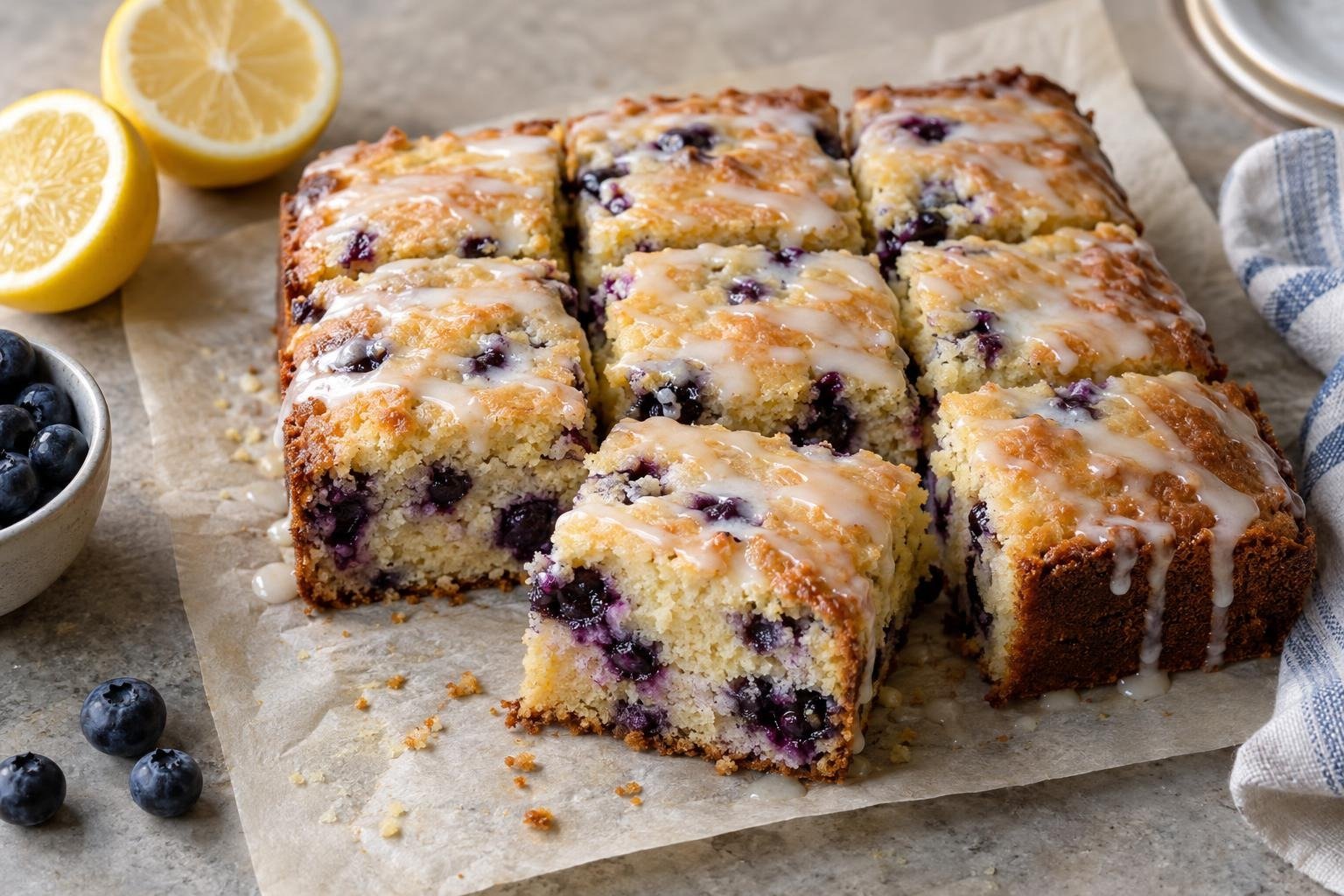
A golden edge, juicy pockets of blueberry, and a fragrant lemon crumb give this blueberry lemon snack cake plenty of character without pushing it into layer-cake territory. The crumb is soft and close but not heavy, with enough structure to hold the berries neatly. A thin lemon glaze settles into the top and adds a tart little finish that makes an everyday square feel properly polished.
I build the batter by rubbing lemon zest into the sugar, then creaming it with softened butter until visibly aerated. That sequence extracts the zest’s aromatic oils while creating the tiny air pockets needed for a lighter crumb. Once the flour goes in, I mix only until the last dry streaks disappear, fold in flour-coated berries, and bake until the center springs back and a tester shows moist crumbs rather than wet batter.
Why You’ll Love this Blueberry Cake
- Rubbing lemon zest into granulated sugar releases its aromatic oils, distributing fresh lemon flavor throughout the batter instead of concentrating it in isolated flecks.
- Creaming properly softened butter with the lemon sugar incorporates air into the fat, helping this relatively thick, fruit-filled batter rise with a soft, even crumb.
- Whole-milk Greek yogurt supplies moisture, fat, and acidity without thinning the batter so much that the blueberries sink readily to the bottom.
- Reserving a small portion of the measured flour for the blueberries dries their surfaces and helps the thick batter hold them in place during baking.
- Cooling the cake completely before glazing prevents the confectioners’ sugar glaze from melting into a transparent, sticky coating.
Ingredient Notes for Blueberry Lemon Snack Cake for an Everyday Pan Cake
- All-purpose flour: Its moderate protein level gives the cake enough structure to support the blueberries while keeping the crumb tender. Reserve 8 grams from the measured quantity for coating the fruit.
- Baking powder: This supplies the main chemical lift. Whisk it thoroughly through the flour so the square cake rises evenly rather than forming scattered tunnels or dense patches.
- Unsalted butter: Butter contributes flavor, tenderness, and aeration. It should feel cool but yield to gentle finger pressure, ideally around 65°F, before creaming.
- Granulated sugar and lemon zest: Sugar sweetens, tenderizes, and helps retain moisture. Rubbing the zest into it releases citrus oils and creates a more aromatic batter without adding excess liquid.
- Eggs: Eggs provide emulsification, protein, and structure. Room-temperature eggs blend into the aerated butter more smoothly and reduce the chance of a curdled batter.
- Whole-milk Greek yogurt: Thick yogurt adds moisture and acidity while maintaining a batter sturdy enough to suspend fruit. Full-fat sour cream may be used at the same weight for a similarly rich crumb.
- Blueberries: Fresh berries give the most predictable batter consistency. Frozen blueberries can be used directly from the freezer, but they may streak the crumb and can add several minutes to baking.
- Confectioners’ sugar glaze: Sifted confectioners’ sugar dissolves smoothly with lemon juice. The glaze should fall in a thick ribbon so it remains visible on top instead of soaking into the cake.
A Few Baking Tips
- Use a light-colored metal 8-inch square pan for predictable browning. Glass transfers heat differently, while a 9-inch square pan produces a thinner cake that will finish sooner.
- Measure the flour by weight and reserve the coating portion from that total. Adding an extra spoonful specifically for the berries can make the crumb drier than intended.
- Do not rush the creaming stage. Properly aerated butter and sugar should look paler and noticeably fluffier, but greasy or melting butter will not hold those air cells effectively.
- Stop the mixer before the flour is fully incorporated and finish by hand. This prevents overdeveloping gluten while ensuring no dry flour remains at the bottom of the bowl.
- Test the center in more than one spot because a punctured blueberry can mimic wet batter. Look for opaque moist crumbs, a resilient center, and edges beginning to pull subtly from the pan.
Ingredients for Blueberry Lemon Snack Cake
- 188 g all-purpose flour (About 1 1/2 cups, spooned and leveled; reserve 8 g for coating the blueberries)
- 6 g baking powder (About 1 1/2 teaspoons)
- 3 g fine sea salt (About 1/2 teaspoon)
- 150 g granulated sugar (About 3/4 cup)
- 6 g finely grated lemon zest (About 2 tablespoons loosely packed, from approximately 2 lemons)
- 113 g unsalted butter (About 1/2 cup, softened to approximately 65°F)
- 100 g large eggs (2 large eggs without shells, at room temperature)
- 120 g whole-milk plain Greek yogurt (About 1/2 cup, at room temperature)
- 30 g fresh lemon juice (2 tablespoons)
- 5 g pure vanilla extract (1 teaspoon)
- 170 g blueberries (About 1 cup fresh, or frozen and kept frozen until folding)
- 90 g confectioners’ sugar (About 3/4 cup, sifted)
- 20 g fresh lemon juice (4 teaspoons, plus up to 1 teaspoon only if needed for the glaze)
- 0.5 g fine sea salt (A small pinch for the glaze)
How to Make Blueberry Lemon Snack Cake
- STEP 1). Prepare the oven, pan, and ingredients Heat the oven to 350°F with a rack in the center. Lightly grease an 8-inch square light-colored metal pan, then line it with parchment, leaving overhang on two sides. Let the butter, eggs, and yogurt lose their refrigerator chill while you measure. The butter should indent under gentle pressure without looking greasy or partially melted. Keeping these ingredients near the same temperature helps the batter form a stable emulsion and rise evenly.
- STEP 2). Combine the dry ingredients and coat the blueberries Reserve 8 grams, about 1 tablespoon, of the measured flour. In a medium bowl, whisk the remaining 180 grams flour with the baking powder and 3 grams salt for about 30 seconds. In a separate bowl, gently toss the blueberries with the reserved flour until their surfaces look lightly dusty rather than heavily coated. If using frozen berries, keep them frozen and complete this step immediately before folding them into the batter.
- STEP 3). Make the lemon sugar and aerate the butter Place the granulated sugar and lemon zest in the mixer bowl. Rub them together firmly with your fingertips for 30 to 45 seconds, until the sugar feels slightly damp and smells strongly of lemon. Add the softened butter and beat with the paddle on medium speed for 3 to 4 minutes, scraping the bowl and paddle halfway through. Stop when the mixture is pale, fluffy, and increased in volume, not merely combined into a dense paste.
- STEP 4). Add the eggs and prepare the yogurt mixture Beat in the eggs one at a time on medium-low speed, mixing for about 30 seconds after each addition and scraping the bowl before adding the next. The mixture should look creamy and cohesive, although a slight curdled appearance is harmless at this stage. In a small bowl, stir the Greek yogurt, 30 grams lemon juice, and vanilla until smooth. If the butter mixture looks broken, add 1 tablespoon of the prepared flour mixture to help restore the emulsion.
- STEP 5). Finish the batter and fold in the blueberries With the mixer on low, add one-third of the flour mixture, followed by half of the yogurt mixture. Repeat, then add the final third of flour. Stop mixing as soon as only a few pale flour streaks remain. Remove the bowl from the mixer and fold with a flexible spatula, scraping the bottom where dry pockets hide. Fold in the coated blueberries with 3 or 4 broad turns. The finished batter should be thick, aerated, and scoopable, not fluid.
- STEP 6). Fill the pan and bake until safely done Transfer the batter to the prepared pan and spread it evenly into the corners with an offset spatula, taking care not to crush the berries. Bake at 350°F for 38 to 44 minutes. The cake is done when the top is lightly golden, the center springs back after a gentle touch, and a tester inserted away from a blueberry comes out with a few moist crumbs but no glossy batter. Avoid judging doneness by a berry-stained tester alone.
- STEP 7). Cool the cake without trapping steam Set the pan on a wire rack and cool the cake in the pan for 20 minutes. Run a thin knife around any unlined edges, then use the parchment overhang to lift the cake onto the rack. Let it cool completely for about 50 minutes more. The crumb is still setting while warm, so early slicing can compress the center or make it appear underbaked even when the cake reached proper doneness.
- STEP 8). Glaze, set, and slice the cake Sift the confectioners’ sugar into a small bowl, then whisk in 20 grams lemon juice and the pinch of salt. The glaze should fall from the whisk in a thick ribbon that holds briefly before settling; add extra lemon juice only a few drops at a time if needed. Spoon or drizzle it over the fully cooled cake. Let the glaze set for 20 minutes, then cut into 9 squares with a clean, sharp knife, wiping the blade between cuts.
Storage and Freezing
- Room temperature: Store the fully cooled, glazed cake in an airtight container for up to 2 days. Place parchment between stacked pieces to protect the glaze.
- Refrigerator: Refrigerate airtight for up to 5 days. Let individual pieces stand at room temperature for 20 to 30 minutes before serving so the butter-softened crumb loses its chilled firmness.
- Freezing: Freeze unglazed cake squares in a single layer until firm, then wrap individually and place in a freezer-safe container for up to 2 months. Glaze after thawing for the cleanest finish.
- Thawing: Unwrap and thaw the squares on a wire rack at room temperature for 1 to 2 hours. Keep them loosely covered once thawed to prevent drying.
- Serving: For the best lemon aroma and soft crumb, serve the cake at room temperature rather than directly from the refrigerator.
Frequently Asked Questions
Why is my blueberry lemon snack cake dense?
A dense cake usually results from butter that was too cold or warm to aerate, insufficient creaming, or continued mixing after the flour was added. Properly creamed butter and sugar should look pale and fluffy, with no greasy sheen.
Also check that the baking powder is active and the 8-inch pan is used. An oversized pan creates a thin cake, while an undersized pan can leave the center underbaked as the edges become firm.
What pan size works best for blueberry lemon snack cake?
An 8-inch square light-colored metal pan gives this formula enough depth for a soft crumb while allowing the center to bake through in roughly 38 to 44 minutes. The parchment overhang also makes the cooled cake easier to remove intact.
A 9-inch square pan spreads the batter more thinly, so begin checking several minutes early. Dark metal may brown the edges faster, and glass can require different timing because it heats and cools less responsively.
How do I know when the batter is mixed enough?
After the final flour addition, stop the mixer while a few pale streaks remain. Finish with a spatula, scraping across the bottom and folding only until no dry pockets are visible. The batter should remain thick, fluffy, and scoopable.
A glossy, stretchy batter or one that becomes noticeably looser can indicate overmixing. That develops excess gluten and knocks out aeration, producing a tighter crumb around the blueberries.
Can I make this cake with frozen blueberries?
Frozen blueberries can go into the batter directly from the freezer after a light flour coating. Thawing releases juice that thins the batter and encourages purple streaking, so keep the berries frozen until the moment they are folded in.
The colder fruit may extend baking slightly. Check for a springy center and test in multiple places, since blueberry juice on the tester should not be confused with raw, glossy cake batter.
What ingredient substitutions suit this blueberry lemon snack cake?
Full-fat sour cream can replace the whole-milk Greek yogurt at the same weight because both provide acidity, fat, and a thick consistency. Fresh and frozen blueberries are also interchangeable when the frozen fruit is kept frozen before folding.
Lower-fat or pourable yogurt is not ideal here because it changes the batter’s moisture and viscosity. Avoid replacing butter with liquid oil in this formula, since creamed butter supplies essential aeration as well as flavor.
How far ahead can I bake and glaze the cake?
The unglazed cake can be baked one day ahead, cooled completely, and stored airtight at room temperature. Apply the glaze several hours before serving and allow about 20 minutes for it to set before covering or slicing.
For longer preparation, freeze unglazed squares for up to 2 months. Thaw them unwrapped on a rack, then glaze after they reach room temperature so condensation does not dilute the finish.
More Ridiculously Delicious Cakes
- Raspberry Lemon Coffee Cake with Soft, Tender Crumb
- Lemon Olive Oil Bundt Cake with a Tender Crumb
- Lemon Poppy Seed Coffee Cake with Soft, Tender Crumb
- Lemon Layer Cake with Soft, Bright Citrus Layers
- Strawberry Snack Cake for an Everyday Pan Cake
Blueberry Lemon Snack Cake for an Everyday Pan Cake
Ingredients
Equipment
Method
- Heat the oven to 350°F with a rack in the center. Lightly grease an 8-inch square light-colored metal pan, then line it with parchment, leaving overhang on two sides. Let the butter, eggs, and yogurt lose their refrigerator chill while you measure. The butter should indent under gentle pressure without looking greasy or partially melted. Keeping these ingredients near the same temperature helps the batter form a stable emulsion and rise evenly.
- Reserve 8 grams, about 1 tablespoon, of the measured flour. In a medium bowl, whisk the remaining 180 grams flour with the baking powder and 3 grams salt for about 30 seconds. In a separate bowl, gently toss the blueberries with the reserved flour until their surfaces look lightly dusty rather than heavily coated. If using frozen berries, keep them frozen and complete this step immediately before folding them into the batter.
- Place the granulated sugar and lemon zest in the mixer bowl. Rub them together firmly with your fingertips for 30 to 45 seconds, until the sugar feels slightly damp and smells strongly of lemon. Add the softened butter and beat with the paddle on medium speed for 3 to 4 minutes, scraping the bowl and paddle halfway through. Stop when the mixture is pale, fluffy, and increased in volume, not merely combined into a dense paste.
- Beat in the eggs one at a time on medium-low speed, mixing for about 30 seconds after each addition and scraping the bowl before adding the next. The mixture should look creamy and cohesive, although a slight curdled appearance is harmless at this stage. In a small bowl, stir the Greek yogurt, 30 grams lemon juice, and vanilla until smooth. If the butter mixture looks broken, add 1 tablespoon of the prepared flour mixture to help restore the emulsion.
- With the mixer on low, add one-third of the flour mixture, followed by half of the yogurt mixture. Repeat, then add the final third of flour. Stop mixing as soon as only a few pale flour streaks remain. Remove the bowl from the mixer and fold with a flexible spatula, scraping the bottom where dry pockets hide. Fold in the coated blueberries with 3 or 4 broad turns. The finished batter should be thick, aerated, and scoopable, not fluid.
- Transfer the batter to the prepared pan and spread it evenly into the corners with an offset spatula, taking care not to crush the berries. Bake at 350°F for 38 to 44 minutes. The cake is done when the top is lightly golden, the center springs back after a gentle touch, and a tester inserted away from a blueberry comes out with a few moist crumbs but no glossy batter. Avoid judging doneness by a berry-stained tester alone.
- Set the pan on a wire rack and cool the cake in the pan for 20 minutes. Run a thin knife around any unlined edges, then use the parchment overhang to lift the cake onto the rack. Let it cool completely for about 50 minutes more. The crumb is still setting while warm, so early slicing can compress the center or make it appear underbaked even when the cake reached proper doneness.
- Sift the confectioners’ sugar into a small bowl, then whisk in 20 grams lemon juice and the pinch of salt. The glaze should fall from the whisk in a thick ribbon that holds briefly before settling; add extra lemon juice only a few drops at a time if needed. Spoon or drizzle it over the fully cooled cake. Let the glaze set for 20 minutes, then cut into 9 squares with a clean, sharp knife, wiping the blade between cuts.
Notes
- Use a light-colored metal 8-inch square pan for predictable browning. Glass transfers heat differently, while a 9-inch square pan produces a thinner cake that will finish sooner.
- Measure the flour by weight and reserve the coating portion from that total. Adding an extra spoonful specifically for the berries can make the crumb drier than intended.
- Do not rush the creaming stage. Properly aerated butter and sugar should look paler and noticeably fluffier, but greasy or melting butter will not hold those air cells effectively.
- Stop the mixer before the flour is fully incorporated and finish by hand. This prevents overdeveloping gluten while ensuring no dry flour remains at the bottom of the bowl.



