Heat the oven to 350°F with a rack in the center. Lightly grease an 8-inch square light-colored metal pan, then line it with parchment, leaving overhang on two sides. Let the butter, eggs, and yogurt lose their refrigerator chill while you measure. The butter should indent under gentle pressure without looking greasy or partially melted. Keeping these ingredients near the same temperature helps the batter form a stable emulsion and rise evenly.
Reserve 8 grams, about 1 tablespoon, of the measured flour. In a medium bowl, whisk the remaining 180 grams flour with the baking powder and 3 grams salt for about 30 seconds. In a separate bowl, gently toss the blueberries with the reserved flour until their surfaces look lightly dusty rather than heavily coated. If using frozen berries, keep them frozen and complete this step immediately before folding them into the batter.
Place the granulated sugar and lemon zest in the mixer bowl. Rub them together firmly with your fingertips for 30 to 45 seconds, until the sugar feels slightly damp and smells strongly of lemon. Add the softened butter and beat with the paddle on medium speed for 3 to 4 minutes, scraping the bowl and paddle halfway through. Stop when the mixture is pale, fluffy, and increased in volume, not merely combined into a dense paste.
Beat in the eggs one at a time on medium-low speed, mixing for about 30 seconds after each addition and scraping the bowl before adding the next. The mixture should look creamy and cohesive, although a slight curdled appearance is harmless at this stage. In a small bowl, stir the Greek yogurt, 30 grams lemon juice, and vanilla until smooth. If the butter mixture looks broken, add 1 tablespoon of the prepared flour mixture to help restore the emulsion.
With the mixer on low, add one-third of the flour mixture, followed by half of the yogurt mixture. Repeat, then add the final third of flour. Stop mixing as soon as only a few pale flour streaks remain. Remove the bowl from the mixer and fold with a flexible spatula, scraping the bottom where dry pockets hide. Fold in the coated blueberries with 3 or 4 broad turns. The finished batter should be thick, aerated, and scoopable, not fluid.
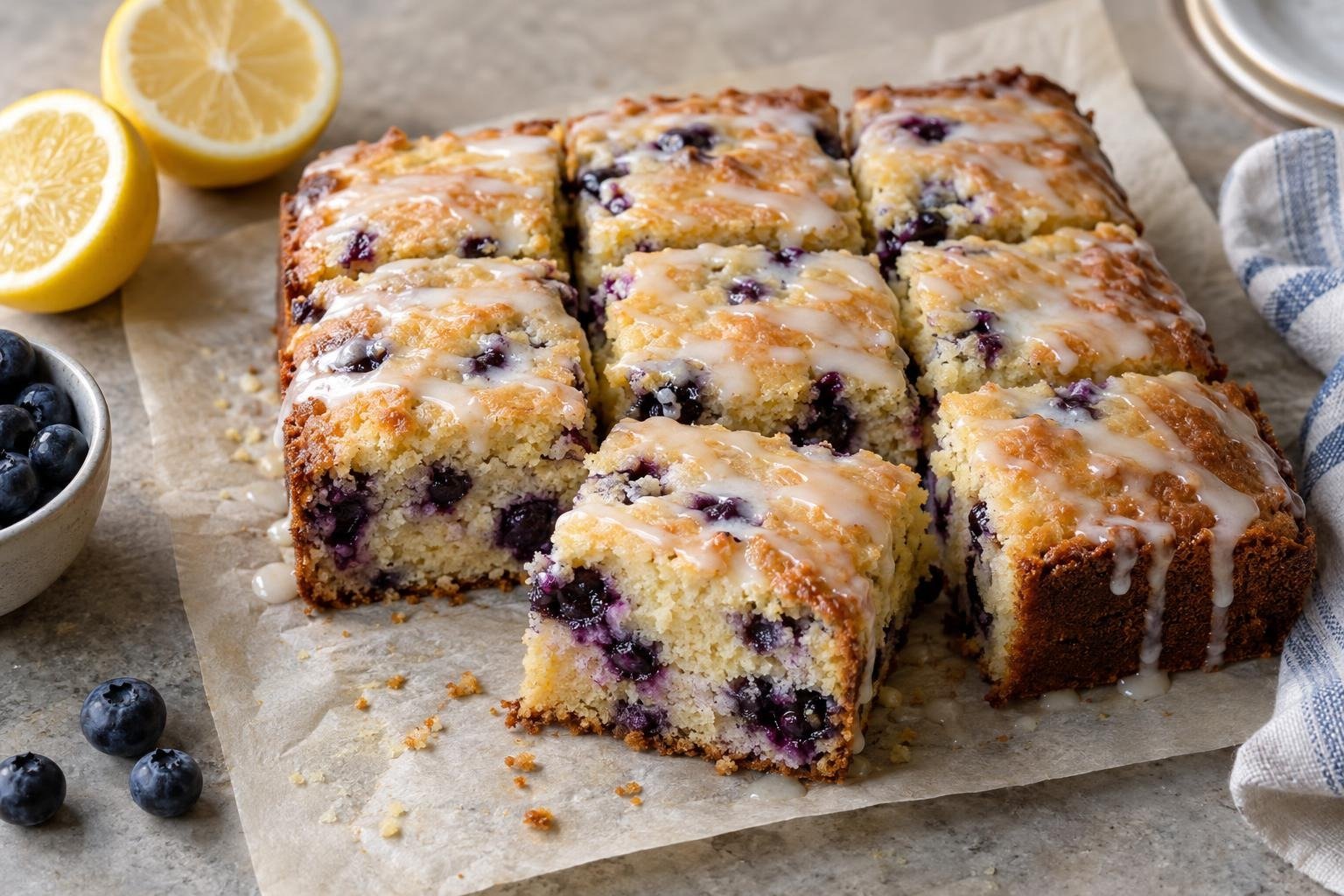
Transfer the batter to the prepared pan and spread it evenly into the corners with an offset spatula, taking care not to crush the berries. Bake at 350°F for 38 to 44 minutes. The cake is done when the top is lightly golden, the center springs back after a gentle touch, and a tester inserted away from a blueberry comes out with a few moist crumbs but no glossy batter. Avoid judging doneness by a berry-stained tester alone.
Set the pan on a wire rack and cool the cake in the pan for 20 minutes. Run a thin knife around any unlined edges, then use the parchment overhang to lift the cake onto the rack. Let it cool completely for about 50 minutes more. The crumb is still setting while warm, so early slicing can compress the center or make it appear underbaked even when the cake reached proper doneness.
Sift the confectioners’ sugar into a small bowl, then whisk in 20 grams lemon juice and the pinch of salt. The glaze should fall from the whisk in a thick ribbon that holds briefly before settling; add extra lemon juice only a few drops at a time if needed. Spoon or drizzle it over the fully cooled cake. Let the glaze set for 20 minutes, then cut into 9 squares with a clean, sharp knife, wiping the blade between cuts.