
Table of Contents
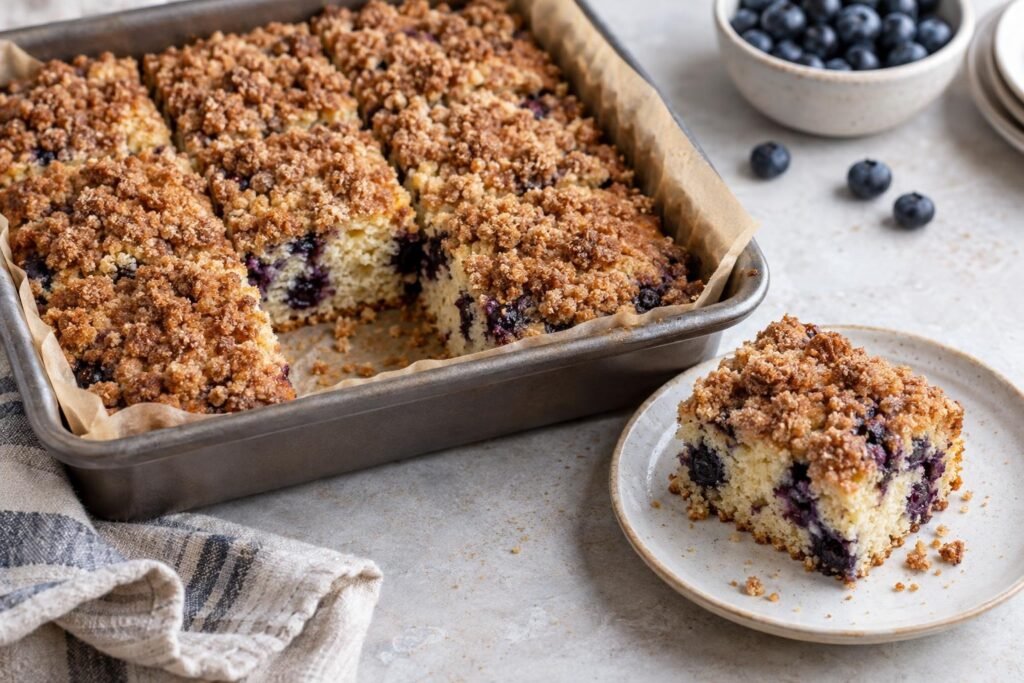
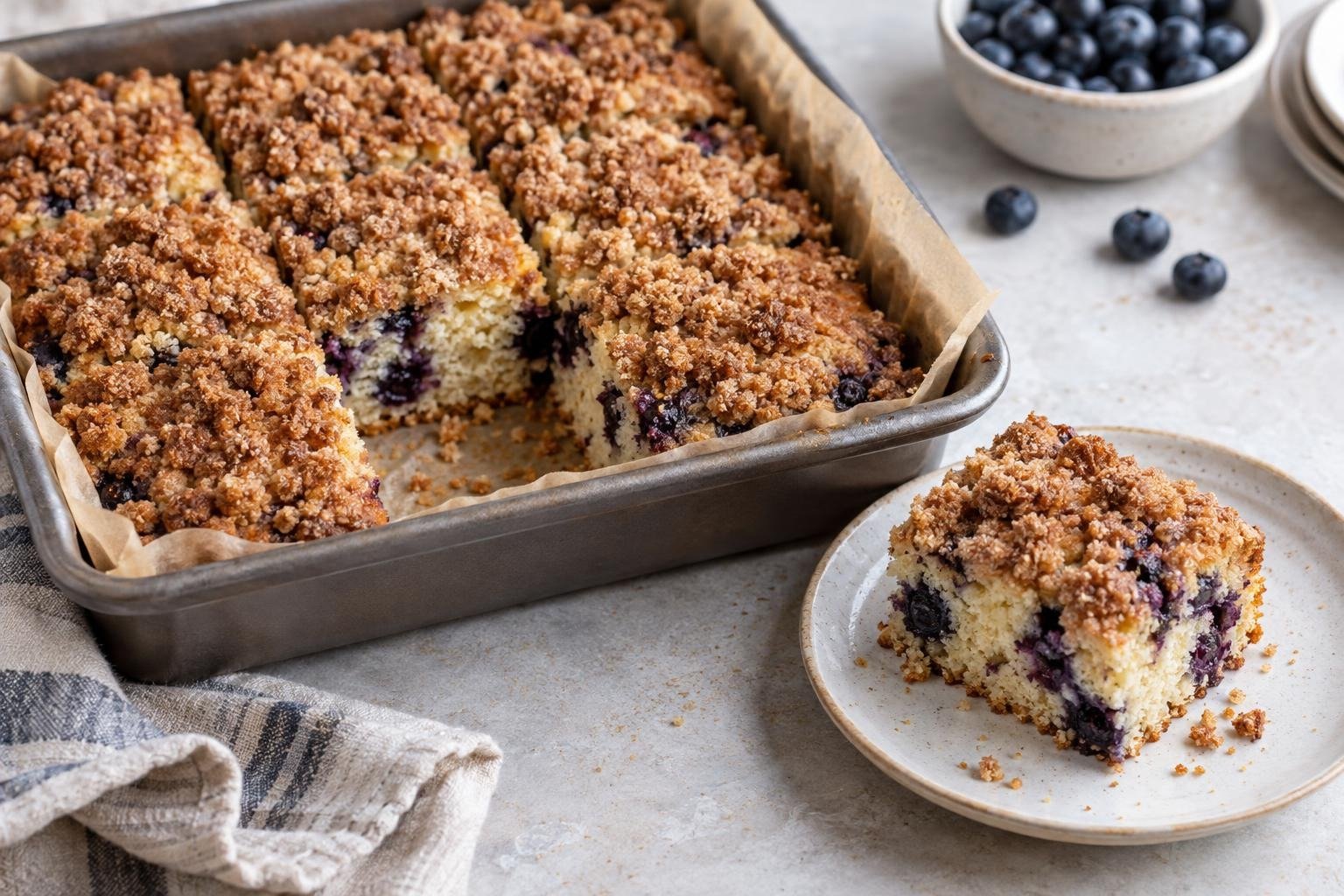
A crisp, craggy cinnamon topping gives way to juicy blueberries and a soft, buttery crumb in this buttermilk blueberry coffee cake. The tangy buttermilk keeps the sweetness balanced, while brown sugar in the streusel creates caramel notes and clusters that remain distinct from the tender cake beneath them.
I build the batter by creaming softened butter with sugar until visibly aerated, then alternate the dry ingredients with buttermilk to control gluten development. The batter should be thick enough to suspend the berries without becoming stiff. I chill the streusel while mixing the cake, use a parchment-lined 9-inch square pan, and rely on a golden center, springy surface, and moist crumbs rather than wet batter to confirm doneness.
Why This Blueberry Cake Frickin’ Works
- Creaming room-temperature butter and granulated sugar traps small air pockets, giving the coffee cake lift without making its crumb coarse or fragile.
- Buttermilk contributes moisture and acidity, while baking powder and baking soda provide balanced leavening and prevent the rich batter from feeling heavy.
- A thick batter holds the blueberries in suspension, limiting the soggy berry layer that can develop when fruit sinks to the bottom of a thinner cake.
- Melted butter hydrates the streusel evenly, and chilling the formed clusters helps the topping remain craggy instead of dissolving into the cake.
- Cooling the cake fully in its pan allows the buttery crumb and berry juices to set, producing cleaner slices without sacrificing moisture.
Ingredient Notes for Buttermilk Blueberry Coffee Cake with a Tender Crumb
- All-purpose flour: Flour supplies the structure for both the cake and streusel. Weigh it when possible, and reserve a spoonful of the cake’s measured dry mixture for coating the blueberries rather than adding extra flour.
- Unsalted butter: Softened butter traps air in the batter during creaming. The streusel butter is melted and cooled slightly so it coats the flour evenly without making the topping greasy.
- Granulated sugar: Fine granulated sugar aerates efficiently with softened butter and sweetens the cake without adding the extra moisture that brown sugar would contribute to the batter.
- Light brown sugar: Brown sugar gives the streusel a deeper caramel flavor and enough moisture to form defined clusters. Pack it firmly if measuring by volume.
- Buttermilk: Cultured buttermilk tenderizes the crumb, adds acidity, and provides more body than regular milk. Shake it before measuring so the solids are evenly distributed.
- Blueberries: Fresh or frozen blueberries both suit this formula. Keep frozen berries frozen until folding them into the batter to reduce purple streaking and excess juice release.
- Baking powder and baking soda: This combination provides reliable lift while using the acidity of the buttermilk. Measure both level because excess leavener can produce a coarse crumb or sunken center.
- Ground cinnamon and vanilla: Cinnamon seasons the streusel without masking the berries, while vanilla rounds out the butter and buttermilk flavors in the cake.
A Few Baking Tips
- Use a light-colored metal pan for steady heat conduction. A dark pan can brown the edges and streusel before the center has finished baking, while a glass pan responds more slowly to temperature changes.
- Stop creaming after the butter and sugar become pale and aerated. If the butter begins looking shiny or greasy, it has become too warm and will hold less air in the batter.
- Mix only until the final flour streaks disappear. Continued beating after the flour is hydrated develops gluten and can turn the intended tender crumb springy or tunneled.
- Keep frozen blueberries in the freezer until the moment they are coated and folded in. Thawing releases juice that can loosen the batter and create heavy purple patches.
- Check the center rather than relying only on browned edges. Insert the skewer away from visible berries because puncturing a berry can resemble raw batter and lead to unnecessary overbaking.
Ingredients for Buttermilk Blueberry Coffee Cake
- 120 g all-purpose flour (1 cup, for the streusel)
- 100 g light brown sugar (1/2 cup, firmly packed)
- 1 1/2 tsp ground cinnamon (for the streusel)
- 1/4 tsp fine sea salt (for the streusel)
- 85 g unsalted butter (6 tbsp, melted and cooled for 5 minutes)
- 250 g all-purpose flour (2 cups, spooned and leveled if not weighed)
- 2 tsp baking powder (level)
- 1/2 tsp baking soda (level)
- 1/2 tsp fine sea salt (for the cake batter)
- 113 g unsalted butter (1/2 cup, softened to about 18 to 21°C)
- 180 g granulated sugar (about 3/4 cup plus 2 tbsp)
- 2 large eggs (at room temperature)
- 2 tsp pure vanilla extract (for the cake batter)
- 180 ml cultured buttermilk (3/4 cup, shaken and at room temperature)
- 250 g blueberries (about 1 1/2 cups, fresh or frozen and not thawed)
How to Make Buttermilk Blueberry Coffee Cake
- STEP 1). Prepare the oven, pan, and ingredients Position a rack in the center of the oven and heat it to 350°F (177°C). Lightly grease a 9-inch square metal pan, then line the bottom and two opposite sides with parchment to form a sling. Set the pan aside. Bring the batter butter, eggs, and buttermilk to room temperature so the mixture emulsifies smoothly. If using fresh blueberries, rinse them only if needed and dry them thoroughly before measuring.
- STEP 2). Form and chill the streusel clusters In a medium bowl, whisk the streusel flour, brown sugar, cinnamon, and salt until no compact sugar lumps remain. Pour in the melted butter and stir with a fork until all dry patches disappear. Squeeze portions between your fingers to create clusters ranging from pea-sized crumbs to pieces about 1/2 inch wide. Refrigerate the bowl while preparing the batter so the butter firms and the topping stays distinct during baking.
- STEP 3). Combine the cake’s dry ingredients and coat the berries In a clean medium bowl, whisk the cake flour, baking powder, baking soda, and salt for about 30 seconds to distribute the leaveners. Transfer 1 tablespoon of this measured mixture to a separate small bowl. Add the blueberries and toss gently until they have a thin, even coating. This light flour coating helps absorb surface moisture and makes it easier to distribute the fruit without crushing it.
- STEP 4). Cream the butter and sugar, then add the eggs Place the softened butter and granulated sugar in the bowl of a stand mixer fitted with the paddle, or use a large bowl and hand mixer. Beat on medium speed for 3 minutes, scraping the bowl halfway through, until the mixture looks pale, fluffy, and increased in volume. Add the eggs one at a time, beating for about 30 seconds after each addition. Mix in the vanilla, then scrape the bowl and paddle thoroughly.
- STEP 5). Alternate the dry ingredients with the buttermilk With the mixer on low, add one-third of the remaining dry mixture and mix just until mostly incorporated. Add half the buttermilk in a slow stream, followed by another third of the dry mixture, the remaining buttermilk, and the final dry ingredients. Stop while a few flour streaks remain. Fold with a flexible spatula until the batter is smooth and thick, then gently fold in the coated blueberries without crushing them or overworking the flour.
- STEP 6). Assemble and bake until the center is set Spread the batter evenly in the prepared pan, working it into the corners with an offset spatula. Scatter the chilled streusel over the surface, keeping some larger clusters intact and covering the batter without pressing down. Bake for 45 to 52 minutes, rotating the pan once after 35 minutes. The cake is done when the center is golden and springs back lightly, and a skewer inserted away from a berry comes out with moist crumbs but no wet batter.
- STEP 7). Cool completely before lifting and slicing Transfer the pan to a wire rack and cool the cake in the pan for 60 minutes. Run a thin knife along the two unlined edges, then use the parchment sling to lift the cake carefully onto the rack. Let it cool for at least 30 minutes more before cutting into 12 pieces. This cooling period allows the crumb and blueberry juices to set while preserving the contrast between the soft cake and crisp topping.
Storage and Freezing
- Storage: Keep the fully cooled coffee cake in an airtight container at room temperature for up to 2 days. Place parchment between stacked slices to protect the streusel.
- Refrigeration: Refrigerate airtight for up to 5 days if the room is warm. Let individual slices stand at room temperature for 20 to 30 minutes before serving.
- Freezing: Wrap individual cooled slices in plastic wrap, place them in a freezer-safe container, and freeze for up to 2 months.
- Thawing: Unwrap frozen slices and thaw them on a covered plate at room temperature for 1 to 2 hours, which prevents condensation from softening the topping.
- Serving: Serve at room temperature, or warm an unfrosted slice in a 300°F (149°C) oven for 6 to 8 minutes to refresh the crumb and streusel.
Frequently Asked Questions
Why does my buttermilk blueberry coffee cake turn out dense?
Dense coffee cake commonly results from butter that was too cold to aerate, overmixed flour, or expired leaveners. The creamed butter and sugar should look pale and fluffy before the eggs are added.
Once the flour and buttermilk enter the bowl, use low speed and stop while a few flour streaks remain. Finish by hand so the thick batter retains its trapped air and does not develop excess gluten.
How do you keep buttermilk blueberry coffee cake moist?
Buttermilk, butter, eggs, and blueberries provide sufficient moisture when the cake is baked only until the center is set. A skewer should show moist crumbs, but it must not carry shiny, wet batter.
Cool the cake before slicing so steam remains within the crumb rather than escaping through a cut surface. Once cool, store it airtight because exposed streusel cakes lose moisture quickly through their large top surface.
What is the difference between coffee cake crumb and streusel topping?
The cake crumb is the soft interior structure created by flour, eggs, butter, buttermilk, and leavening. It should feel tender and cohesive, with small air cells that support the blueberries.
Streusel is a separate flour, sugar, butter, and cinnamon mixture scattered over the batter. Forming clusters and chilling them before baking produces a crisp, craggy topping instead of a sugary layer that melts into the cake.
Should frozen blueberries be thawed before adding them to coffee cake?
Frozen blueberries should remain frozen until they are coated with the reserved dry mixture and folded into the batter. Thawing breaks down the fruit and releases juice that can discolor and loosen the batter.
Fold them in with only a few broad strokes. The cake may need the upper end of the baking range because frozen fruit lowers the batter temperature, so confirm doneness in the center rather than adding a fixed amount of time.
Can you freeze buttermilk blueberry coffee cake?
Individual slices freeze more evenly and thaw faster than a whole cake. Cool the coffee cake completely, wrap each slice snugly, and place the wrapped portions in a rigid freezer-safe container for up to 2 months.
Thaw slices unwrapped but covered so condensation does not collect against the streusel. For a crisper topping, warm thawed portions in a 300°F (149°C) oven for 6 to 8 minutes and let them stand briefly before serving.
More Ridiculously Delicious Cakes
- Brown Butter Cinnamon Coffee Cake with Soft, Tender Crumb
- Strawberry Rhubarb Coffee Cake with Soft, Tender Crumb
- Maple Pecan Coffee Cake with Soft, Tender Crumb
- Cranberry Orange Coffee Cake with Soft, Tender Crumb
- Lemon Poppy Seed Coffee Cake with Soft, Tender Crumb
Buttermilk Blueberry Coffee Cake with a Tender Crumb
Ingredients
Equipment
Method
- Position a rack in the center of the oven and heat it to 350°F (177°C). Lightly grease a 9-inch square metal pan, then line the bottom and two opposite sides with parchment to form a sling. Set the pan aside. Bring the batter butter, eggs, and buttermilk to room temperature so the mixture emulsifies smoothly. If using fresh blueberries, rinse them only if needed and dry them thoroughly before measuring.
- In a medium bowl, whisk the streusel flour, brown sugar, cinnamon, and salt until no compact sugar lumps remain. Pour in the melted butter and stir with a fork until all dry patches disappear. Squeeze portions between your fingers to create clusters ranging from pea-sized crumbs to pieces about 1/2 inch wide. Refrigerate the bowl while preparing the batter so the butter firms and the topping stays distinct during baking.
- In a clean medium bowl, whisk the cake flour, baking powder, baking soda, and salt for about 30 seconds to distribute the leaveners. Transfer 1 tablespoon of this measured mixture to a separate small bowl. Add the blueberries and toss gently until they have a thin, even coating. This light flour coating helps absorb surface moisture and makes it easier to distribute the fruit without crushing it.
- Place the softened butter and granulated sugar in the bowl of a stand mixer fitted with the paddle, or use a large bowl and hand mixer. Beat on medium speed for 3 minutes, scraping the bowl halfway through, until the mixture looks pale, fluffy, and increased in volume. Add the eggs one at a time, beating for about 30 seconds after each addition. Mix in the vanilla, then scrape the bowl and paddle thoroughly.
- With the mixer on low, add one-third of the remaining dry mixture and mix just until mostly incorporated. Add half the buttermilk in a slow stream, followed by another third of the dry mixture, the remaining buttermilk, and the final dry ingredients. Stop while a few flour streaks remain. Fold with a flexible spatula until the batter is smooth and thick, then gently fold in the coated blueberries without crushing them or overworking the flour.
- Spread the batter evenly in the prepared pan, working it into the corners with an offset spatula. Scatter the chilled streusel over the surface, keeping some larger clusters intact and covering the batter without pressing down. Bake for 45 to 52 minutes, rotating the pan once after 35 minutes. The cake is done when the center is golden and springs back lightly, and a skewer inserted away from a berry comes out with moist crumbs but no wet batter.
- Transfer the pan to a wire rack and cool the cake in the pan for 60 minutes. Run a thin knife along the two unlined edges, then use the parchment sling to lift the cake carefully onto the rack. Let it cool for at least 30 minutes more before cutting into 12 pieces. This cooling period allows the crumb and blueberry juices to set while preserving the contrast between the soft cake and crisp topping.
Notes
- Use a light-colored metal pan for steady heat conduction. A dark pan can brown the edges and streusel before the center has finished baking, while a glass pan responds more slowly to temperature changes.
- Stop creaming after the butter and sugar become pale and aerated. If the butter begins looking shiny or greasy, it has become too warm and will hold less air in the batter.
- Mix only until the final flour streaks disappear. Continued beating after the flour is hydrated develops gluten and can turn the intended tender crumb springy or tunneled.
- Keep frozen blueberries in the freezer until the moment they are coated and folded in. Thawing releases juice that can loosen the batter and create heavy purple patches.
- Check the center rather than relying only on browned edges. Insert the skewer away from visible berries because puncturing a berry can resemble raw batter and lead to unnecessary overbaking.



