Table of Contents
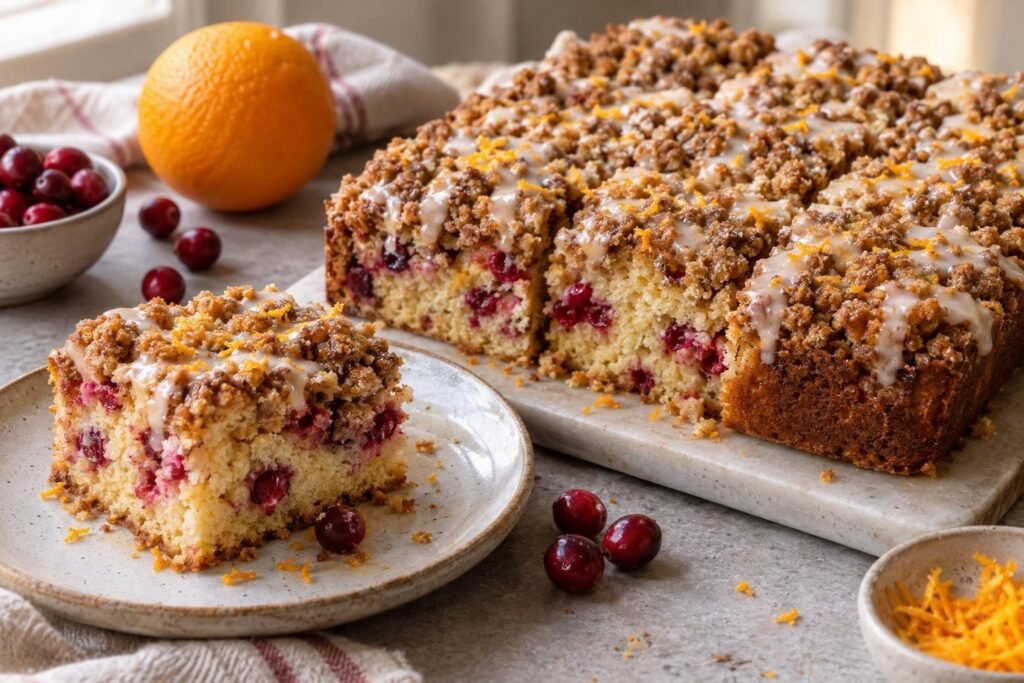
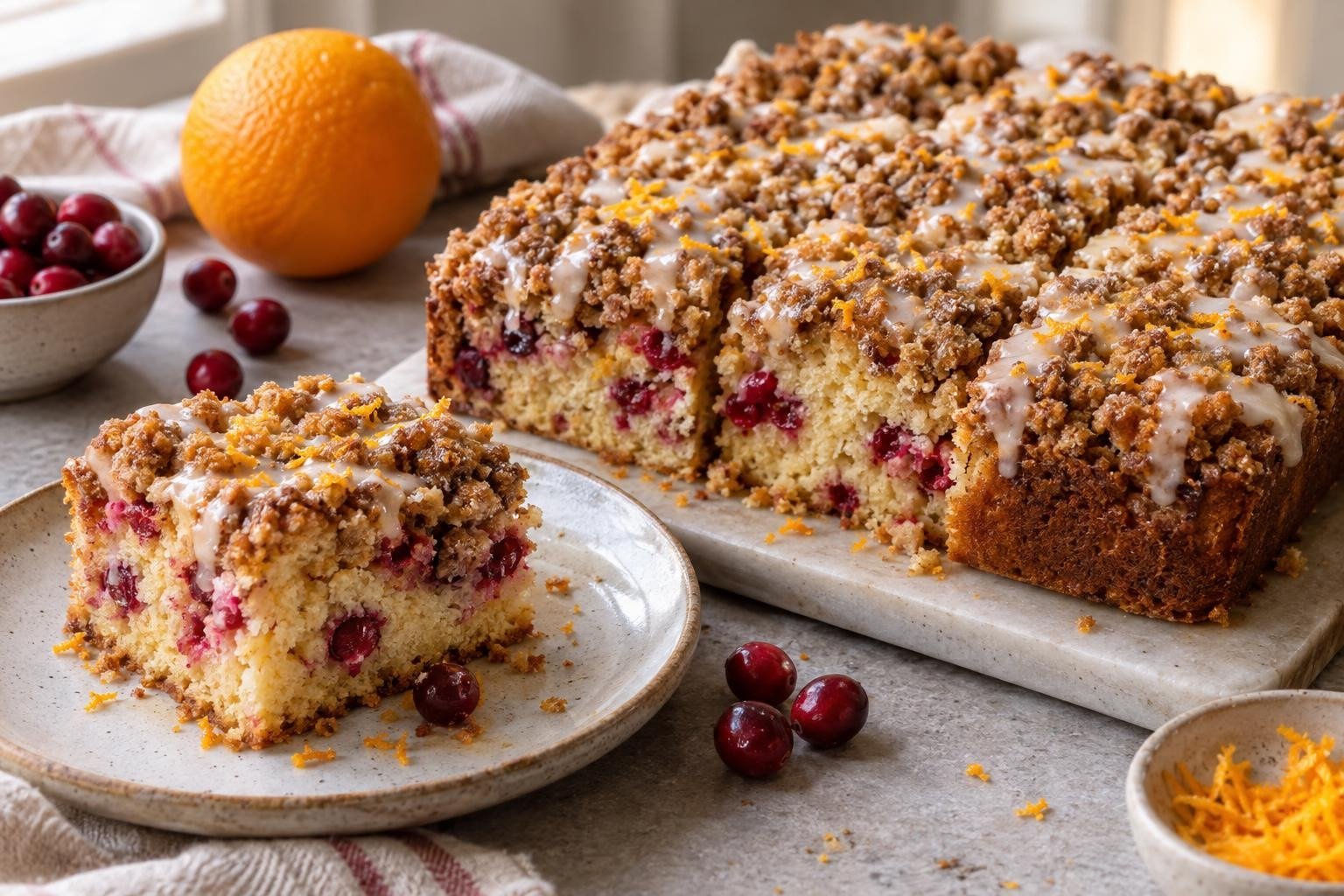
Buttery cinnamon crumbs, fragrant orange zest, and pockets of tart cranberry give this cranberry orange coffee cake plenty of contrast without overwhelming its soft, tender center. Sour cream keeps the crumb rich and moist, while fresh orange juice brightens the berries and balances the brown sugar streusel. A thin orange glaze finishes the fully cooled cake with just enough sweetness for breakfast, brunch, or a holiday dessert table.
I build the batter by creaming softened butter with sugar and zest, which releases the zest’s aromatic oils while incorporating small air bubbles for lift. Alternating the dry ingredients with the sour cream mixture limits gluten development and keeps the batter thick enough to suspend the cranberries. Watch the center rather than relying only on the clock: it should spring back gently, and a tester should show moist crumbs rather than glossy, wet batter.
Why This Coffee Cake Turns Out So Good
- Full-fat sour cream supplies fat and moisture while its acidity works with the baking soda, producing a tender crumb with balanced lift.
- Rubbing orange zest into the granulated sugar releases aromatic citrus oils and distributes them throughout the batter instead of concentrating them in isolated flecks.
- Coating the cranberries with a small, separately measured portion of flour absorbs surface moisture and helps prevent the fruit from collecting at the bottom.
- A thick batter supports the cranberries and the generous streusel layer, while alternating wet and dry additions prevents unnecessary gluten development.
- Cooling the cake completely before glazing keeps the orange icing visible on top instead of allowing it to melt into the warm streusel.
Ingredient Notes for Cranberry Orange Coffee Cake with Soft, Tender Crumb
- Fresh or frozen cranberries: Their acidity balances the sweet batter and streusel. Use frozen berries directly from the freezer because thawing releases juice that can streak and loosen the batter.
- Orange zest and juice: Zest provides concentrated citrus aroma, while juice contributes acidity and flavor. Zest the orange before squeezing it, removing only the orange surface rather than the bitter white pith.
- All-purpose flour: Its moderate protein level gives the cake enough structure to hold the fruit and topping. The flour for coating the cranberries is measured separately so the main batter retains the intended balance.
- Full-fat sour cream: Sour cream contributes moisture, fat, and acidity without making the batter runny. Full-fat plain Greek yogurt may be used at the same weight, although its tang can be slightly more pronounced.
- Unsalted butter: Softened butter traps air during creaming for the cake, while melted butter binds the streusel into distinct clusters. Unsalted butter keeps the overall seasoning under control.
- Brown and confectioners’ sugars: Brown sugar gives the streusel a caramel note and helps it clump. Confectioners’ sugar dissolves quickly into a smooth glaze without requiring heat.
Expert Baking Tips
- Use a light-colored metal pan for steady heat transfer. A dark pan can brown the bottom and edges before the cranberry-rich center finishes baking.
- Cream butter that is pliable but still cool. Greasy or partially melted butter cannot retain the fine air bubbles needed for an even, tender crumb.
- Stop mechanical mixing as soon as the last flour addition is almost incorporated. Finish with a spatula so the fruit is not crushed and the batter does not become tough.
- Test the cake in two central spots because hitting a cranberry can make the tester look wet. Properly baked crumb appears moist and clings in small pieces, while raw batter looks shiny and pasty.
- Wait until the cake is completely cool before glazing or slicing. Warm streusel is fragile, warm crumb compresses easily, and the glaze will disappear into the surface.
Ingredients for Cranberry Orange Coffee Cake
- 120 g all-purpose flour (For the cinnamon streusel)
- 100 g packed light brown sugar (For the cinnamon streusel)
- 1 tsp ground cinnamon (For the cinnamon streusel)
- 1/4 tsp fine salt (For the cinnamon streusel)
- 85 g unsalted butter (Melted and cooled slightly, for the cinnamon streusel)
- 240 g all-purpose flour (For the cake batter)
- 10 g all-purpose flour (Reserved for coating the cranberries)
- 2 tsp baking powder (Level the measuring spoon)
- 1/2 tsp baking soda (Works with the acidity in the sour cream and orange juice)
- 3/4 tsp fine salt (For the cake batter)
- 180 g granulated sugar (For the cake batter)
- 2 tbsp finely grated orange zest (From about 2 medium oranges, with no white pith)
- 113 g unsalted butter (Softened to about 65°F so it yields when pressed but remains cool)
- 2 large eggs (At room temperature)
- 2 tsp pure vanilla extract (For rounding out the citrus flavor)
- 180 g full-fat sour cream (At room temperature)
- 60 ml fresh orange juice (For the cake batter)
- 200 g fresh or frozen cranberries (Keep frozen cranberries frozen until mixing)
- 90 g confectioners’ sugar (Sifted, for the glaze)
- 23 ml fresh orange juice (For the glaze)
How to Make Cranberry Orange Coffee Cake
- STEP 1). Prepare the oven, pan, and ingredients Position a rack in the center of the oven and heat it to 350°F. Lightly grease a 9-inch square light-colored metal pan, then line it with parchment so two sides overhang as handles. Set the pan on a baking sheet if its base is very thin. Bring the eggs and sour cream to room temperature, melt the streusel butter, and keep frozen cranberries in the freezer until needed so they do not release juice prematurely.
- STEP 2). Make the cinnamon streusel Whisk 120 g flour, the brown sugar, cinnamon, and 1/4 teaspoon salt in a medium bowl, breaking up any firm sugar lumps. Pour in the 85 g melted butter and stir with a fork until no dry flour remains. Squeeze portions between your fingers to create a mixture of small crumbs and larger clusters. Refrigerate the streusel while mixing the batter so the butter firms slightly and the clusters remain distinct during baking.
- STEP 3). Combine the dry ingredients and coat the cranberries In a medium bowl, whisk the 240 g flour, baking powder, baking soda, and 3/4 teaspoon salt for about 30 seconds to distribute the leaveners evenly. Place the cranberries in a separate bowl and toss them with the reserved 10 g flour until their surfaces are lightly coated. Return frozen berries to the freezer while finishing the batter. This separate coating controls surface moisture without taking flour away from the cake’s structure.
- STEP 4). Cream the butter, orange sugar, and eggs Place the granulated sugar and orange zest in the mixer bowl and rub them together with your fingertips until the sugar feels damp and smells strongly of citrus. Add the softened 113 g butter and beat with the paddle on medium speed for 3 minutes, scraping once, until pale and fluffy. Beat in the eggs one at a time for about 30 seconds each, then mix in the vanilla. The mixture should look creamy and emulsified, not oily.
- STEP 5). Alternate the dry and sour cream mixtures Stir the sour cream and 60 ml orange juice together in a small bowl; a slightly uneven appearance is normal. With the mixer on low, add one-third of the flour mixture, followed by half the sour cream mixture. Repeat, then finish with the remaining flour. Stop when only a few flour streaks remain. Fold with a spatula from the bottom of the bowl until the batter is thick and uniform, then gently fold in the flour-coated cranberries.
- STEP 6). Assemble and bake the coffee cake Spread the batter evenly in the prepared pan, pushing it into the corners without compressing it. Scatter the chilled streusel across the surface, separating oversized pieces but retaining a mixture of cluster sizes. Bake at 350°F for 48 to 55 minutes, rotating the pan after 35 minutes. The top should be golden, the center should spring back lightly, and a tester inserted away from a cranberry should emerge with moist crumbs but no glossy batter.
- STEP 7). Cool, glaze, and slice Cool the cake in its pan on a wire rack for 20 minutes. Run a thin knife along the unlined edges, use the parchment handles to lift the cake out, and cool it directly on the rack for at least 70 minutes. Whisk the sifted confectioners’ sugar with 23 ml orange juice until smooth and thick but pourable, then drizzle it over the fully cooled cake. Let the glaze set for 15 minutes before cutting into 12 pieces with a serrated knife.
Storage and Freezing
- Storage: Keep the cooled, glazed coffee cake in an airtight container at room temperature for up to 2 days. For longer storage, refrigerate it for up to 5 days and keep the cut edges covered to limit moisture loss.
- Freezing: Freeze unglazed individual slices on a parchment-lined tray until firm, then wrap them tightly and place them in a freezer-safe container for up to 2 months.
- Thawing: Unwrap frozen slices and thaw them at room temperature for 1 to 2 hours. Add glaze only after the surface is fully thawed and dry.
- Serving: Serve at room temperature for the softest crumb. Refrigerated slices may be warmed without glaze in a 300°F oven for 8 to 10 minutes.
Frequently Asked Questions
Should I use fresh or frozen cranberries in cranberry orange coffee cake?
Fresh and frozen cranberries both work in this formula because the thick sour cream batter can support them. Keep frozen cranberries frozen until the moment they are folded into the batter; thawed fruit releases excess juice and can create gummy streaks.
Toss either type with the reserved 10 g flour. The coating manages surface moisture and improves distribution, although a few berries may still settle slightly as they soften.
How do you keep cranberry orange coffee cake moist?
Full-fat sour cream, properly softened butter, and a relatively thick batter supply moisture while preserving enough structure to hold the berries. Weighing the flour prevents an accidental excess, which is one of the most common causes of a dry coffee cake.
Remove the cake when the center springs back and the tester carries moist crumbs rather than wet batter. Overbaking drives out moisture, so begin checking at 48 minutes and cover cut surfaces during storage.
Why did my cranberries sink to the bottom of the cake?
Cranberries can sink when the batter is too loose, the berries are wet from thawing, or the butter and sugar were under-creamed. Measure the orange juice carefully and keep frozen berries frozen so they do not dilute the batter.
Coat the fruit with the separately measured flour and fold it in only after the batter is complete. Gentle folding preserves the batter’s air and avoids crushing the berries, both of which help maintain suspension.
Can I freeze cranberry orange coffee cake?
Freezing works best before the orange glaze is added because thawed glaze may become sticky or soak unevenly into the streusel. Freeze individual slices until firm, wrap each one securely, and store them in an airtight freezer container for up to 2 months.
Thaw unwrapped slices at room temperature so condensation does not collect against the crumb. Once thawed and dry, drizzle with freshly mixed orange glaze or serve the slices plain.
What ingredient substitutions work in this cranberry orange coffee cake recipe?
Full-fat plain Greek yogurt can replace the sour cream at the same 180 g weight. It provides similar acidity and protein, although the finished cake may taste slightly tangier. Fresh and frozen cranberries are interchangeable when frozen fruit is added without thawing.
Avoid replacing the butter with liquid oil in this formula because the creaming method depends on solid fat for aeration. Bottled orange juice also lacks the fresh zest that supplies most of the cake’s citrus aroma.
More Ridiculously Delicious Cakes
- Maple Pecan Coffee Cake with Soft, Tender Crumb
- Cinnamon Streusel Coffee Cake with a Soft Sour Cream Crumb
- Chocolate Sour Cream Bundt Cake with a Moist Crumb
- Strawberry Layer Cake with Soft Berry-Flavored Layers
- Coconut Layer Cake with Soft, Tender Crumb
Cranberry Orange Coffee Cake with Soft, Tender Crumb
Ingredients
Equipment
Method
- Position a rack in the center of the oven and heat it to 350°F. Lightly grease a 9-inch square light-colored metal pan, then line it with parchment so two sides overhang as handles. Set the pan on a baking sheet if its base is very thin. Bring the eggs and sour cream to room temperature, melt the streusel butter, and keep frozen cranberries in the freezer until needed so they do not release juice prematurely.
- Whisk 120 g flour, the brown sugar, cinnamon, and 1/4 teaspoon salt in a medium bowl, breaking up any firm sugar lumps. Pour in the 85 g melted butter and stir with a fork until no dry flour remains. Squeeze portions between your fingers to create a mixture of small crumbs and larger clusters. Refrigerate the streusel while mixing the batter so the butter firms slightly and the clusters remain distinct during baking.
- In a medium bowl, whisk the 240 g flour, baking powder, baking soda, and 3/4 teaspoon salt for about 30 seconds to distribute the leaveners evenly. Place the cranberries in a separate bowl and toss them with the reserved 10 g flour until their surfaces are lightly coated. Return frozen berries to the freezer while finishing the batter. This separate coating controls surface moisture without taking flour away from the cake’s structure.
- Place the granulated sugar and orange zest in the mixer bowl and rub them together with your fingertips until the sugar feels damp and smells strongly of citrus. Add the softened 113 g butter and beat with the paddle on medium speed for 3 minutes, scraping once, until pale and fluffy. Beat in the eggs one at a time for about 30 seconds each, then mix in the vanilla. The mixture should look creamy and emulsified, not oily.
- Stir the sour cream and 60 ml orange juice together in a small bowl; a slightly uneven appearance is normal. With the mixer on low, add one-third of the flour mixture, followed by half the sour cream mixture. Repeat, then finish with the remaining flour. Stop when only a few flour streaks remain. Fold with a spatula from the bottom of the bowl until the batter is thick and uniform, then gently fold in the flour-coated cranberries.
- Spread the batter evenly in the prepared pan, pushing it into the corners without compressing it. Scatter the chilled streusel across the surface, separating oversized pieces but retaining a mixture of cluster sizes. Bake at 350°F for 48 to 55 minutes, rotating the pan after 35 minutes. The top should be golden, the center should spring back lightly, and a tester inserted away from a cranberry should emerge with moist crumbs but no glossy batter.
- Cool the cake in its pan on a wire rack for 20 minutes. Run a thin knife along the unlined edges, use the parchment handles to lift the cake out, and cool it directly on the rack for at least 70 minutes. Whisk the sifted confectioners’ sugar with 23 ml orange juice until smooth and thick but pourable, then drizzle it over the fully cooled cake. Let the glaze set for 15 minutes before cutting into 12 pieces with a serrated knife.
Notes
- Use a light-colored metal pan for steady heat transfer. A dark pan can brown the bottom and edges before the cranberry-rich center finishes baking.
- Cream butter that is pliable but still cool. Greasy or partially melted butter cannot retain the fine air bubbles needed for an even, tender crumb.
- Stop mechanical mixing as soon as the last flour addition is almost incorporated. Finish with a spatula so the fruit is not crushed and the batter does not become tough.
- Test the cake in two central spots because hitting a cranberry can make the tester look wet. Properly baked crumb appears moist and clings in small pieces, while raw batter looks shiny and pasty.
- Wait until the cake is completely cool before glazing or slicing. Warm streusel is fragile, warm crumb compresses easily, and the glaze will disappear into the surface.