Table of Contents
Fresh lemon aroma, sparkling sugar, lightly golden edges, and soft, chewy centers give these small-batch lemon cookies plenty of character without producing a crowded cookie tin. Lemon zest supplies the concentrated citrus flavor, while a measured spoonful of juice adds brightness without turning the dough loose or cakey. Each cookie is large enough to feel like a proper dessert, and the recipe makes eight.
I rub the zest into the sugar before mixing because friction releases the peel’s aromatic oils exactly where they can flavor the dough. A yolk and brown sugar support chewiness, cornstarch keeps the centers tender, and a 45-minute chill controls spreading. Watch the cookies rather than waiting for deep browning: the edges should look set, but the pale centers should remain slightly puffed when the pan leaves the oven.
Why You’ll Love these Ridiculously Delicious Lemon Cookies
- Rubbing fresh lemon zest into the granulated sugar releases citrus oils and distributes them evenly through the fat-based dough.
- Using one egg yolk instead of a whole egg adds richness and binding without the extra water that could make this small batch spread too thin.
- Light brown sugar retains moisture and promotes chewiness, while granulated sugar supports lightly crisp edges and a delicate exterior crust.
- Cornstarch reduces the effective gluten strength of the flour, helping the centers stay tender without making the unbaked dough fragile.
- Chilling eight evenly portioned dough balls firms the butter, giving the edges time to set before the cookies spread too far.
Ingredient Notes for Small-Batch Lemon Cookies with Soft, Chewy Centers
- Fresh lemon: Finely grate only the yellow peel because the white pith tastes bitter. Zest the lemon before juicing it, and measure the juice so excess liquid does not loosen the dough.
- Unsalted butter: Butter provides flavor, spread, and tenderness. It should be pliable but cool, around 18 to 21°C, so it can hold air during mixing rather than becoming greasy.
- Granulated and light brown sugars: Granulated sugar goes into both the dough and the exterior coating. Brown sugar contributes moisture and chewiness, so pack it into the measurement if you are not weighing it.
- Egg yolk: One large yolk supplies fat, protein, and emulsifiers that bind the small quantity of dough. Bring it to room temperature so it blends smoothly with the creamed butter.
- All-purpose flour and cornstarch: Flour gives the cookies structure, while cornstarch softens that structure. Weigh both when possible, since excess flour is a common reason lemon cookies stay thick or turn dry.
- Baking soda and salt: Baking soda encourages controlled spread and browning while reacting with the lemon’s acidity. Fine salt balances the sugar and sharpens the fresh citrus flavor.
Baking Tips Worth Knowing
- Grate the zest directly over the measured sugar so the bowl catches every aromatic oil released from the lemon peel.
- If the butter looks shiny or partially melted, refrigerate it briefly before mixing. Warm butter cannot retain enough air and encourages excessive spread.
- Use a scale to make eight 48 g portions. Equal dough balls finish baking together, which matters when the centers are intentionally removed while still pale.
- Keep the dough balls covered during refrigeration. Exposed dough can develop a dry skin that prevents the cookies from spreading and cracking evenly.
- Do not judge doneness by overall browning. These cookies should have set edges and pale centers; deep golden centers indicate a firmer, less chewy result.
Ingredients for Small-Batch Lemon Cookies
- 130 g all-purpose flour (about 1 cup plus 1 tablespoon, spooned and leveled if measured by volume)
- 8 g cornstarch (1 tablespoon)
- 1/4 teaspoon baking soda (level measurement)
- 1/4 teaspoon fine salt (use half this amount if using salted butter)
- 85 g unsalted butter (6 tablespoons, softened but still cool)
- 60 g granulated sugar (for the cookie dough)
- 35 g light brown sugar (about 3 tablespoons, firmly packed)
- 2 teaspoons finely grated lemon zest (from about 1 medium lemon, yellow peel only)
- 1 large egg yolk (about 18 g, at room temperature)
- 15 g fresh lemon juice (1 tablespoon, strained)
- 1/2 teaspoon pure vanilla extract (rounds out the lemon flavor)
- 20 g granulated sugar (about 1 tablespoon plus 2 teaspoons, for coating)
How to Make Small-Batch Lemon Cookies
- STEP 1). Prepare the pan and dry ingredients Line a large rimmed baking sheet with parchment paper. In a medium bowl, whisk the all-purpose flour, cornstarch, baking soda, and fine salt for about 30 seconds, breaking up every visible lump of cornstarch. Set this mixture aside. Keep the baking sheet at room temperature for now, and confirm there is enough refrigerator space for it before mixing the dough.
- STEP 2). Release the lemon oils and cream the butter Place the 60 g granulated sugar and lemon zest in a large mixing bowl. Rub them together with your fingertips for about 30 seconds, until the sugar feels slightly damp and smells strongly of lemon. Add the softened butter and brown sugar. Beat with an electric mixer on medium speed for 2 minutes, scraping the bowl once, until creamy, cohesive, and slightly lighter but not fluffy or warm.
- STEP 3). Mix in the yolk, juice, and vanilla Add the room-temperature egg yolk and beat on medium-low speed for 30 seconds, stopping to scrape the bottom and sides of the bowl. Add the measured lemon juice and vanilla, then mix for another 20 to 30 seconds. The mixture should look smooth and creamy, although slight curdling from the acidic juice is harmless. Do not continue beating once the liquids are evenly incorporated.
- STEP 4). Form and chill the dough portions Add the dry ingredients and mix on low speed just until most flour disappears, about 20 seconds. Finish folding with a flexible spatula, scraping the bowl until no dry pockets remain; the dough should be soft but scoopable. Divide it into eight portions of about 48 g each and roll them gently into balls. Arrange them on the prepared sheet, cover without pressing the covering onto the dough, and refrigerate for 45 minutes.
- STEP 5). Heat the oven and coat the cookies During the final 20 minutes of chilling, position a rack in the center of the oven and heat it to 350°F or 175°C. Put the remaining 20 g granulated sugar in a shallow bowl. Roll each cold dough ball in the sugar, covering the surface evenly, then return it to the lined sheet. Space the portions at least 3 inches apart and leave them rounded rather than flattening them.
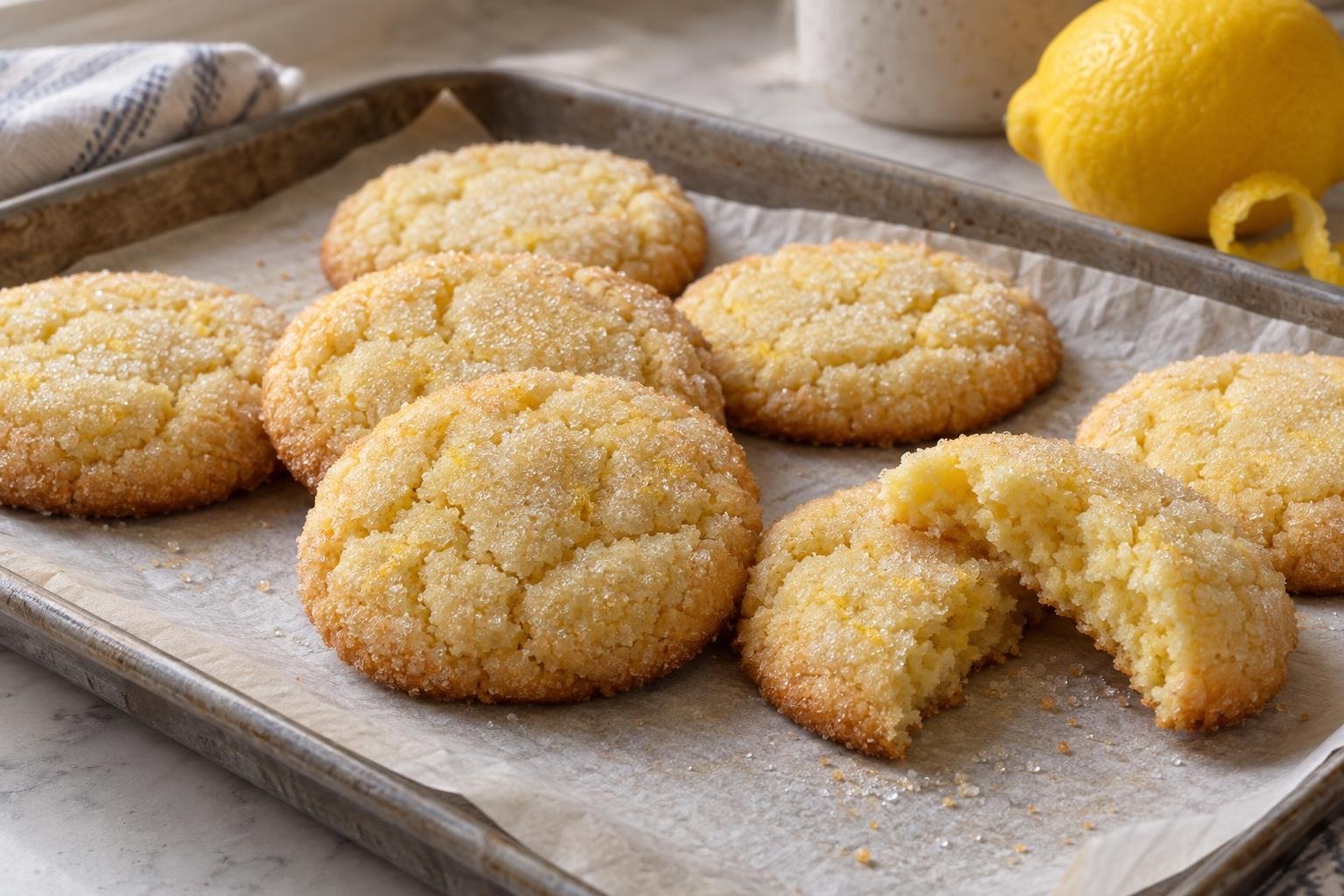
- STEP 6). Bake, set, and cool the cookies Bake the cookies on the center rack for 10 to 12 minutes, rotating the pan after 7 minutes if the oven browns unevenly. They are done when the edges are set and faintly golden, the tops have delicate cracks, and the centers remain pale and slightly puffed without glossy raw dough. Cool on the pan for 10 minutes, then transfer carefully to a wire rack and cool for at least 5 minutes before serving.
Storage and Freezing
- Room temperature: Store fully cooled cookies in an airtight container for up to 4 days. Place parchment between layers to protect the sugar crust.
- Refrigerated dough: Keep tightly covered, portioned dough balls in the refrigerator for up to 48 hours. Coat them in sugar immediately before baking.
- Freezing dough: Freeze uncoated dough balls on a lined tray until firm, then transfer them to an airtight freezer container for up to 2 months.
- Thawing: Refrigerate frozen dough balls overnight, roll them in sugar, and bake according to the recipe once they are cold but no longer frozen solid.
- Serving: Let stored cookies stand uncovered at room temperature for 15 minutes so the butter softens slightly and the lemon aroma becomes more noticeable.
Frequently Asked Questions
Why do small-batch lemon cookies spread too much?
Excessive spread usually comes from butter that was too warm, an abbreviated chilling period, or too little flour. The creamed butter should be pliable but not shiny, and the portioned dough needs the full 45-minute chill so its fat is firm when it enters the oven.
Also check the oven temperature and pan. An oven that runs cool delays edge setting, while a warm or greased baking sheet accelerates spreading. Use parchment on a cool, ungreased metal pan.
How far ahead can I prepare this lemon cookie dough?
Portioned dough can remain covered in the refrigerator for up to 48 hours. Leave off the exterior sugar until just before baking because sugar can absorb surface moisture and become syrupy during a long refrigerated rest.
For longer storage, freeze the uncoated portions until solid and seal them for up to 2 months. Thaw the portions overnight in the refrigerator, coat them with sugar, and bake while the dough is still cold.
What small-batch lemon cookies ingredient substitutions work?
Salted butter can replace unsalted butter if the added fine salt is reduced by half. Because salt levels vary among butter brands, this adjustment is less exact than using unsalted butter, but it preserves the formula’s fat and water balance.
Fresh zest should not be replaced with extra juice because additional liquid increases spreading without reproducing the peel’s concentrated aroma. This formula has not been structured for gluten-free flour, whole eggs, liquid oil, or artificial sweeteners.
Can you freeze dough for small-batch lemon cookies?
Freezing works best after the dough has been divided into eight balls but before the sugar coating is applied. Freeze the portions on a parchment-lined tray, then move the firm balls to an airtight container so they retain their shape and do not collect ice crystals.
Thaw them overnight in the refrigerator rather than on the counter. Once the dough is cold but no longer frozen solid, coat it in sugar and follow the original baking time and visual doneness cues.
How do you know when soft lemon cookies are fully baked?
Look for set, faintly golden edges, fine cracks across the surface, and pale centers that remain slightly raised. The centers should not look wet or glossy, but they will appear softer than the edges when the pan first comes out of the oven.
Leave the cookies on the hot pan for 10 minutes. Residual heat finishes setting their structure without drying the centers. If the entire cookie is deeply golden in the oven, the cooled texture will be firmer and less chewy.
More Ridiculously Delicious Cookies
- Bakery-Style Lemon Crinkle Cookies with Soft Centers
- Small Batch Chocolate Chip Cookies with Chewy Centers and Crisp Edges
- Small-Batch Soft Sugar Cookies with Soft, Chewy Centers
- Bakery-Style Soft Sugar Cookies with Soft, Chewy Centers
- Fudgy Chocolate Crinkle Cookies with Crackled Sugar Tops
Small-Batch Lemon Cookies with Soft, Chewy Centers
Ingredients
Equipment
Method
- Line a large rimmed baking sheet with parchment paper. In a medium bowl, whisk the all-purpose flour, cornstarch, baking soda, and fine salt for about 30 seconds, breaking up every visible lump of cornstarch. Set this mixture aside. Keep the baking sheet at room temperature for now, and confirm there is enough refrigerator space for it before mixing the dough.
- Place the 60 g granulated sugar and lemon zest in a large mixing bowl. Rub them together with your fingertips for about 30 seconds, until the sugar feels slightly damp and smells strongly of lemon. Add the softened butter and brown sugar. Beat with an electric mixer on medium speed for 2 minutes, scraping the bowl once, until creamy, cohesive, and slightly lighter but not fluffy or warm.
- Add the room-temperature egg yolk and beat on medium-low speed for 30 seconds, stopping to scrape the bottom and sides of the bowl. Add the measured lemon juice and vanilla, then mix for another 20 to 30 seconds. The mixture should look smooth and creamy, although slight curdling from the acidic juice is harmless. Do not continue beating once the liquids are evenly incorporated.
- Add the dry ingredients and mix on low speed just until most flour disappears, about 20 seconds. Finish folding with a flexible spatula, scraping the bowl until no dry pockets remain; the dough should be soft but scoopable. Divide it into eight portions of about 48 g each and roll them gently into balls. Arrange them on the prepared sheet, cover without pressing the covering onto the dough, and refrigerate for 45 minutes.
- During the final 20 minutes of chilling, position a rack in the center of the oven and heat it to 350°F or 175°C. Put the remaining 20 g granulated sugar in a shallow bowl. Roll each cold dough ball in the sugar, covering the surface evenly, then return it to the lined sheet. Space the portions at least 3 inches apart and leave them rounded rather than flattening them.
- Bake the cookies on the center rack for 10 to 12 minutes, rotating the pan after 7 minutes if the oven browns unevenly. They are done when the edges are set and faintly golden, the tops have delicate cracks, and the centers remain pale and slightly puffed without glossy raw dough. Cool on the pan for 10 minutes, then transfer carefully to a wire rack and cool for at least 5 minutes before serving.
Notes
- Grate the zest directly over the measured sugar so the bowl catches every aromatic oil released from the lemon peel.
- If the butter looks shiny or partially melted, refrigerate it briefly before mixing. Warm butter cannot retain enough air and encourages excessive spread.
- Use a scale to make eight 48 g portions. Equal dough balls finish baking together, which matters when the centers are intentionally removed while still pale.
- Keep the dough balls covered during refrigeration. Exposed dough can develop a dry skin that prevents the cookies from spreading and cracking evenly.
- Do not judge doneness by overall browning. These cookies should have set edges and pale centers; deep golden centers indicate a firmer, less chewy result.