
Table of Contents
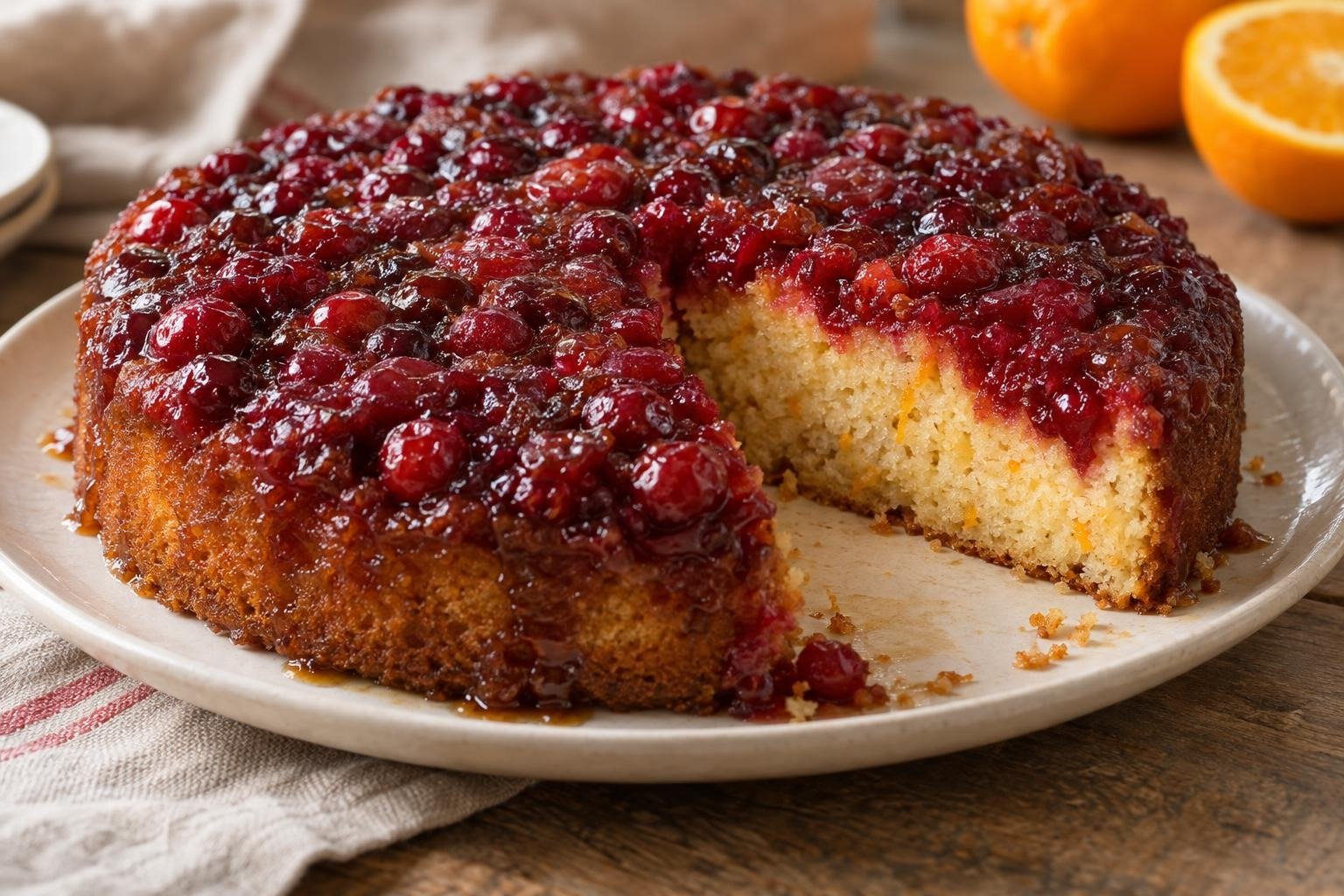
Glossy ruby cranberries, buttery brown sugar caramel, and a soft crumb scented with fresh zest give this cranberry orange upside-down cake its sharp, sweet contrast. The fruit softens but keeps enough shape to form a distinct topping, while the orange cake underneath stays plush rather than turning soggy. It is festive enough for a holiday table, but the bright citrus keeps every forkful from feeling overly rich.
I build the topping directly in a parchment-lined metal pan, arrange the cranberries evenly, and spread the batter without disturbing the fruit. Room-temperature ingredients help the butter mixture hold its emulsion, while alternating the dry and wet mixtures limits gluten development. The important finishing cue is timing: let the cake settle for 10 minutes, loosen the edge, and invert it while the caramel is still fluid enough to release cleanly.
Why This Cake Turns Out So Good
- A dense, even layer of cranberries creates complete fruit coverage without adding so much released juice that the cake crumb becomes waterlogged.
- Brown sugar and melted butter form a fluid caramel layer that coats the berries during baking and remains loose enough for a clean warm inversion.
- Fresh orange zest is creamed into the butter and sugar, where friction releases its aromatic oils and distributes citrus flavor throughout the cake.
- Sour cream supplies fat, acidity, and moisture, producing a tender crumb that supports the fruit topping without becoming fragile.
- Alternating the flour mixture with the sour cream and orange juice controls gluten development and helps the batter remain thick enough to stay above the cranberries.
Ingredient Notes for Cranberry Orange Upside-Down Cake with Bright Citrus and Caramel
- Cranberries: Fresh or frozen cranberries both work because their firm skins help them retain definition during baking. Use frozen berries directly from the freezer so thawed juice does not dissolve the caramel prematurely.
- Orange: Finely grate only the colored outer peel because the white pith tastes bitter. Zest the orange before juicing it, and rub the zest into the sugar during creaming to release its fragrant oils.
- Brown sugar: Light brown sugar gives the topping a balanced caramel flavor. Dark brown sugar may replace it in the same weight for a deeper molasses note and slightly darker finish.
- Unsalted butter: Melted butter carries the caramel topping, while softened butter traps air in the cake batter. The cake butter should yield to gentle pressure but remain cool and structured, not shiny or greasy.
- Sour cream: Full-fat sour cream contributes moisture and fat while its acidity works with the baking soda. Bring it to room temperature so it blends smoothly without chilling or splitting the creamed butter.
- All-purpose flour: This flour provides enough structure to support the juicy topping. Weigh it when possible, and stop mixing as soon as the final dry streaks disappear to avoid a tough or tunneled crumb.
A Few Baking Tips
- Use a light-colored metal pan at least 2 inches deep. Dark metal can over-brown the caramel before the center finishes, while a shallow pan leaves too little room for the rising batter.
- Keep the butter, eggs, sour cream, and orange juice near the same cool room temperature. Large temperature differences can break the butter emulsion and produce a dense or uneven crumb.
- Do not thaw frozen cranberries. Their released liquid can thin the caramel, stain the batter, and increase the chance of a damp fruit boundary.
- Spread the batter from several small deposits rather than dropping it into the center. This preserves an even cranberry layer and prevents bare caramel patches after inversion.
- Set a timer for the 10-minute pan rest. Inverting immediately can tear the cake, while waiting until completely cool allows the caramel to set and increases sticking.
Ingredients for Cranberry Orange Upside-Down Cake
- 5 g unsalted butter (softened, for greasing the pan)
- 57 g unsalted butter (cut into pieces, for the caramel topping)
- 130 g light brown sugar (packed; dark brown sugar may be used for a deeper molasses flavor)
- 300 g fresh or frozen cranberries (use frozen berries without thawing)
- 210 g all-purpose flour (weighed for accuracy)
- 6 g baking powder (about 1 1/2 teaspoons)
- 1 g baking soda (about 1/4 teaspoon)
- 3 g fine sea salt (about 1/2 teaspoon)
- 113 g unsalted butter (softened to cool room temperature)
- 170 g granulated sugar
- 12 g finely grated orange zest (from about 2 medium oranges; avoid the white pith)
- 2 large eggs (about 100 g without shells, at room temperature)
- 5 ml pure vanilla extract (about 1 teaspoon)
- 120 g full-fat sour cream (at room temperature)
- 60 ml fresh orange juice (strained and at room temperature)
How to Make Cranberry Orange Upside-Down Cake
- STEP 1). Heat the oven and prepare the cake pan Position a rack in the center of the oven and heat it to 350°F. Grease the bottom and sides of a 9 x 2-inch light-colored metal cake pan with the softened butter. Line the bottom with a parchment circle, then lightly grease the parchment. Set the pan on a rimmed baking sheet to catch any possible caramel drips. A solid cake pan is essential here because a springform pan can leak melted butter and sugar.
- STEP 2). Make the caramel and arrange the cranberries Melt the topping butter in a small saucepan over medium-low heat. Add the brown sugar and stir with a heatproof spatula for 1 to 2 minutes, just until the mixture is glossy and evenly moistened; it may look slightly grainy and should not be boiled into a hard caramel. Immediately spread it across the prepared pan. Scatter the cranberries over the sugar in a tight, even layer, filling visible gaps so the inverted surface has consistent fruit coverage.
- STEP 3). Combine the dry and wet mixtures Whisk the flour, baking powder, baking soda, and salt in a medium bowl for about 30 seconds, breaking up any compacted pockets of leavener. In a separate bowl, whisk the room-temperature sour cream and orange juice until smooth and pourable. Keeping the dry and wet components separate until mixing gives better control over gluten development and prevents the acidic liquid from activating the leaveners before the batter is ready for the oven.
- STEP 4). Cream the butter, sugar, and orange zest Place the softened cake butter, granulated sugar, and orange zest in the bowl of a stand mixer fitted with the paddle attachment. Beat on medium speed for 3 to 4 minutes, scraping the bowl and paddle halfway through. Stop when the mixture is visibly paler, slightly increased in volume, and creamy rather than greasy. This step incorporates small air cells and uses the sugar crystals to release aromatic oils from the zest, giving the cake both lift and evenly distributed orange flavor.
- STEP 5). Add the eggs and finish the batter Beat in the eggs one at a time on medium-low speed, mixing for about 30 seconds after each and scraping the bowl before adding the next. Blend in the vanilla. On low speed, add one-third of the flour mixture, half of the sour cream mixture, another third of the flour, the remaining sour cream mixture, and the remaining flour. Stop when only a few dry streaks remain, then fold with a spatula until the batter is thick, smooth, and evenly combined.
- STEP 6). Fill the pan and bake until set Spoon the batter over the cranberries in several portions so their arrangement stays intact. Use an offset spatula to spread it gently to the edge and level the top without pressing into the fruit. Bake on the rimmed sheet for 43 to 48 minutes, rotating the pan after 30 minutes. The cake is done when the center springs back lightly and a skewer inserted into the cake portion returns with moist crumbs, not glossy wet batter. Transfer the pan to a wire rack.
- STEP 7). Rest, invert, and cool before slicing Cool the cake in its pan for exactly 10 minutes so the crumb can firm while the caramel remains fluid. Run a thin knife around the side without cutting inward, place a large rimmed serving plate over the pan, and invert both together in one confident motion. Leave the pan in place for 1 minute, then lift it straight up and peel away the parchment. Reposition any attached berries with a spoon. Cool for at least 30 minutes before cutting with a clean serrated knife.
Storage and Freezing
- Storage: Cover the fully cooled cake and keep it at room temperature for up to 1 day. For longer storage, refrigerate it in an airtight container for up to 4 days.
- Freezing: Freeze individual slices in a single layer until firm, then wrap them tightly and place them in a freezer-safe container for up to 2 months.
- Thawing: Unwrap frozen slices and thaw them in a covered container in the refrigerator overnight to limit condensation on the fruit.
- Serving: Bring refrigerated cake to room temperature for 30 to 45 minutes, or warm individual slices briefly at low power in the microwave. The crumb and caramel taste softer when they are not refrigerator-cold.
Frequently Asked Questions
When should you turn out cranberry orange upside-down cake?
Turn out the cake after it has rested in the pan for 10 minutes. The crumb will have enough time to settle, but the butter and brown sugar caramel will still be warm and fluid.
Inverting sooner may cause the tender cake to split. Waiting until it is cold lets the caramel harden against the pan, which makes cranberries more likely to remain stuck.
Why does cranberry orange upside-down cake stick to the pan?
Sticking usually comes from an unlined pan, an unevenly greased edge, or an inversion performed after the caramel has cooled. Cranberry juice can also cook into exposed metal where the parchment does not sit flat.
Use a fitted parchment circle, loosen only the side with a thin knife, and invert after the 10-minute rest. If a few berries remain behind, lift them with a spoon and return them to the warm cake.
How do you know when cranberry upside-down cake is fully baked?
Look for a lightly golden top, a center that springs back under gentle pressure, and edges beginning to pull slightly from the pan. A skewer inserted into the cake portion should show moist crumbs rather than liquid batter.
Avoid judging through a cranberry because hot fruit juice will look wet even when the crumb is baked. Check two spots near the center without pushing the skewer all the way into the caramel.
What cranberry orange upside-down cake ingredient substitutions work here?
Frozen cranberries may replace fresh cranberries in the same weight, but they should go into the pan while still frozen. Dark brown sugar can replace light brown sugar for a stronger molasses flavor and darker caramel.
Fresh orange zest and juice are central to the intended flavor and acidity, so bottled juice is not an equal replacement. Full-fat sour cream also supplies specific moisture and fat, and lower-fat products can make the crumb less tender.
Can I make cranberry orange upside-down cake ahead of serving?
The cake can be baked one day before serving and kept covered at room temperature once completely cool. Leave it on its serving plate so the glossy cranberry topping does not need to be transferred again.
For a longer lead time, refrigerate it for up to four days. Bring the cake toward room temperature before serving because chilled butter firms the crumb and makes the caramel seem less supple.
More Ridiculously Delicious Cakes
- Pineapple Upside-Down Cake with Golden Caramelized Pineapple
- Pear Almond Upside-Down Cake with Toasted Almond Crumb
- Pumpkin Roll Cake with Cream Cheese Swirls
- Brown Butter Cinnamon Coffee Cake with Soft, Tender Crumb
- Cinnamon Swirl Snack Cake with a Buttery Cinnamon Ribbon
Cranberry Orange Upside-Down Cake with Bright Citrus and Caramel
Ingredients
Equipment
Method
- Position a rack in the center of the oven and heat it to 350°F. Grease the bottom and sides of a 9 x 2-inch light-colored metal cake pan with the softened butter. Line the bottom with a parchment circle, then lightly grease the parchment. Set the pan on a rimmed baking sheet to catch any possible caramel drips. A solid cake pan is essential here because a springform pan can leak melted butter and sugar.
- Melt the topping butter in a small saucepan over medium-low heat. Add the brown sugar and stir with a heatproof spatula for 1 to 2 minutes, just until the mixture is glossy and evenly moistened; it may look slightly grainy and should not be boiled into a hard caramel. Immediately spread it across the prepared pan. Scatter the cranberries over the sugar in a tight, even layer, filling visible gaps so the inverted surface has consistent fruit coverage.
- Whisk the flour, baking powder, baking soda, and salt in a medium bowl for about 30 seconds, breaking up any compacted pockets of leavener. In a separate bowl, whisk the room-temperature sour cream and orange juice until smooth and pourable. Keeping the dry and wet components separate until mixing gives better control over gluten development and prevents the acidic liquid from activating the leaveners before the batter is ready for the oven.
- Place the softened cake butter, granulated sugar, and orange zest in the bowl of a stand mixer fitted with the paddle attachment. Beat on medium speed for 3 to 4 minutes, scraping the bowl and paddle halfway through. Stop when the mixture is visibly paler, slightly increased in volume, and creamy rather than greasy. This step incorporates small air cells and uses the sugar crystals to release aromatic oils from the zest, giving the cake both lift and evenly distributed orange flavor.
- Beat in the eggs one at a time on medium-low speed, mixing for about 30 seconds after each and scraping the bowl before adding the next. Blend in the vanilla. On low speed, add one-third of the flour mixture, half of the sour cream mixture, another third of the flour, the remaining sour cream mixture, and the remaining flour. Stop when only a few dry streaks remain, then fold with a spatula until the batter is thick, smooth, and evenly combined.
- Spoon the batter over the cranberries in several portions so their arrangement stays intact. Use an offset spatula to spread it gently to the edge and level the top without pressing into the fruit. Bake on the rimmed sheet for 43 to 48 minutes, rotating the pan after 30 minutes. The cake is done when the center springs back lightly and a skewer inserted into the cake portion returns with moist crumbs, not glossy wet batter. Transfer the pan to a wire rack.
- Cool the cake in its pan for exactly 10 minutes so the crumb can firm while the caramel remains fluid. Run a thin knife around the side without cutting inward, place a large rimmed serving plate over the pan, and invert both together in one confident motion. Leave the pan in place for 1 minute, then lift it straight up and peel away the parchment. Reposition any attached berries with a spoon. Cool for at least 30 minutes before cutting with a clean serrated knife.
Notes
- Use a light-colored metal pan at least 2 inches deep. Dark metal can over-brown the caramel before the center finishes, while a shallow pan leaves too little room for the rising batter.
- Keep the butter, eggs, sour cream, and orange juice near the same cool room temperature. Large temperature differences can break the butter emulsion and produce a dense or uneven crumb.
- Do not thaw frozen cranberries. Their released liquid can thin the caramel, stain the batter, and increase the chance of a damp fruit boundary.
- Spread the batter from several small deposits rather than dropping it into the center. This preserves an even cranberry layer and prevents bare caramel patches after inversion.
- Set a timer for the 10-minute pan rest. Inverting immediately can tear the cake, while waiting until completely cool allows the caramel to set and increases sticking.