Position a rack in the center of the oven and heat it to 350°F. Grease the bottom and sides of a 9 x 2-inch light-colored metal cake pan with the softened butter. Line the bottom with a parchment circle, then lightly grease the parchment. Set the pan on a rimmed baking sheet to catch any possible caramel drips. A solid cake pan is essential here because a springform pan can leak melted butter and sugar.
Melt the topping butter in a small saucepan over medium-low heat. Add the brown sugar and stir with a heatproof spatula for 1 to 2 minutes, just until the mixture is glossy and evenly moistened; it may look slightly grainy and should not be boiled into a hard caramel. Immediately spread it across the prepared pan. Scatter the cranberries over the sugar in a tight, even layer, filling visible gaps so the inverted surface has consistent fruit coverage.
Whisk the flour, baking powder, baking soda, and salt in a medium bowl for about 30 seconds, breaking up any compacted pockets of leavener. In a separate bowl, whisk the room-temperature sour cream and orange juice until smooth and pourable. Keeping the dry and wet components separate until mixing gives better control over gluten development and prevents the acidic liquid from activating the leaveners before the batter is ready for the oven.
Place the softened cake butter, granulated sugar, and orange zest in the bowl of a stand mixer fitted with the paddle attachment. Beat on medium speed for 3 to 4 minutes, scraping the bowl and paddle halfway through. Stop when the mixture is visibly paler, slightly increased in volume, and creamy rather than greasy. This step incorporates small air cells and uses the sugar crystals to release aromatic oils from the zest, giving the cake both lift and evenly distributed orange flavor.
Beat in the eggs one at a time on medium-low speed, mixing for about 30 seconds after each and scraping the bowl before adding the next. Blend in the vanilla. On low speed, add one-third of the flour mixture, half of the sour cream mixture, another third of the flour, the remaining sour cream mixture, and the remaining flour. Stop when only a few dry streaks remain, then fold with a spatula until the batter is thick, smooth, and evenly combined.
Spoon the batter over the cranberries in several portions so their arrangement stays intact. Use an offset spatula to spread it gently to the edge and level the top without pressing into the fruit. Bake on the rimmed sheet for 43 to 48 minutes, rotating the pan after 30 minutes. The cake is done when the center springs back lightly and a skewer inserted into the cake portion returns with moist crumbs, not glossy wet batter. Transfer the pan to a wire rack.
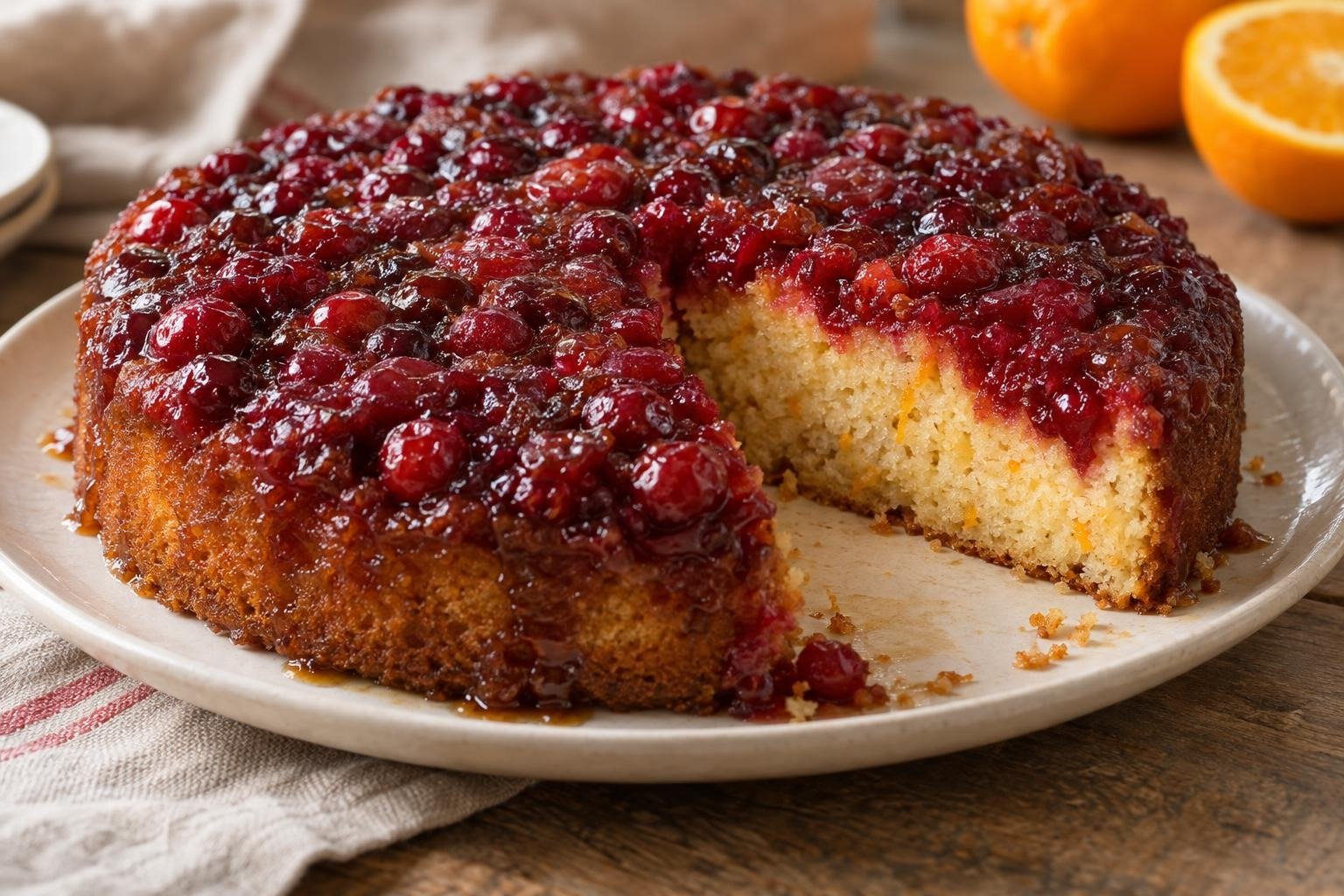
Cool the cake in its pan for exactly 10 minutes so the crumb can firm while the caramel remains fluid. Run a thin knife around the side without cutting inward, place a large rimmed serving plate over the pan, and invert both together in one confident motion. Leave the pan in place for 1 minute, then lift it straight up and peel away the parchment. Reposition any attached berries with a spoon. Cool for at least 30 minutes before cutting with a clean serrated knife.