

Table of Contents
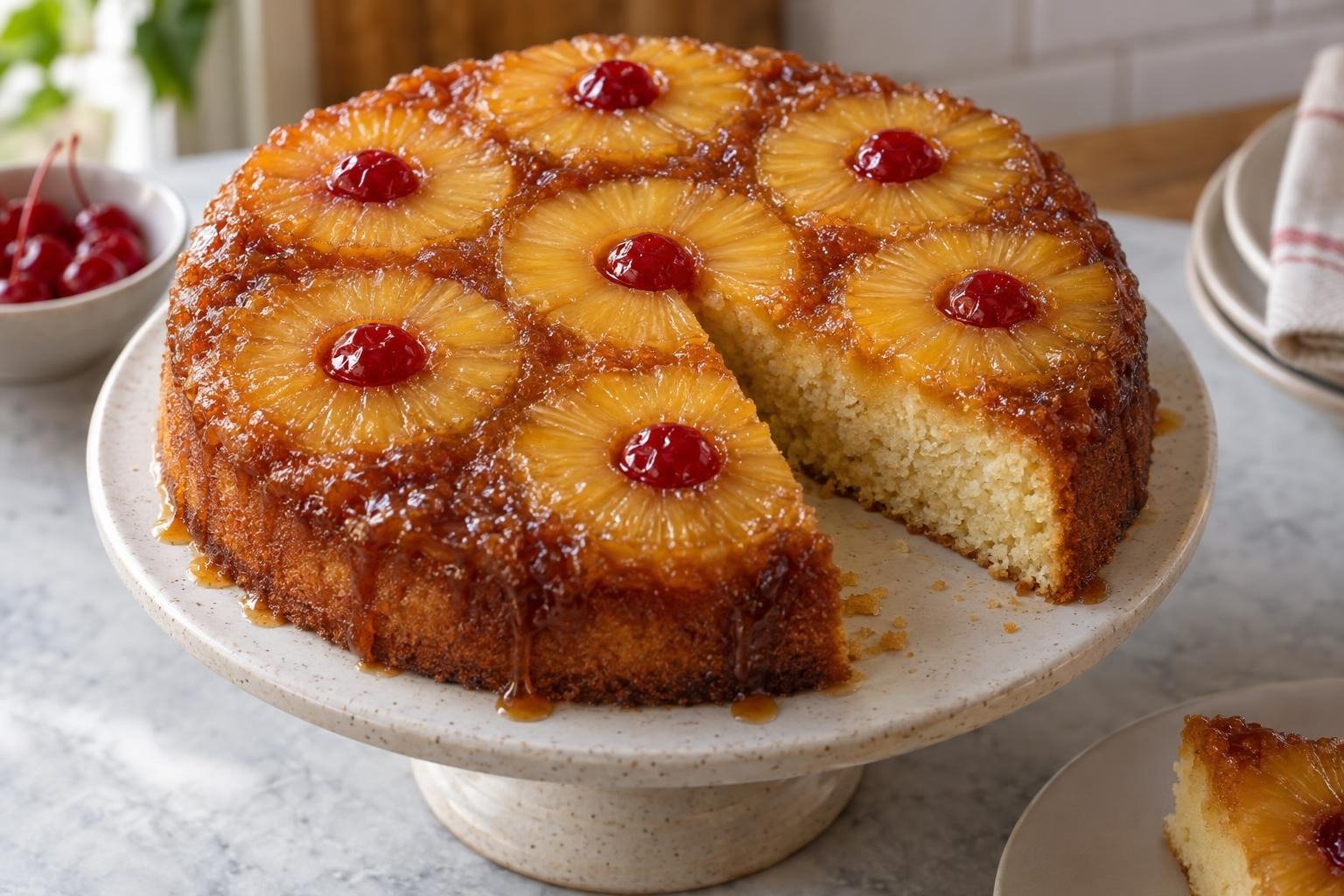
Glossy pineapple rings, buttery brown sugar caramel, and a soft vanilla crumb give this pineapple upside-down cake its unmistakable character. The fruit turns golden at the edges while its tangy juice balances the rich topping, and bright cherries add the classic pop of color. Underneath, the cake is tender without becoming soggy, so each slice holds a distinct fruit layer instead of collapsing into syrup.
I drain and blot the pineapple before it touches the caramel, then reserve a measured amount of juice for the batter. That controls free moisture while carrying pineapple flavor through the crumb. A solid 9-inch pan supports the topping, sour cream keeps the cake tender, and a 10-minute cooling window lets the crumb settle without allowing the caramel to harden against the pan. The cake is ready to invert when the edges remain hot and the topping still moves freely.
Why This Apple Cake Frickin’ Works
- Blotting the drained pineapple removes surface liquid that could dilute the brown sugar topping or create a gummy layer directly beneath the fruit.
- Melted butter and firmly packed light brown sugar form an even caramel base without requiring a separate stovetop syrup or introducing excess water.
- Sour cream contributes fat, acidity, and milk proteins, producing a fine, tender crumb that remains sturdy enough to support the fruit after inversion.
- Alternating the flour mixture with sour cream and pineapple juice limits gluten development while distributing moisture evenly through the thick batter.
- A 10-minute pan rest balances structure and release: the hot cake firms enough to handle while the caramel remains fluid enough to leave the pan.
Ingredient Notes for Pineapple Upside-Down Cake with Golden Caramelized Pineapple
- Canned pineapple rings: Rings packed in juice provide consistent thickness and moisture. Drain them thoroughly, reserve the juice, and blot both sides so the caramel stays concentrated rather than watery.
- Light brown sugar: Its molasses content supplies caramel flavor and helps the topping remain glossy. Pack it firmly when using a volume measure, then distribute it evenly so syrup does not pool around the center fruit.
- Unsalted butter: Butter carries flavor in both the topping and crumb. Melt the topping portion gently, but soften the cake portion to cool room temperature so it can trap air during creaming.
- Sour cream: Full-fat sour cream adds acidity, fat, and moisture without thinning the batter. Stir it smooth before measuring so dense pockets do not remain in the finished crumb.
- All-purpose flour: Its moderate protein level gives this fruit-topped cake enough strength for inversion. Weigh it for accuracy and stop mixing as soon as the final pale streaks disappear.
- Reserved pineapple juice: A measured 80 grams reinforces the fruit flavor and hydrates the batter. Adding more could weaken the crumb or create a damp band beneath the topping.
- Maraschino cherries: Drain and blot the cherries before placing them in the pineapple centers. Their color and sweetness are traditional, but their surface syrup should not be added to the caramel.
Expert Baking Tips
- Use a solid, light-colored metal pan rather than a springform pan. Caramel can leak through a removable base, while very dark metal may brown the outer crumb before the center finishes baking.
- Blot the pineapple until paper towels no longer become visibly wet. Draining alone removes packing juice, but it does not remove the film of moisture clinging to each ring.
- Keep the topping level before arranging the fruit. Uneven brown sugar creates concentrated syrup pockets that can run down the cake or leave sections stuck to the pan.
- Spread the thick batter by moving from the center toward the edge with light pressure. Dragging the spatula against the fruit can shift the carefully arranged rings and expose bare caramel.
- Set a timer as soon as the cake leaves the oven. Turning it out immediately risks tearing the fragile crumb, while a long pan rest allows the caramel to cool, thicken, and glue the fruit to the bottom.
Ingredients for Pineapple Upside-Down Cake
- 56 g unsalted butter (1/4 cup, melted, for the caramel topping)
- 150 g light brown sugar (3/4 cup, firmly packed)
- 340 g canned pineapple rings in juice (7 rings, drained weight from one 20-ounce can; reserve the juice)
- 7 whole maraschino cherries (drained, stems removed, and blotted dry)
- 200 g all-purpose flour (1 2/3 cups, spooned and leveled if not weighed)
- 6 g baking powder (1 1/2 teaspoons)
- 2 g baking soda (1/2 teaspoon)
- 3 g fine sea salt (1/2 teaspoon)
- 113 g unsalted butter (1/2 cup, softened to cool room temperature, for the cake)
- 150 g granulated sugar (3/4 cup)
- 100 g large eggs (2 eggs without shells, at room temperature)
- 5 g pure vanilla extract (1 teaspoon)
- 120 g full-fat sour cream (1/2 cup, at room temperature and stirred smooth)
- 80 g reserved pineapple juice (1/3 cup, measured after draining the pineapple)
How to Make Pineapple Upside-Down Cake
- STEP 1). Prepare the pan, fruit, and oven Set a rack in the center of the oven and heat it to 350°F. Lightly brush the sides of a solid 9-inch by 2-inch round metal pan with softened butter, leaving the bottom unlined. Drain the pineapple rings in a fine-mesh strainer for 15 minutes, reserving the juice. Arrange the rings and cherries on paper towels, then blot both sides thoroughly. Surface moisture can thin the caramel and leave a slippery, underbaked-looking band beneath the fruit.
- STEP 2). Build the brown sugar caramel layer Pour the 56 grams melted butter into the prepared pan and tilt the pan until the bottom is evenly coated. Sprinkle the light brown sugar over the butter, breaking up firm lumps with your fingertips. Use a small offset spatula to spread the mixture into an even layer without stirring it into a paste. Level coverage matters because thick mounds produce syrupy pockets, while bare areas allow the pineapple to stick directly to the metal.
- STEP 3). Arrange the pineapple and cherries Place one blotted pineapple ring in the center of the pan and arrange the remaining six evenly around it, pressing them lightly into the sugar without pushing the caramel aside. Set one dry cherry in the center of each ring. Keep the fruit in a single layer and leave small channels between the rings so the cake batter can reach the pan bottom and anchor the topping. Set the assembled pan aside while mixing the batter.
- STEP 4). Combine the dry ingredients and cream the butter Whisk the flour, baking powder, baking soda, and salt in a medium bowl for about 30 seconds. In a stand mixer fitted with the paddle, beat the softened 113 grams butter and granulated sugar on medium speed for 3 to 4 minutes, scraping the bowl halfway through. Stop when the mixture looks pale, fluffy, and slightly increased in volume. Proper creaming creates small air cells, but greasy or melted butter cannot hold them effectively.
- STEP 5). Finish the pineapple cake batter Beat in the eggs one at a time on medium-low speed, mixing for about 30 seconds after each and scraping the bowl before adding the next. Blend in the vanilla. Whisk the sour cream and 80 grams pineapple juice together until smooth. On low speed, add the flour mixture in three portions, alternating with the sour cream mixture in two portions. Stop when only a few flour streaks remain, then fold by hand until the batter is thick, smooth, and uniform.
- STEP 6). Cover the fruit and bake the cake Spoon the batter gently over the arranged fruit in several mounds, then spread it to the edges with a silicone spatula without disturbing the rings. Smooth the surface and tap the pan once on a folded towel to settle large air pockets. Bake at 350°F for 42 to 48 minutes. The cake is done when the center springs back lightly, the edges pull just slightly from the pan, and a skewer inserted into the cake portion returns with moist crumbs but no wet batter.
- STEP 7). Rest, invert, and cool before slicing Transfer the pan to a wire rack and cool for exactly 10 minutes. Run a thin knife around the side without cutting beneath the cake. Center a large rimmed serving plate over the pan, hold both firmly with oven mitts, and invert them in one confident motion. Leave the pan in place for 30 seconds so the syrup drains onto the fruit, then lift it straight up. Replace any displaced fruit carefully and cool for at least 80 minutes before slicing with a serrated knife.
Storage and Freezing
- Room temperature: Cover the completely cooled cake and keep it at a cool room temperature for up to 1 day.
- Refrigeration: Refrigerate the covered cake for up to 4 days. A deep container prevents the sticky fruit topping from touching plastic wrap.
- Freezing: Freeze individual cooled slices on a parchment-lined tray until firm, then wrap them and place them in an airtight container for up to 2 months.
- Thawing: Unwrap frozen slices and thaw them covered in the refrigerator overnight to limit condensation on the caramel topping.
- Serving: Bring refrigerated slices to room temperature for 20 to 30 minutes, or warm individual pieces briefly until the crumb softens without melting the topping into a puddle.
Frequently Asked Questions
When should you turn out pineapple upside-down cake?
Turn out this pineapple upside-down cake 10 minutes after it leaves the oven. That short rest allows the hot crumb to gain enough structure for handling while the butter and brown sugar caramel remain fluid.
Invert onto a rimmed plate in one decisive motion, wait 30 seconds, and lift the pan vertically. Waiting much longer can let the caramel set against the metal and trap the fruit.
Why does pineapple upside-down cake stick to the pan?
Sticking usually comes from wet pineapple, an uneven caramel layer, or leaving the baked cake in its pan too long. Excess fruit juice dilutes the sugar, while exposed metal gives the pineapple direct contact with the pan.
Blot every ring, cover the pan bottom evenly with butter and sugar, and respect the 10-minute inversion window. If one ring remains behind, lift it carefully and return it to the warm cake.
How do you keep pineapple upside-down cake from getting soggy?
Moisture control begins before mixing. Drain the rings for 15 minutes, blot both sides, and measure only 80 grams of reserved pineapple juice for the batter. Do not pour leftover canning juice over the finished cake.
Bake until the center springs back and a skewer shows moist crumbs rather than wet batter. Cooling before slicing also matters because a hot crumb releases steam and can appear gummy when cut too soon.
What pineapple upside-down cake ingredient substitutions are appropriate?
The pineapple rings, full-fat sour cream, butter, and measured juice establish the moisture and structure of this formula, so changing them can affect release and crumb stability. Crushed pineapple is especially unsuitable because it creates an irregular, wetter fruit layer.
The maraschino cherries may be omitted without changing the cake structure. Dark brown sugar can replace light brown sugar by weight, although its stronger molasses flavor will make the topping darker and more assertive.
How far ahead can pineapple upside-down cake be made?
This cake may be baked one day before serving. Cool it completely on its serving plate, then cover it without pressing wrapping directly against the sticky pineapple topping. Hold it at a cool room temperature or refrigerate it if the kitchen is warm.
For the softest crumb, bring a refrigerated cake toward room temperature before serving. The caramel will look glossier and the butter-based crumb will feel more tender once it loses its refrigerator chill.
More Ridiculously Delicious Cakes
- Carrot Layer Cake with a Moist Crumb
- Strawberry Rhubarb Coffee Cake with Soft, Tender Crumb
- Vanilla Bean Layer Cake with Soft, Tender Layers
- Chocolate Streusel Coffee Cake with Soft, Tender Crumb
- Chocolate Sour Cream Bundt Cake with a Moist Crumb
Pineapple Upside-Down Cake with Golden Caramelized Pineapple
Ingredients
Equipment
Method
- Set a rack in the center of the oven and heat it to 350°F. Lightly brush the sides of a solid 9-inch by 2-inch round metal pan with softened butter, leaving the bottom unlined. Drain the pineapple rings in a fine-mesh strainer for 15 minutes, reserving the juice. Arrange the rings and cherries on paper towels, then blot both sides thoroughly. Surface moisture can thin the caramel and leave a slippery, underbaked-looking band beneath the fruit.
- Pour the 56 grams melted butter into the prepared pan and tilt the pan until the bottom is evenly coated. Sprinkle the light brown sugar over the butter, breaking up firm lumps with your fingertips. Use a small offset spatula to spread the mixture into an even layer without stirring it into a paste. Level coverage matters because thick mounds produce syrupy pockets, while bare areas allow the pineapple to stick directly to the metal.
- Place one blotted pineapple ring in the center of the pan and arrange the remaining six evenly around it, pressing them lightly into the sugar without pushing the caramel aside. Set one dry cherry in the center of each ring. Keep the fruit in a single layer and leave small channels between the rings so the cake batter can reach the pan bottom and anchor the topping. Set the assembled pan aside while mixing the batter.
- Whisk the flour, baking powder, baking soda, and salt in a medium bowl for about 30 seconds. In a stand mixer fitted with the paddle, beat the softened 113 grams butter and granulated sugar on medium speed for 3 to 4 minutes, scraping the bowl halfway through. Stop when the mixture looks pale, fluffy, and slightly increased in volume. Proper creaming creates small air cells, but greasy or melted butter cannot hold them effectively.
- Beat in the eggs one at a time on medium-low speed, mixing for about 30 seconds after each and scraping the bowl before adding the next. Blend in the vanilla. Whisk the sour cream and 80 grams pineapple juice together until smooth. On low speed, add the flour mixture in three portions, alternating with the sour cream mixture in two portions. Stop when only a few flour streaks remain, then fold by hand until the batter is thick, smooth, and uniform.
- Spoon the batter gently over the arranged fruit in several mounds, then spread it to the edges with a silicone spatula without disturbing the rings. Smooth the surface and tap the pan once on a folded towel to settle large air pockets. Bake at 350°F for 42 to 48 minutes. The cake is done when the center springs back lightly, the edges pull just slightly from the pan, and a skewer inserted into the cake portion returns with moist crumbs but no wet batter.
- Transfer the pan to a wire rack and cool for exactly 10 minutes. Run a thin knife around the side without cutting beneath the cake. Center a large rimmed serving plate over the pan, hold both firmly with oven mitts, and invert them in one confident motion. Leave the pan in place for 30 seconds so the syrup drains onto the fruit, then lift it straight up. Replace any displaced fruit carefully and cool for at least 80 minutes before slicing with a serrated knife.
Notes
- Use a solid, light-colored metal pan rather than a springform pan. Caramel can leak through a removable base, while very dark metal may brown the outer crumb before the center finishes baking.
- Blot the pineapple until paper towels no longer become visibly wet. Draining alone removes packing juice, but it does not remove the film of moisture clinging to each ring.
- Keep the topping level before arranging the fruit. Uneven brown sugar creates concentrated syrup pockets that can run down the cake or leave sections stuck to the pan.
- Spread the thick batter by moving from the center toward the edge with light pressure. Dragging the spatula against the fruit can shift the carefully arranged rings and expose bare caramel.
- Set a timer as soon as the cake leaves the oven. Turning it out immediately risks tearing the fragile crumb, while a long pan rest allows the caramel to cool, thicken, and glue the fruit to the bottom.



