Set a rack in the center of the oven and heat it to 350°F. Lightly brush the sides of a solid 9-inch by 2-inch round metal pan with softened butter, leaving the bottom unlined. Drain the pineapple rings in a fine-mesh strainer for 15 minutes, reserving the juice. Arrange the rings and cherries on paper towels, then blot both sides thoroughly. Surface moisture can thin the caramel and leave a slippery, underbaked-looking band beneath the fruit.
Pour the 56 grams melted butter into the prepared pan and tilt the pan until the bottom is evenly coated. Sprinkle the light brown sugar over the butter, breaking up firm lumps with your fingertips. Use a small offset spatula to spread the mixture into an even layer without stirring it into a paste. Level coverage matters because thick mounds produce syrupy pockets, while bare areas allow the pineapple to stick directly to the metal.
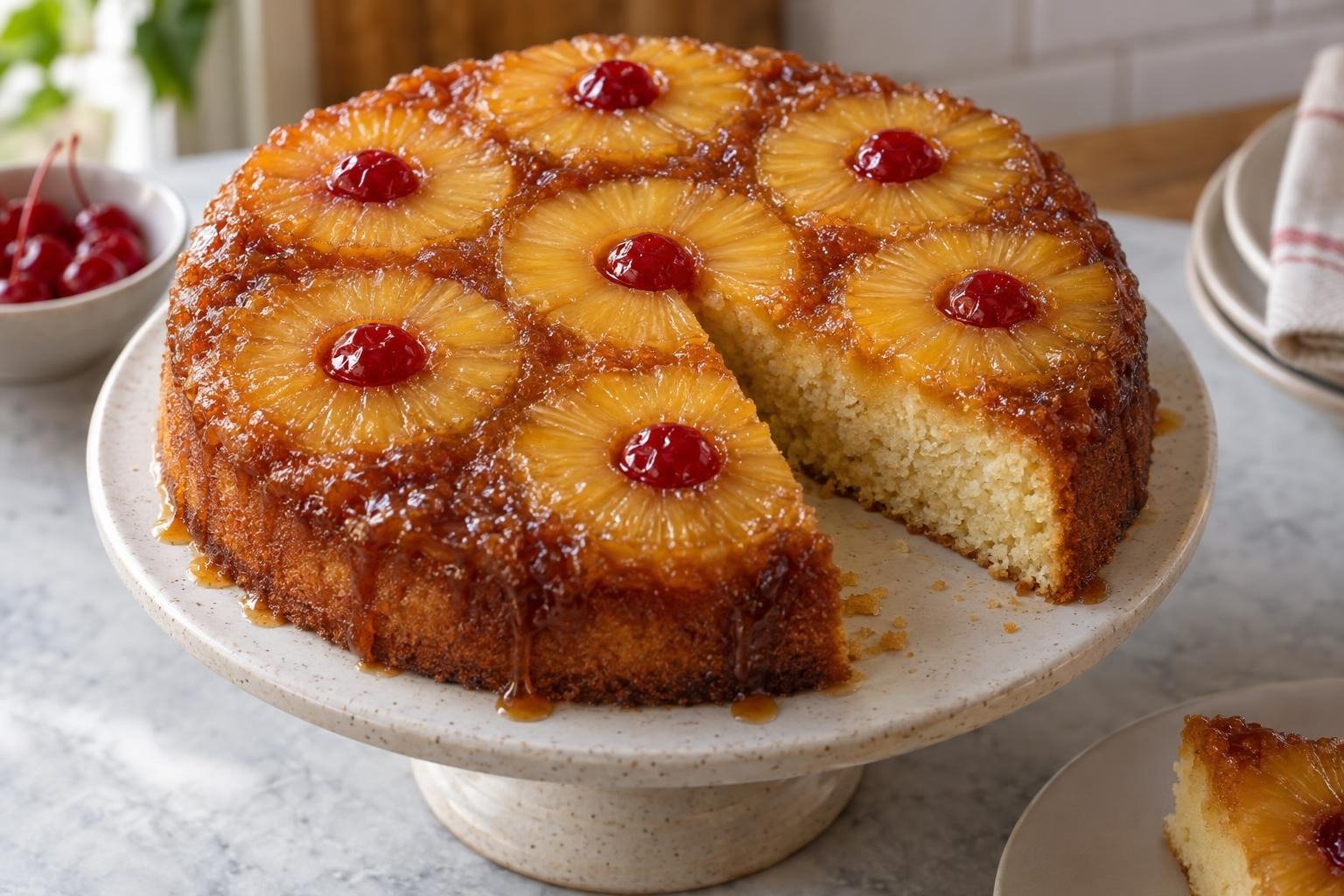
Place one blotted pineapple ring in the center of the pan and arrange the remaining six evenly around it, pressing them lightly into the sugar without pushing the caramel aside. Set one dry cherry in the center of each ring. Keep the fruit in a single layer and leave small channels between the rings so the cake batter can reach the pan bottom and anchor the topping. Set the assembled pan aside while mixing the batter.
Whisk the flour, baking powder, baking soda, and salt in a medium bowl for about 30 seconds. In a stand mixer fitted with the paddle, beat the softened 113 grams butter and granulated sugar on medium speed for 3 to 4 minutes, scraping the bowl halfway through. Stop when the mixture looks pale, fluffy, and slightly increased in volume. Proper creaming creates small air cells, but greasy or melted butter cannot hold them effectively.
Beat in the eggs one at a time on medium-low speed, mixing for about 30 seconds after each and scraping the bowl before adding the next. Blend in the vanilla. Whisk the sour cream and 80 grams pineapple juice together until smooth. On low speed, add the flour mixture in three portions, alternating with the sour cream mixture in two portions. Stop when only a few flour streaks remain, then fold by hand until the batter is thick, smooth, and uniform.
Spoon the batter gently over the arranged fruit in several mounds, then spread it to the edges with a silicone spatula without disturbing the rings. Smooth the surface and tap the pan once on a folded towel to settle large air pockets. Bake at 350°F for 42 to 48 minutes. The cake is done when the center springs back lightly, the edges pull just slightly from the pan, and a skewer inserted into the cake portion returns with moist crumbs but no wet batter.
Transfer the pan to a wire rack and cool for exactly 10 minutes. Run a thin knife around the side without cutting beneath the cake. Center a large rimmed serving plate over the pan, hold both firmly with oven mitts, and invert them in one confident motion. Leave the pan in place for 30 seconds so the syrup drains onto the fruit, then lift it straight up. Replace any displaced fruit carefully and cool for at least 80 minutes before slicing with a serrated knife.