
Table of Contents
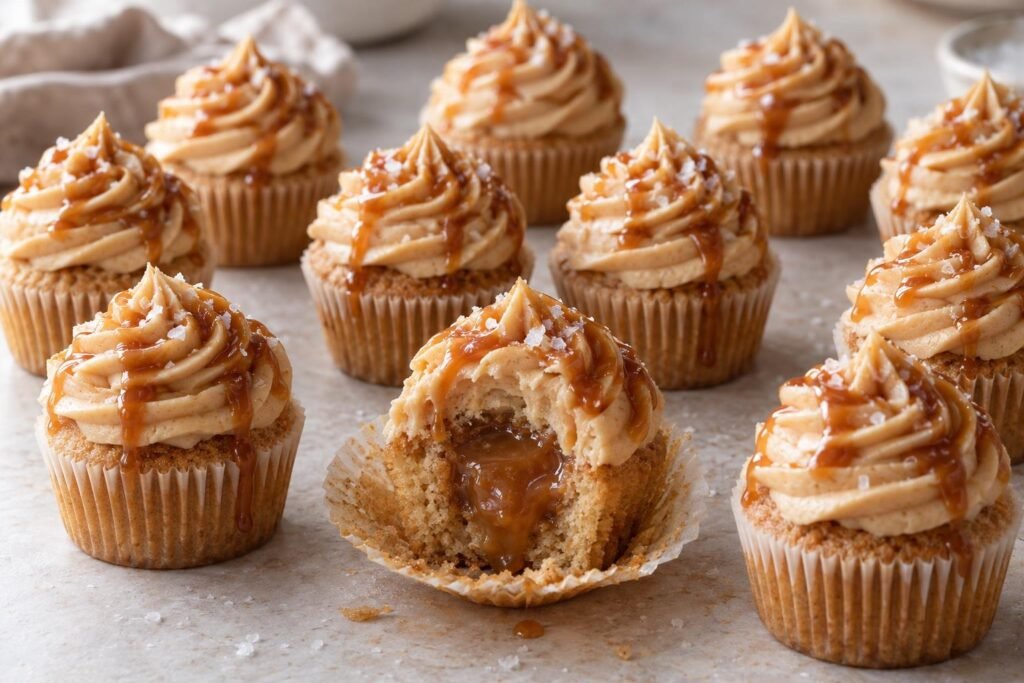
Buttery caramel aroma, a soft brown sugar crumb, and a creamy, lightly salty center make these salted caramel cupcakes rich without turning them into sugar bombs. Each cupcake hides a proper caramel filling rather than relying on a surface drizzle for flavor. The caramel buttercream is smooth and full-bodied, while a final pinch of flaky salt sharpens the toasted sugar notes and keeps every bite balanced.
I use one caramel sauce three ways here: thickened for the centers, beaten into the buttercream, and loosened just enough for the finish. Weighing about 65 grams of batter into each liner gives the cupcakes room to rise without overflowing. I bake until the tops spring back and a tester shows moist crumbs, then cool them completely before coring. That sequence protects the crumb and prevents warm cake or caramel from melting the frosting.

Why This Recipe Is Deliciously Ridiculous
- Brown sugar contributes moisture and subtle molasses flavor, giving the cupcakes a tender crumb that supports the caramel without competing with it.
- Sour cream supplies fat, acidity, and moisture, helping the cakes remain soft while limiting the amount of thin liquid in the batter.
- The homemade caramel is divided by weight so the centers stay generous, the buttercream remains stable, and the drizzle does not overwhelm the finished cupcakes.
- Creaming softened butter with brown sugar traps small air pockets, while alternating the dry and liquid ingredients minimizes gluten development and keeps the crumb fluffy.
- Cooling the caramel and cupcakes completely before assembly prevents the filling from soaking into warm cake and keeps the buttercream from becoming greasy or slack.
Ingredient Notes for Salted Caramel Cupcakes with a Creamy Caramel Center
- All-purpose flour: Its moderate protein level provides enough structure for filled cupcakes without making the crumb tough. Weigh it rather than packing it into a measuring cup.
- Brown sugar: Light brown sugar brings moisture, caramel-like flavor, and gentle acidity. Break up firm lumps before creaming so they do not leave dense streaks in the batter.
- Unsalted butter: Butter controls richness in all three components. Soften the cupcake and frosting portions to about 18 to 21°C so they cream smoothly without becoming oily.
- Sour cream: Full-fat sour cream tenderizes the crumb and gives the batter body. Full-fat plain Greek yogurt can replace it by equal weight, although the crumb may taste slightly tangier.
- Heavy cream: Cream with at least 35 percent milk fat produces a smooth caramel that thickens when cool. Lower-fat milk is not a direct replacement because it can make the sauce thin and more prone to seizing.
- Granulated sugar: White sugar caramelizes cleanly, making its color easy to judge. Once the syrup boils, avoid stirring because agitation can encourage crystallization.
- Fine sea salt: Fine salt dissolves evenly throughout the caramel. Add it after the butter so its flavor is distributed rather than concentrated in occasional grains.
- Flaky sea salt: A small finishing pinch gives brief bursts of salinity and a delicate crunch. Apply it shortly before serving because the flakes dissolve as they absorb moisture.
My Best Baking Tips
- Judge caramel by color rather than the clock. Remove it at deep amber because residual heat continues cooking the sugar, and very dark caramel will taste bitter.
- Use room-temperature dairy and eggs in the cupcake batter. Cold ingredients can firm the butter and break the emulsion, producing a coarse or uneven crumb.
- Keep each liner close to 65 grams of batter. Overfilling encourages mushroomed edges, while underfilling leaves too little cake around the caramel center.
- Do not core warm cupcakes. Their crumb is fragile while hot, and trapped steam can thin the caramel and make the center gummy.
- If the buttercream feels soft, refrigerate it for 10 minutes and remix briefly. Adding extra confectioners' sugar immediately can make the frosting unnecessarily sweet.
Ingredients for Salted Caramel Cupcakes
- 180 g all-purpose flour (For the cupcakes; spooned and leveled if measuring by volume)
- 6 g baking powder (For the cupcakes; about 1 1/2 teaspoons)
- 1.5 g fine sea salt (For the cupcakes; about 1/4 teaspoon)
- 113 g unsalted butter (For the cupcakes; softened to 18 to 21°C)
- 150 g light brown sugar (For the cupcakes; break up any firm lumps)
- 2 large eggs (For the cupcakes; at room temperature)
- 10 ml pure vanilla extract (For the cupcakes; about 2 teaspoons)
- 120 g full-fat sour cream (For the cupcakes; at room temperature)
- 80 ml whole milk (For the cupcakes; at room temperature)
- 200 g granulated sugar (For the salted caramel)
- 60 ml water (For the salted caramel)
- 180 ml heavy cream (For the salted caramel; warmed until steaming)
- 56 g unsalted butter (For the salted caramel; cubed and at room temperature)
- 4.5 g fine sea salt (For the salted caramel; about 3/4 teaspoon)
- 5 ml pure vanilla extract (For the salted caramel; about 1 teaspoon)
- 226 g unsalted butter (For the buttercream; softened to 18 to 21°C)
- 360 g confectioners' sugar (For the buttercream; sifted)
- 15 to 30 ml heavy cream (For the buttercream; use only enough to adjust consistency)
- 2 g flaky sea salt (For finishing; use a light pinch on each cupcake)
How to Make Salted Caramel Cupcakes
- STEP 1). Cook and cool the salted caramel Warm 180 ml heavy cream until steaming, then keep it nearby. Combine the granulated sugar and water in a medium heavy-bottomed saucepan and cook over medium heat without stirring. Swirl the pan only if the color develops unevenly. When the syrup becomes a deep amber, about 8 to 11 minutes, remove it from the heat. Carefully whisk in the warm cream, followed by 56 grams butter, fine sea salt, and vanilla. Return to low heat for 1 minute if lumpy, then cool for about 45 minutes until thick but spoonable.
- STEP 2). Prepare the pan and dry ingredients Position a rack in the center of the oven and heat it to 175°C. Line a standard 12-cup muffin pan with paper liners. In a medium bowl, whisk the flour, baking powder, and cupcake salt for at least 30 seconds, breaking apart any compacted flour. In a separate jug or bowl, stir together the sour cream and milk until smooth. Properly dispersing the leavener now prevents tunnels and isolated bitter spots in the baked cupcakes.
- STEP 3). Cream the butter and brown sugar Place 113 grams softened butter and the brown sugar in the bowl of a stand mixer fitted with the paddle. Beat on medium speed for 3 to 4 minutes, scraping the bowl and paddle halfway through. The mixture should look lighter, aerated, and slightly fluffy rather than wet or greasy. Add the eggs one at a time on medium-low speed, mixing until each disappears before adding the next. Blend in the cupcake vanilla, then scrape the bowl thoroughly.
- STEP 4). Finish and portion the cupcake batter With the mixer on low, add one-third of the flour mixture, followed by half of the sour cream mixture. Repeat, ending with the remaining flour. Stop as soon as the last dry streaks disappear, then fold the batter two or three times with a spatula to incorporate anything on the bottom. Divide approximately 65 grams of batter into each liner, filling each about two-thirds full. Smooth prominent peaks so the cupcakes rise evenly rather than forming pointed tops.
- STEP 5). Bake and cool the cupcakes Bake the cupcakes on the center rack for 18 to 21 minutes, rotating the pan once after 15 minutes only if the oven browns unevenly. They are done when the tops spring back after a gentle touch and a tester inserted in the center comes out with a few moist crumbs but no wet batter. Cool in the pan for 5 minutes, then carefully transfer the cupcakes to a wire rack. Let them cool completely for about 60 minutes before filling or frosting.
- STEP 6). Core and fill the cooled cupcakes Weigh 180 grams of the cooled salted caramel into a small bowl for filling. Using a cupcake corer or paring knife, remove a plug about 2.5 cm wide and 2 cm deep from the center of each cupcake, taking care not to cut through the base. Spoon or pipe approximately 15 grams of caramel into each cavity. Trim the soft underside from each removed plug and replace the thin top piece over the caramel to create a level surface for frosting.
- STEP 7). Whip the caramel buttercream Beat 226 grams softened butter with the paddle attachment on medium speed for 3 minutes until smooth and pale. Add the sifted confectioners' sugar in three additions on low speed, mixing until each is absorbed. Add 150 grams room-temperature salted caramel and beat on medium for 2 minutes. Mix in heavy cream 1 teaspoon at a time only if needed. The finished buttercream should hold a curved peak without looking stiff, separated, or glossy. Beat on low for 1 minute to reduce large air pockets.
- STEP 8). Pipe and finish the cupcakes Fit a large piping bag with a round or open-star tip and fill it with the buttercream, pressing out large air pockets as you work. Pipe one generous swirl onto each completely cooled cupcake. Stir the remaining caramel until fluid enough to fall from a spoon in a thick ribbon; warm it for only a few seconds if necessary, then let it return to room temperature. Drizzle a small amount over each swirl and finish with a restrained pinch of flaky sea salt before serving.
Storage and Freezing
- Storage: Keep assembled cupcakes in a single layer in an airtight container in the refrigerator for up to 4 days. Bring them to cool room temperature for 30 to 45 minutes before serving so the buttercream and caramel soften.
- Freezing: Freeze unfrosted, unfilled cupcakes in an airtight container for up to 2 months. The caramel can be frozen separately in a tightly sealed container for up to 2 months. For the cleanest appearance, prepare the buttercream and decorate after thawing.
- Thawing: Thaw wrapped cupcakes at room temperature for 1 to 2 hours.
- Thaw caramel overnight in the refrigerator, then warm it gently and stir until smooth before cooling it to a thick, spoonable consistency.
- Serving: Add the final caramel drizzle and flaky sea salt shortly before serving. This keeps the salt distinct and prevents the drizzle from softening the piped buttercream during extended storage.
Frequently Asked Questions
How much batter should go into each liner for salted caramel cupcakes?
Portion approximately 65 grams of batter into each standard liner, which fills it about two-thirds full. A scale gives more consistent results than judging twelve liners by eye.
This amount leaves enough headroom for a rounded rise without producing wide, overhanging edges. It also creates sufficient cake around the cavity so the filled cupcake remains stable when lifted and eaten.
What consistency should the caramel filling have?
The cooled caramel should fall from a spoon in a slow, thick ribbon and settle softly rather than run like syrup. If it is warm enough to flow quickly, it can soak into the crumb instead of remaining creamy in the center.
Caramel that becomes too firm can be warmed gently for a few seconds and stirred. Let it cool again before filling, since even moderately warm caramel can soften the cake and melt the buttercream.
Why did my salted caramel cupcakes sink in the middle?
A sunken center usually points to underbaking, excess batter in the liners, or an emulsion that broke because the ingredients were too cold. Look for springy tops and moist crumbs on the tester, not wet batter.
Avoid opening the oven during the early rise, and keep each liner near 65 grams. Mix only until the flour disappears because an overmixed batter can develop tunnels and rise unevenly before collapsing.
Can I freeze salted caramel cupcakes?
Unfilled, unfrosted cupcakes freeze more cleanly than fully decorated ones. Wrap them once cool, place them in an airtight container, and freeze for up to 2 months. Freeze the caramel separately in a sealed container.
Thaw the cakes while wrapped so condensation forms on the wrapping rather than the crumb. Bring the caramel back to a thick, spoonable texture, then fill and decorate the cupcakes after they reach room temperature.
Which ingredient substitutions work in this salted caramel cupcakes recipe?
Full-fat plain Greek yogurt can replace the sour cream by equal weight because it supplies similar acidity, protein, and body. Its tang may be slightly more noticeable, but the batter consistency should remain thick and scoopable.
Whole milk should remain in the cake, and heavy cream should remain in the caramel. Lower-fat dairy introduces more water and less fat, which can leave the caramel thin or make it less stable when used in the filling and buttercream.
Keep the Frickin’ Deliciousness Going!
- Bakery-Style Vanilla Cupcakes with Fluffy Vanilla Buttercream
- Strawberry Cupcakes with Fresh Berry Frosting
- Bakery-Style Chocolate Cupcakes with Rich Chocolate Buttercream
Salted Caramel Cupcakes with a Creamy Caramel Center
Ingredients
Equipment
Method
- Warm 180 ml heavy cream until steaming, then keep it nearby. Combine the granulated sugar and water in a medium heavy-bottomed saucepan and cook over medium heat without stirring. Swirl the pan only if the color develops unevenly. When the syrup becomes a deep amber, about 8 to 11 minutes, remove it from the heat. Carefully whisk in the warm cream, followed by 56 grams butter, fine sea salt, and vanilla. Return to low heat for 1 minute if lumpy, then cool for about 45 minutes until thick but spoonable.
- Position a rack in the center of the oven and heat it to 175°C. Line a standard 12-cup muffin pan with paper liners. In a medium bowl, whisk the flour, baking powder, and cupcake salt for at least 30 seconds, breaking apart any compacted flour. In a separate jug or bowl, stir together the sour cream and milk until smooth. Properly dispersing the leavener now prevents tunnels and isolated bitter spots in the baked cupcakes.
- Place 113 grams softened butter and the brown sugar in the bowl of a stand mixer fitted with the paddle. Beat on medium speed for 3 to 4 minutes, scraping the bowl and paddle halfway through. The mixture should look lighter, aerated, and slightly fluffy rather than wet or greasy. Add the eggs one at a time on medium-low speed, mixing until each disappears before adding the next. Blend in the cupcake vanilla, then scrape the bowl thoroughly.
- With the mixer on low, add one-third of the flour mixture, followed by half of the sour cream mixture. Repeat, ending with the remaining flour. Stop as soon as the last dry streaks disappear, then fold the batter two or three times with a spatula to incorporate anything on the bottom. Divide approximately 65 grams of batter into each liner, filling each about two-thirds full. Smooth prominent peaks so the cupcakes rise evenly rather than forming pointed tops.
- Bake the cupcakes on the center rack for 18 to 21 minutes, rotating the pan once after 15 minutes only if the oven browns unevenly. They are done when the tops spring back after a gentle touch and a tester inserted in the center comes out with a few moist crumbs but no wet batter. Cool in the pan for 5 minutes, then carefully transfer the cupcakes to a wire rack. Let them cool completely for about 60 minutes before filling or frosting.
- Weigh 180 grams of the cooled salted caramel into a small bowl for filling. Using a cupcake corer or paring knife, remove a plug about 2.5 cm wide and 2 cm deep from the center of each cupcake, taking care not to cut through the base. Spoon or pipe approximately 15 grams of caramel into each cavity. Trim the soft underside from each removed plug and replace the thin top piece over the caramel to create a level surface for frosting.
- Beat 226 grams softened butter with the paddle attachment on medium speed for 3 minutes until smooth and pale. Add the sifted confectioners' sugar in three additions on low speed, mixing until each is absorbed. Add 150 grams room-temperature salted caramel and beat on medium for 2 minutes. Mix in heavy cream 1 teaspoon at a time only if needed. The finished buttercream should hold a curved peak without looking stiff, separated, or glossy. Beat on low for 1 minute to reduce large air pockets.
- Fit a large piping bag with a round or open-star tip and fill it with the buttercream, pressing out large air pockets as you work. Pipe one generous swirl onto each completely cooled cupcake. Stir the remaining caramel until fluid enough to fall from a spoon in a thick ribbon; warm it for only a few seconds if necessary, then let it return to room temperature. Drizzle a small amount over each swirl and finish with a restrained pinch of flaky sea salt before serving.
Notes
- Judge caramel by color rather than the clock. Remove it at deep amber because residual heat continues cooking the sugar, and very dark caramel will taste bitter.
- Use room-temperature dairy and eggs in the cupcake batter. Cold ingredients can firm the butter and break the emulsion, producing a coarse or uneven crumb.
- Keep each liner close to 65 grams of batter. Overfilling encourages mushroomed edges, while underfilling leaves too little cake around the caramel center.
- Do not core warm cupcakes. Their crumb is fragile while hot, and trapped steam can thin the caramel and make the center gummy.
- If the buttercream feels soft, refrigerate it for 10 minutes and remix briefly. Adding extra confectioners' sugar immediately can make the frosting unnecessarily sweet.



