

Table of Contents
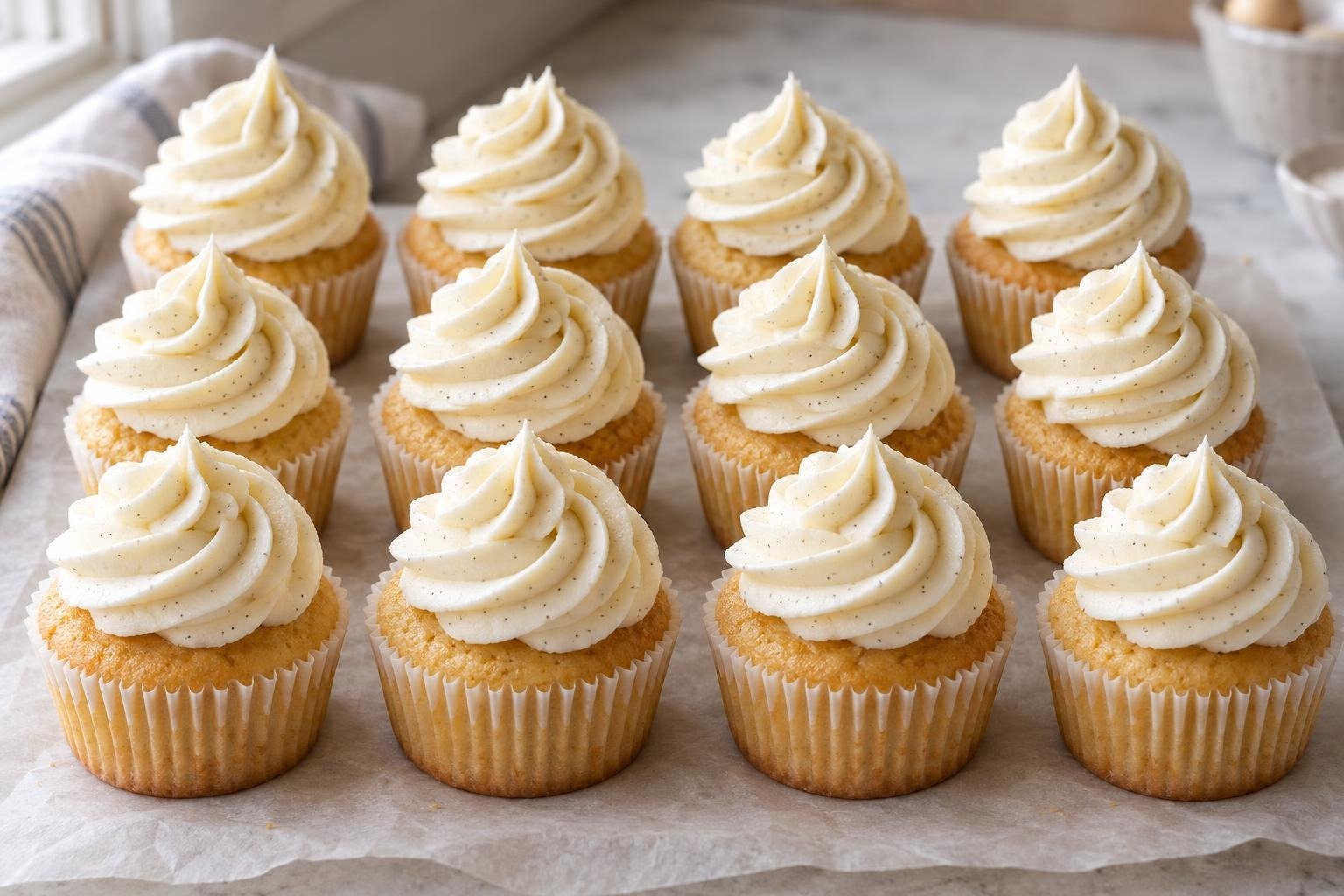
The instant you peel back the paper on these vanilla cupcakes, you’ll catch the rich, buttery aroma and see their golden domes, light crumb, and a velvety swirl of creamy vanilla buttercream crowning each one. This is a vanilla cupcake recipe that delivers everything I crave in a bakery-style treat: a soft, moist texture with delicate pores, pure vanilla flavor, and a frosting that pipes high without ever feeling greasy or dense.
Developing these moist vanilla cupcakes with buttercream took some careful balancing. I rely on a precise combination of cake flour, buttermilk, and both oil and butter for structure and tenderness, and I always use pure vanilla bean paste for punchy, natural flavor. The mixing method couples creaming for lift with gentle folding to keep that open crumb. For the buttercream, I blend butter with icing sugar and just enough cream to get a perfectly smooth, effortlessly fluffy swirl, sturdy for piping, soft in the mouth. Watch for the golden edges and springy tops to know you’ve nailed that bakery finish.
Why This Recipe Frickin’ Works
- Cake flour delivers a fine, airy crumb by limiting excessive gluten formation, key for delicate cupcakes.
- Buttermilk provides acidity to tenderize the crumb and amplify vanilla flavor, giving a moist result that stays soft for days.
- A blend of butter and neutral oil delivers rich taste and keeps the cakes soft, ensuring they never dry out.
- Creaming butter, sugar, and eggs ensures high-rising domes and an open, tender bakery-style texture.
- The fluffy buttercream is stabilized by high-quality butter and controlled cream addition, giving you swoopy, pipeable swirls that won’t collapse.
Ingredient Notes for Bakery-Style Vanilla Cupcakes with Fluffy Vanilla Buttercream
- Cake Flour: Chosen for its low protein, which produces cupcakes with a tender, fine crumb and avoids tough results.
- Unsalted Butter: Provides classic bakery flavor and structure in the cupcakes and makes the buttercream rich and creamy. Soften to cool room temperature for proper creaming.
- Neutral Oil: Light oil like canola or grapeseed adds moisture and prevents the cupcakes from drying out, even after a day or two.
- Buttermilk: Its acidity and fat yield a super-soft texture, balancing structure and lift, and it enhances vanilla notes.
- Eggs: Bind the structure, add moisture, and help the cakes set with a tender crumb.
- Vanilla Bean Paste: Gives an intense, aromatic vanilla flavor and signature flecks in crumb and buttercream; pure extract also works, but avoid imitation.
- Baking Powder and Baking Soda: Provide leavening to create domed, bakery-style tops and aid lift in both acidic and neutral components.
- Fine Sea Salt: Enhances the cupcake flavor, don’t skip it, as bland cupcakes are a tragedy.
- Powdered Sugar: Used in buttercream for an ultra-smooth, spreadable, and pipeable consistency.
- Heavy Cream: Adjusts buttercream texture, making it lighter and whip-like without thinning it out.
Expert Baking Tips
- Measure flour by weight after sifting to avoid overpacking, which can lead to dense cupcakes.
- Bake cupcakes as soon as the batter is portioned to maximize leavening power for tall domes.
- Use room-temperature ingredients for better emulsion and more even mixing; cold eggs can cause curdling.
- Beat buttercream until airy, but don’t overwhip or it may develop bubbles and affect piping definition.
- If cupcakes dome excessively or form cracks, double-check oven temperature with a reliable thermometer for accuracy.
Ingredients for Vanilla Cupcakes
- 140 g cake flour (sifted before measuring)
- 1 1/4 tsp baking powder
- 1/4 tsp baking soda
- 1/4 tsp fine sea salt
- 60 g unsalted butter (softened, but cool)
- 45 g neutral oil (such as canola or grapeseed)
- 150 g caster or superfine sugar
- 1 large egg (room temperature)
- 1 large egg yolk (room temperature)
- 2 tsp vanilla bean paste
- 120 g buttermilk (room temperature)
- 170 g unsalted butter (softened, for buttercream)
- 320 g powdered sugar (sifted, for buttercream)
- 1 tbsp vanilla bean paste (for buttercream)
- 1/8 tsp fine sea salt (for buttercream)
- 2-3 tbsp heavy cream (for buttercream, as needed)
How to Make Vanilla Cupcakes
- STEP 1). Prep pan and sift dry ingredients Line a standard 12-cup muffin pan with cupcake liners. In a medium bowl, sift together the cake flour, baking powder, baking soda, and salt. Whisk to combine thoroughly, ensuring leaveners are evenly dispersed to prevent uneven domes or air pockets in the finished cupcakes.
- STEP 2). Cream butter, oil, and sugar In the bowl of a stand mixer fitted with the paddle attachment, cream together the butter, oil, and sugar on medium-high speed for 2 to 3 minutes, until the mixture is light, fluffy, and noticeably paler. Proper creaming creates tiny air bubbles that contribute to rise and that classic soft crumb.
- STEP 3). Beat in eggs and vanilla Add the egg, egg yolk, and vanilla bean paste to the creamed butter mixture. Beat on medium for 1 minute, scraping down the bowl once. The mixture should look satiny and slightly thickened, not curdled. This emulsifies fat and liquid and binds the structure for tender cupcakes.
- STEP 4). Add dry ingredients and buttermilk in turns Reduce mixer to low. Add one third of the dry ingredients, mixing just until faint streaks remain, then half the buttermilk. Repeat, ending with the final third of dry ingredients. Stop mixing as soon as the batter is mostly incorporated, then finish folding gently by hand. This minimizes gluten for a tender, moist crumb.
- STEP 5). Portion and bake cupcakes Use a cookie scoop or large spoon to divide the batter evenly among the liners, filling each about two-thirds full. Bake on the center rack of a preheated 350°F (175°C) oven for 17-19 minutes. The cupcakes are done when golden on top, springy to the touch, and a toothpick inserted in the center comes out with a few moist crumbs (not wet batter).
- STEP 6). Cool cupcakes completely Remove the pan from the oven and let cupcakes cool in the pan for 5 minutes before transferring them to a wire rack. Cool completely to room temperature before frosting. This prevents the buttercream from melting or sliding, ensuring clean, tall swirls.
- STEP 7). Beat butter for buttercream In a clean stand mixer fitted with the paddle (or whisk) attachment, beat the softened butter on medium-high for 3 minutes until smooth, shiny, and nearly white. Properly whipped butter traps air, vital for a buttercream that’s light while also sturdy for piping tall swirls.
- STEP 8). Incorporate sugar, vanilla, salt, and cream With the mixer on low, gradually add the sifted powdered sugar until combined. Scrape down the bowl, then add vanilla bean paste, salt, and 2 tablespoons of heavy cream. Increase speed to medium-high and whip for 2 full minutes, adding more cream only if needed to achieve a glossy, fluffy frosting that holds peaks when piped.
- STEP 9). Pipe buttercream onto cooled cupcakes Transfer the buttercream to a piping bag fitted with a large open star or round tip. Pipe tall swirls onto each cooled cupcake, holding the bag vertical and moving slowly for defined peaks. Buttercream should hold its shape without sagging or sliding. Finish with sprinkles if desired.
Storage and Freezing
- Store cupcakes in an airtight container at cool room temperature for up to 2 days.
- For longer storage, refrigerate up to 5 days; bring to room temp before serving for best texture.
- Freeze unfrosted cupcakes double-wrapped for up to 2 months; thaw at room temp and frost fresh.
- Buttercream can be made ahead and refrigerated for 5 days; re-whip briefly before using.
Frequently Asked Questions
What makes these vanilla cupcakes bakery-style instead of homemade?
Bakery-style vanilla cupcakes have a tender, fine crumb with high domes and an ultra-moist, uniform interior. My technique uses cake flour, a specific fat combination, and emulsification cues to build structure and moistness, while buttermilk and vanilla bean paste punch up flavor. The buttercream is airy and pipeable with professional-level stability and a real vanilla taste, setting these apart from simpler homemade cupcake recipes.
If you’ve ever had dense, dry homemade cupcakes, this formula solves that with careful mixing, proper creaming, and enough liquid and acid for tenderness. The visual cues and mixing order help you replicate that plush, bakery-style result reliably in a home kitchen.
How do I know when the cupcakes are done baking?
These vanilla cupcakes are ready when the tops are light golden and springy if gently pressed. Insert a toothpick into the center of a cupcake; it should emerge with a few moist crumbs attached, not wet batter. If the toothpick comes out completely clean, they may be slightly overbaked and less tender than ideal.
Additionally, the cupcakes will pull away just faintly from the liner’s edge and the surface will appear set and slightly domed. Avoid opening the oven too early, as changes in air pressure and temperature can collapse the delicate structure.
Why do you use both butter and oil in the recipe?
Blending butter and oil brings together the best of both worlds for these cupcakes. Butter delivers classic bakery aroma and flavor, helps build structure during creaming, and sets flavor expectations for bakery-style vanilla cupcakes. Oil, on the other hand, slips in behind the scenes to keep the crumb exceptionally moist even after a few days.
The result is a harmonized cupcake texture: the buttery taste you expect, with silkier moisture that lingers, never greasy or heavy. This balance is my go-to for achieving both flavor and resiliency in cupcake formulas.
What’s the most important tip for fluffy, stable buttercream?
Start with butter that is soft but still a bit cool, it should press in easily, but not look greasy or melted. Properly whip the butter before adding sugar to build a strong yet airy emulsion. Gradually add powdered sugar, and only adjust with cream at the end to reach the perfect piping consistency for tall, defined swirls.
Over-mixing can cause air bubbles, making it harder to get smooth, bakery-style peaks. If you notice bubbles, run a spatula around the bowl slowly to smooth the buttercream before transferring it to your piping bag.
What can cause dense or dry vanilla cupcakes?
Dense or dry cupcakes often result from overmixing after adding the flour, inadequate fat, or using a flour type with too much protein. Cake flour keeps this formula soft, while blending butter with oil and adding buttermilk ensures moisture is locked in. Following my specific mixing instructions helps avoid over-developing gluten, which toughens the crumb.
Don’t be tempted to add more flour, and always check your oven temperature with a thermometer for accuracy. Simple measures like sifted flour and quick, gentle folding are easy ways to maintain that ultra-tender bakery-style bite.
More Ridiculously Delicious Desserts to Try
- Apple Cinnamon Crunch Cake with a Soft, Moist Crumb
- Moist Lemon Pound Cake with a Tender Crumb and Lemon Glaze
- Cinnamon Streusel Coffee Cake with a Soft Sour Cream Crumb
- Best Bakery-Style Blueberry Muffins Recipe with Tall, Moist Tops
- Bakery-Style Chocolate Chip Muffins with Tall, Moist Tops
Bakery-Style Vanilla Cupcakes with Fluffy Vanilla Buttercream
Ingredients
Equipment
Method
- Line a standard 12-cup muffin pan with cupcake liners. In a medium bowl, sift together the cake flour, baking powder, baking soda, and salt. Whisk to combine thoroughly, ensuring leaveners are evenly dispersed to prevent uneven domes or air pockets in the finished cupcakes.
- In the bowl of a stand mixer fitted with the paddle attachment, cream together the butter, oil, and sugar on medium-high speed for 2 to 3 minutes, until the mixture is light, fluffy, and noticeably paler. Proper creaming creates tiny air bubbles that contribute to rise and that classic soft crumb.
- Add the egg, egg yolk, and vanilla bean paste to the creamed butter mixture. Beat on medium for 1 minute, scraping down the bowl once. The mixture should look satiny and slightly thickened, not curdled. This emulsifies fat and liquid and binds the structure for tender cupcakes.
- Reduce mixer to low. Add one third of the dry ingredients, mixing just until faint streaks remain, then half the buttermilk. Repeat, ending with the final third of dry ingredients. Stop mixing as soon as the batter is mostly incorporated, then finish folding gently by hand. This minimizes gluten for a tender, moist crumb.
- Use a cookie scoop or large spoon to divide the batter evenly among the liners, filling each about two-thirds full. Bake on the center rack of a preheated 350°F (175°C) oven for 17-19 minutes. The cupcakes are done when golden on top, springy to the touch, and a toothpick inserted in the center comes out with a few moist crumbs (not wet batter).
- Remove the pan from the oven and let cupcakes cool in the pan for 5 minutes before transferring them to a wire rack. Cool completely to room temperature before frosting. This prevents the buttercream from melting or sliding, ensuring clean, tall swirls.
- In a clean stand mixer fitted with the paddle (or whisk) attachment, beat the softened butter on medium-high for 3 minutes until smooth, shiny, and nearly white. Properly whipped butter traps air, vital for a buttercream that’s light while also sturdy for piping tall swirls.
- With the mixer on low, gradually add the sifted powdered sugar until combined. Scrape down the bowl, then add vanilla bean paste, salt, and 2 tablespoons of heavy cream. Increase speed to medium-high and whip for 2 full minutes, adding more cream only if needed to achieve a glossy, fluffy frosting that holds peaks when piped.
- Transfer the buttercream to a piping bag fitted with a large open star or round tip. Pipe tall swirls onto each cooled cupcake, holding the bag vertical and moving slowly for defined peaks. Buttercream should hold its shape without sagging or sliding. Finish with sprinkles if desired.
Notes
- Measure flour by weight after sifting to avoid overpacking, which can lead to dense cupcakes.
- Bake cupcakes as soon as the batter is portioned to maximize leavening power for tall domes.
- Use room-temperature ingredients for better emulsion and more even mixing; cold eggs can cause curdling.
- Beat buttercream until airy, but don’t overwhip or it may develop bubbles and affect piping definition.
- If cupcakes dome excessively or form cracks, double-check oven temperature with a reliable thermometer for accuracy.



