
Table of Contents
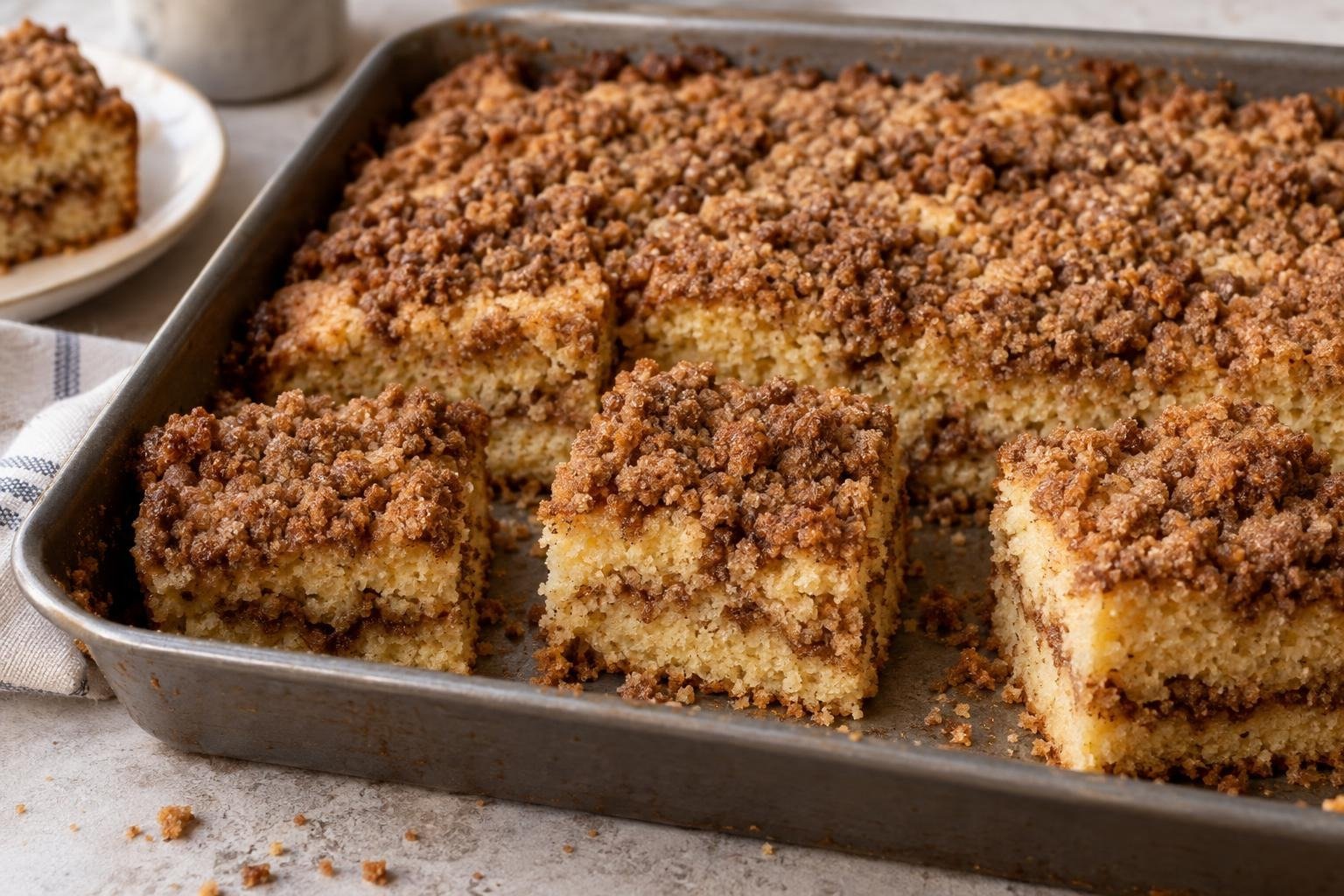
Toasty hazelnut-like aromas, a rippled cinnamon sugar center, and a craggy golden topping give this brown butter cinnamon coffee cake plenty of contrast. The sour cream batter bakes into soft, tidy slices that stay tender beneath the crisp crumbs, while browned milk solids deepen the buttery flavor without making the cake heavy or greasy.
I brown the butter for the batter and topping separately because each portion needs different handling. The topping butter stays warm enough to bind substantial crumbs, while the batter butter must cool until opaque and pliable before creaming. A metal 9 x 13-inch pan promotes even browning, and the cake is ready when the center springs back and a tester shows moist crumbs rather than wet batter.
Why You’ll Love this Brown Butter Cake
- Browning the butter concentrates its toasted milk-solid flavor, giving both the cake and crumb topping a warm, nutty character without adding extracts or artificial flavoring.
- Full-fat sour cream supplies moisture and acidity while its milk proteins support a soft, cohesive crumb that can hold the cinnamon ribbon and substantial topping.
- Creaming cooled brown butter with granulated sugar incorporates small air pockets, helping the relatively rich batter rise evenly instead of baking into a dense layer.
- The cinnamon sugar ribbon is kept free of butter and flour, so it forms a defined aromatic seam rather than disappearing into the cake batter.
- A restrained final mixing stage limits gluten development, while cooling the cake completely allows the crumb and cinnamon layer to set for clean slices.
Ingredient Notes for Brown Butter Cinnamon Coffee Cake with Soft, Tender Crumb
- Unsalted butter: Browning develops toasted flavors as the milk solids caramelize. Use separate portions for the cake and topping, scrape every browned bit from the pans, and cool the batter portion until opaque before creaming.
- All-purpose flour: Its moderate protein content provides enough structure for the ribbon and crumb topping without making the cake tough. Fluff, spoon, and level if measuring by cups, although weighing is more reliable.
- Full-fat sour cream: Sour cream contributes fat, water, acidity, and milk proteins, all of which support a moist, tender crumb. Bring it to room temperature so it emulsifies smoothly into the butter and egg mixture.
- Brown sugar: Light brown sugar supplies molasses flavor and moisture to the cinnamon ribbon and crumb topping. Break up firm lumps before measuring so the layers remain even.
- Cinnamon: Ground cinnamon appears in both the center and topping. Fresh, fragrant cinnamon matters because prolonged storage can mute the volatile oils responsible for its warm aroma.
- Whole milk and eggs: Room-temperature milk loosens the batter, while eggs provide emulsifiers and structure. Adding the eggs individually helps the browned butter mixture stay smooth rather than curdling.
- Baking powder and baking soda: Baking powder supplies most of the lift, while a smaller amount of baking soda reacts with sour cream and encourages browning. Measure both level to prevent an uneven rise or alkaline aftertaste.
A Few Good Things to Know
- Watch the milk solids rather than relying only on time when browning butter. Remove the pan when they are deep amber, since residual heat continues cooking them and black specks will taste bitter.
- Do not cream the cake butter while it is still fluid. It should be opaque and soft enough for the paddle to leave tracks, which allows the sugar crystals to incorporate air rather than simply dissolving into fat.
- Use room-temperature eggs, sour cream, and milk. Cold ingredients can harden the brown butter and split the emulsion, producing small butter pockets and a less uniform crumb.
- Apply the second batter layer in small dollops before spreading. Dragging one large mound across the cinnamon sugar can displace the ribbon and create sticky channels along the pan edges.
- Judge doneness in the center rather than near an edge. The topping may leave buttery residue on a tester, but glossy raw batter indicates the cake needs several more minutes.
Ingredients for Brown Butter Cinnamon Coffee Cake
- 113 g unsalted butter, for the crumb topping (1/2 cup; cut into pieces)
- 180 g all-purpose flour, for the crumb topping (1 1/2 cups, spooned and leveled)
- 180 g packed light brown sugar, for the crumb topping (3/4 cup plus 2 tablespoons)
- 2 tsp ground cinnamon, for the crumb topping (Use fragrant, recently opened cinnamon)
- 1/4 tsp fine sea salt, for the crumb topping (Balances the sugar and browned butter)
- 100 g packed light brown sugar, for the cinnamon ribbon (1/2 cup)
- 2 tsp ground cinnamon, for the cinnamon ribbon (Whisk thoroughly with the brown sugar)
- 360 g all-purpose flour, for the cake (3 cups, spooned and leveled)
- 2 1/2 tsp baking powder (Level measurement)
- 1/2 tsp baking soda (Level measurement)
- 1 tsp fine sea salt, for the cake (Distribute evenly through the flour)
- 198 g unsalted butter, for the cake (14 tablespoons; cut into pieces before browning)
- 250 g granulated sugar (1 1/4 cups)
- 3 large eggs (Room temperature)
- 2 tsp pure vanilla extract (Add with the final egg)
- 240 g full-fat sour cream (1 cup, room temperature)
- 120 ml whole milk (1/2 cup, room temperature)
How to Make Brown Butter Cinnamon Coffee Cake
- STEP 1). Brown the butter and build the crumb topping Melt the 113 g topping butter in a light-colored saucepan over medium heat, stirring as it foams. Continue cooking for 4 to 7 minutes, until the foam subsides and amber milk solids smell nutty. Immediately scrape the butter and browned bits into a medium bowl. Stir in the 180 g flour, 180 g brown sugar, 2 teaspoons cinnamon, and 1/4 teaspoon salt. Squeeze into irregular clumps, then refrigerate while preparing the batter so the crumbs firm up.
- STEP 2). Brown and cool the butter for the cake Brown the 198 g cake butter in the clean saucepan over medium heat, stirring and scraping the bottom as the milk solids turn amber, about 5 to 8 minutes. Transfer every drop and browned speck to the mixer bowl. Let it cool for 20 to 30 minutes, stirring occasionally, until opaque, thickened, and pliable rather than warm and liquid. Meanwhile, heat the oven to 350°F and line a 9 x 13-inch metal pan with parchment, leaving overhang on two sides.
- STEP 3). Combine the ribbon and dry ingredients In a small bowl, rub together the 100 g brown sugar and 2 teaspoons cinnamon with your fingertips until evenly colored and free of firm lumps; set this ribbon mixture aside. In a separate medium bowl, whisk the 360 g flour, baking powder, baking soda, and 1 teaspoon salt for at least 30 seconds. Thorough distribution prevents isolated pockets of leavener and helps the thick batter rise evenly beneath the topping.
- STEP 4). Cream the brown butter and sugar Fit the mixer with the paddle attachment. Beat the cooled brown butter and granulated sugar on medium speed for 3 to 4 minutes, stopping once to scrape the bowl, until lighter, creamy, and slightly increased in volume. Add the eggs one at a time, mixing on medium-low for about 30 seconds after each and scraping before the next addition. Mix in the vanilla with the final egg. The emulsion should look smooth and satiny; if it appears curdled, the flour addition will bring it together.
- STEP 5). Finish the sour cream batter Whisk the room-temperature sour cream and milk together until smooth. With the mixer on low, add one-third of the dry ingredients, followed by half of the sour cream mixture. Repeat, then finish with the remaining dry ingredients. Stop when only a few flour streaks remain and fold twice with a flexible spatula, scraping the bottom. The finished batter should be thick but spreadable. Avoid extended mixing because hydrated flour develops gluten, which can make the crumb firm or tunneled.
- STEP 6). Layer, top, and bake the coffee cake Spread half the batter, about 675 g, evenly in the prepared pan with an offset spatula. Sprinkle the cinnamon ribbon across the surface, keeping a 1/2-inch border so molten sugar does not stick to the pan. Dollop and gently spread the remaining batter over it without disturbing the ribbon. Scatter the chilled crumbs evenly, breaking only very large pieces. Bake for 42 to 48 minutes, rotating after 30 minutes, until the center springs back and a skewer shows moist crumbs but no wet batter.
- STEP 7). Cool, lift, and slice cleanly Set the pan on a wire rack and cool the cake in the pan for 30 minutes so its structure firms without trapping excessive steam. Use the parchment overhang to lift it carefully onto the rack, then cool for at least 60 minutes more. The center and cinnamon ribbon must set before slicing. Transfer to a board and cut with a sharp serrated knife, using gentle sawing strokes and wiping the blade between cuts to preserve the crumb topping and distinct layers.
Storage and Freezing
- Room temperature: Keep the completely cooled coffee cake in an airtight container for up to 2 days. Place parchment between stacked slices to protect the crumb topping.
- Refrigeration: Refrigerate airtight for up to 5 days if the room is warm. Chilling firms the butter, so let individual slices stand at room temperature for 20 to 30 minutes before serving.
- Freezing: Wrap fully cooled individual slices in plastic wrap, place them in a freezer-safe container, and freeze for up to 2 months.
- Thawing: Unwrap frozen slices and thaw them on a covered plate at room temperature for 1 to 2 hours. Uncovering during the final 15 minutes helps keep condensation from softening the topping.
- Serving: Serve at room temperature, or warm a slice in a 300°F oven for 6 to 8 minutes. Brief oven warming restores the topping more effectively than microwaving.
Frequently Asked Questions
What makes brown butter cinnamon coffee cake taste different from regular coffee cake?
Brown butter contains toasted milk solids that contribute nutty, caramel-like aromas beyond the flavor of plain melted butter. This recipe uses it in both the cake batter and crumb topping, so the flavor runs through the entire slice rather than sitting only on the surface.
Browning also removes some of butter's water, making careful mixing important. Cooling the batter portion until opaque allows it to cream with sugar, while the warm topping portion binds flour and brown sugar into crisp, irregular crumbs.
How do you keep brown butter cinnamon coffee cake moist?
Full-fat sour cream, whole milk, brown sugar, and a properly emulsified batter provide enough moisture and fat for a tender crumb. Measuring the flour by weight and stopping the mixer as soon as the dry ingredients disappear prevent an overly stiff batter.
Avoid baking until the tester is completely dry. A few moist crumbs are appropriate, while glossy batter is not. Once cooled, cover the cake promptly because exposed cut surfaces lose moisture faster than the intact top.
Why did my cinnamon ribbon sink or leak at the sides?
A ribbon can shift when the bottom batter layer is too thin, the upper batter is spread aggressively, or the cinnamon sugar reaches the pan walls. Keeping a 1/2-inch border helps contain the sugar as it melts in the oven.
Dollop the upper batter across the entire surface before gently joining the portions with an offset spatula. This distributes its weight and prevents one heavy mound from pushing the cinnamon mixture downward or toward the edges.
Can I freeze brown butter cinnamon coffee cake?
Individual slices freeze well for up to 2 months when they are completely cool and tightly wrapped. Place the wrapped portions in a rigid freezer-safe container so the crumb topping is not crushed by other food.
Thaw slices at room temperature for 1 to 2 hours, then uncover briefly to release condensation. For a crisper topping, warm thawed slices in a 300°F oven for 6 to 8 minutes instead of microwaving them.
When is brown butter cinnamon coffee cake fully baked?
The center should spring back after a light touch, and a wooden skewer inserted through the thickest section should emerge without glossy batter. Moist cake crumbs and a little butter from the topping are expected, so do not wait for a perfectly clean tester.
In a metal 9 x 13-inch pan, baking generally takes 42 to 48 minutes at 350°F. Glass and dark pans transfer heat differently, which can change browning and timing, so visual and tactile cues remain essential.
More Ridiculously Delicious Cakes
- Apple Cinnamon Crunch Cake with a Soft, Moist Crumb
- Maple Pecan Coffee Cake with Soft, Tender Crumb
- Strawberry Rhubarb Coffee Cake with Soft, Tender Crumb
- Raspberry Lemon Coffee Cake with Soft, Tender Crumb
- Cranberry Orange Coffee Cake with Soft, Tender Crumb
Brown Butter Cinnamon Coffee Cake with Soft, Tender Crumb
Ingredients
Equipment
Method
- Melt the 113 g topping butter in a light-colored saucepan over medium heat, stirring as it foams. Continue cooking for 4 to 7 minutes, until the foam subsides and amber milk solids smell nutty. Immediately scrape the butter and browned bits into a medium bowl. Stir in the 180 g flour, 180 g brown sugar, 2 teaspoons cinnamon, and 1/4 teaspoon salt. Squeeze into irregular clumps, then refrigerate while preparing the batter so the crumbs firm up.
- Brown the 198 g cake butter in the clean saucepan over medium heat, stirring and scraping the bottom as the milk solids turn amber, about 5 to 8 minutes. Transfer every drop and browned speck to the mixer bowl. Let it cool for 20 to 30 minutes, stirring occasionally, until opaque, thickened, and pliable rather than warm and liquid. Meanwhile, heat the oven to 350°F and line a 9 x 13-inch metal pan with parchment, leaving overhang on two sides.
- In a small bowl, rub together the 100 g brown sugar and 2 teaspoons cinnamon with your fingertips until evenly colored and free of firm lumps; set this ribbon mixture aside. In a separate medium bowl, whisk the 360 g flour, baking powder, baking soda, and 1 teaspoon salt for at least 30 seconds. Thorough distribution prevents isolated pockets of leavener and helps the thick batter rise evenly beneath the topping.
- Fit the mixer with the paddle attachment. Beat the cooled brown butter and granulated sugar on medium speed for 3 to 4 minutes, stopping once to scrape the bowl, until lighter, creamy, and slightly increased in volume. Add the eggs one at a time, mixing on medium-low for about 30 seconds after each and scraping before the next addition. Mix in the vanilla with the final egg. The emulsion should look smooth and satiny; if it appears curdled, the flour addition will bring it together.
- Whisk the room-temperature sour cream and milk together until smooth. With the mixer on low, add one-third of the dry ingredients, followed by half of the sour cream mixture. Repeat, then finish with the remaining dry ingredients. Stop when only a few flour streaks remain and fold twice with a flexible spatula, scraping the bottom. The finished batter should be thick but spreadable. Avoid extended mixing because hydrated flour develops gluten, which can make the crumb firm or tunneled.
- Spread half the batter, about 675 g, evenly in the prepared pan with an offset spatula. Sprinkle the cinnamon ribbon across the surface, keeping a 1/2-inch border so molten sugar does not stick to the pan. Dollop and gently spread the remaining batter over it without disturbing the ribbon. Scatter the chilled crumbs evenly, breaking only very large pieces. Bake for 42 to 48 minutes, rotating after 30 minutes, until the center springs back and a skewer shows moist crumbs but no wet batter.
- Set the pan on a wire rack and cool the cake in the pan for 30 minutes so its structure firms without trapping excessive steam. Use the parchment overhang to lift it carefully onto the rack, then cool for at least 60 minutes more. The center and cinnamon ribbon must set before slicing. Transfer to a board and cut with a sharp serrated knife, using gentle sawing strokes and wiping the blade between cuts to preserve the crumb topping and distinct layers.
Notes
- Watch the milk solids rather than relying only on time when browning butter. Remove the pan when they are deep amber, since residual heat continues cooking them and black specks will taste bitter.
- Do not cream the cake butter while it is still fluid. It should be opaque and soft enough for the paddle to leave tracks, which allows the sugar crystals to incorporate air rather than simply dissolving into fat.
- Use room-temperature eggs, sour cream, and milk. Cold ingredients can harden the brown butter and split the emulsion, producing small butter pockets and a less uniform crumb.
- Apply the second batter layer in small dollops before spreading. Dragging one large mound across the cinnamon sugar can displace the ribbon and create sticky channels along the pan edges.
- Judge doneness in the center rather than near an edge. The topping may leave buttery residue on a tester, but glossy raw batter indicates the cake needs several more minutes.