Table of Contents
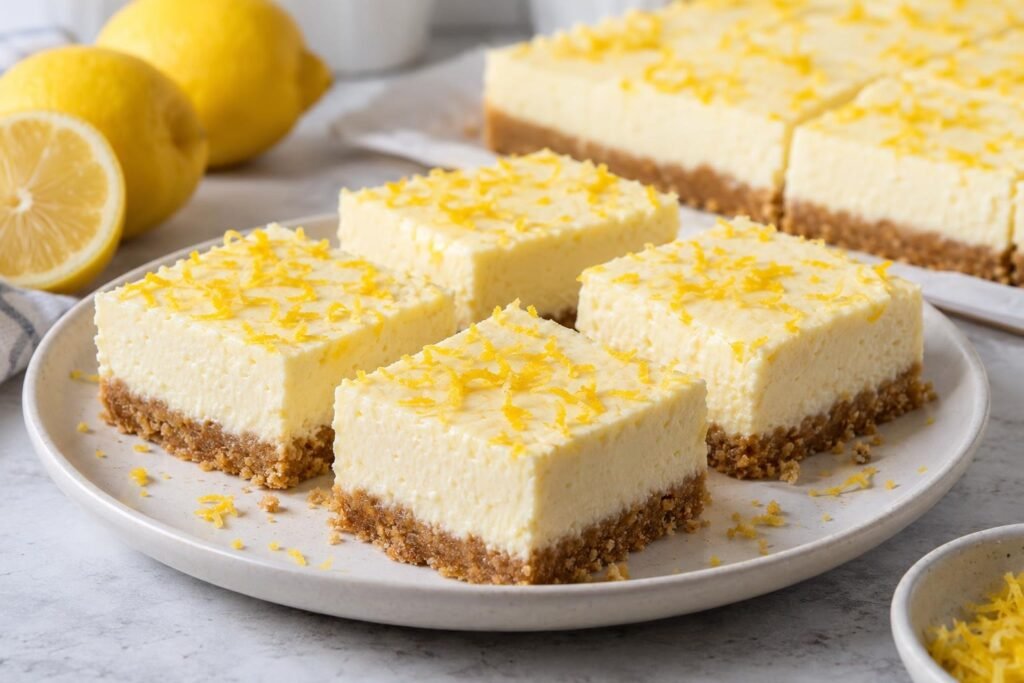
Bright lemon aroma, a cool cream cheese filling, and a crisp, buttery graham crust give these lemon no-bake cheesecake bars plenty of contrast. The filling is tangy without becoming sharp, while whipped cream keeps the texture lighter than a dense baked cheesecake. A little fresh zest over the surface adds color and citrus fragrance without piling on unnecessary decoration.
I use powdered gelatin for a reliable refrigerator set, but the goal is not a rubbery filling. Blooming it fully, dissolving it gently, and tempering it with the cream cheese mixture prevent stubborn strands or little gelatin beads. The bars are ready when the center moves as one piece rather than rippling, the surface feels dry, and a chilled test slice holds a neat vertical edge.

What Makes this Lemon Cheesecake So Frickin’ Good
- Powdered gelatin supports the lemon filling at refrigerator temperature, allowing clean bars without baking the cheesecake layer.
- Full-fat brick cream cheese supplies enough fat and milk solids for a stable, creamy filling; soft spreadable cream cheese contains more moisture and can weaken the set.
- Cold heavy cream whipped to medium-firm peaks introduces air, balancing the substantial cream cheese without making the filling foamy or fragile.
- A firmly compressed graham cracker crust and an initial chill create a compact base that resists crumbling when the bars are lifted and sliced.
- Fresh lemon zest provides concentrated citrus aroma, while strained juice supplies clean acidity without seeds or excess pieces of pulp.
Ingredient Notes for Lemon No-Bake Cheesecake Bars with Tangy Citrus Filling
- Graham cracker crumbs: Finely ground, evenly sized crumbs pack more securely than coarse pieces. Measure by weight when possible, since loose and tightly packed cup measurements can vary considerably.
- Unsalted butter: Melted butter coats the crumbs and firms when chilled, creating the no-bake crust’s structure. Let it cool slightly so it does not leave greasy pockets in the mixture.
- Full-fat brick cream cheese: Use solid blocks rather than whipped or tub-style cream cheese. Bring the blocks to about 18 to 21°C so they blend smoothly without requiring prolonged beating.
- Fresh lemon: Finely grate only the yellow outer peel because the white pith tastes bitter. Strain the juice to remove seeds and large pulp pieces that would interrupt the creamy filling.
- Powdered gelatin: Gelatin must absorb cold water before it is heated. Gentle warming dissolves the swollen granules, while boiling can reduce its setting strength.
- Heavy whipping cream: Keep the cream cold until whipping. Its fat traps air during mixing, giving the filling a lighter texture while the gelatin provides the final sliceable structure.
My Tips for the Best Results
- Keep the cream cheese near cool room temperature but leave the heavy cream refrigerated. This temperature contrast allows the cheese to blend smoothly while the cream still whips efficiently.
- Add the lemon juice gradually. Pouring all of the acid into the cream cheese at once can produce small lumps that are difficult to smooth without overmixing.
- Do not wait too long after tempering the gelatin. Once combined with the cooler cheesecake base, it begins setting, so whip and fold the cream promptly.
- Compress the crust more firmly than seems necessary, especially around the edges. Loose crumbs are the main reason a no-bake crust breaks when the parchment sling is lifted.
- For the cleanest presentation, chill the lifted slab for another 10 minutes before cutting if it has softened during transfer. Warm and wipe the knife before every cut rather than dragging filling from one bar to the next.
Ingredients for Lemon No-Bake Cheesecake Bars
- 2 1/2 cups fine graham cracker crumbs (250 g, ground to an even sandy texture)
- 6 tablespoons unsalted butter (85 g, melted and cooled slightly)
- 2 tablespoons granulated sugar (25 g)
- 1/4 teaspoon fine salt (For balancing the crust)
- 3 tablespoons cold water (45 ml, for blooming the gelatin)
- 2 1/4 teaspoons unflavored powdered gelatin (7 g, one standard envelope)
- 24 ounces full-fat brick cream cheese (680 g, softened to 18 to 21°C)
- 1 cup confectioners’ sugar (120 g, sifted if lumpy)
- 2 tablespoons finely grated lemon zest (Divided, with 1 teaspoon reserved for finishing)
- 1 teaspoon pure vanilla extract (Rounds out the lemon’s acidity)
- 1/2 cup fresh lemon juice (120 ml, strained and at room temperature)
- 1 cup cold heavy whipping cream (240 ml, at least 35 percent milk fat)
How to Make Lemon No-Bake Cheesecake Bars
- STEP 1). Prepare and chill the graham cracker crust Line a 9-inch square metal pan with two crossed strips of parchment, leaving enough overhang to lift the bars later. Combine the graham crumbs, melted butter, granulated sugar, and salt in a medium bowl until every crumb looks evenly damp. Tip the mixture into the pan and compress it firmly with the flat bottom of a measuring cup, paying attention to the corners. Refrigerate the crust for at least 20 minutes while preparing the filling.
- STEP 2). Bloom the powdered gelatin Pour the cold water into a small microwave-safe bowl, then sprinkle the gelatin evenly over the entire surface instead of dropping it in one mound. Leave it undisturbed for 5 to 10 minutes. The granules should absorb the water and form an opaque, thick gel with no dry powder visible. Proper blooming hydrates each granule before heating, which helps the gelatin dissolve smoothly rather than forming tough specks in the lemon filling.
- STEP 3). Mix the lemon cream cheese base Place the softened cream cheese in a large bowl and beat with a paddle or hand mixer on medium-low speed for about 1 minute, scraping the bowl, until completely smooth. Add the confectioners’ sugar, 1 tablespoon plus 2 teaspoons lemon zest, and vanilla; mix until creamy. With the mixer on low, add the room-temperature lemon juice in four additions. Scrape thoroughly after each addition and stop when the base is glossy, uniform, and free of cream cheese lumps.
- STEP 4). Dissolve, temper, and incorporate the gelatin Microwave the bloomed gelatin for 5 seconds, stir, and repeat only as needed until it becomes clear and fluid; do not let it boil. Let it stand for about 1 minute so it remains liquid but is not piping hot. Whisk 3 tablespoons of the lemon cream cheese base into the dissolved gelatin. With the mixer running on low, pour this tempered mixture into the remaining base in a thin stream, then mix for 20 seconds and scrape the bowl.
- STEP 5). Whip the cream and fill the pan In a clean bowl, whip the cold heavy cream on medium speed for 2 to 3 minutes, until the whisk leaves defined tracks and lifted peaks stand with slightly bent tips. Fold one-third of the whipped cream into the lemon base to loosen it, then gently fold in the remainder until no white streaks remain. Spread the filling over the chilled crust with an offset spatula, press it into the corners, level the surface, and sprinkle with the reserved lemon zest.
- STEP 6). Chill, check the set, and slice Refrigerate the uncovered pan for 30 minutes, then cover without touching the surface and chill for at least 5 1/2 more hours, preferably overnight. The center should barely wobble as one cohesive piece, and a light fingertip touch should not leave wet filling behind. Lift the slab out by the parchment and place it on a cutting board. Cut into 16 bars with a large knife, wiping and warming the blade under hot water between cuts, then serve chilled.
Storage and Freezing
- Refrigerating: Store the bars in a single layer in an airtight container for up to 4 days. Keep them at refrigerator temperature until shortly before serving.
- Freezing: Freeze fully set, unsliced bars or individual pieces on a parchment-lined tray until firm, then wrap airtight and freeze for up to 1 month.
- Thawing: Thaw wrapped bars overnight in the refrigerator. Unwrap them after thawing so condensation does not collect directly on the filling.
- Serving: Serve chilled for the cleanest texture. Return leftovers to the refrigerator within 2 hours, or within 1 hour in a very warm room.
Frequently Asked Questions
How do you tell when lemon no-bake cheesecake bars are set?
The filling should move as one cohesive layer when the pan is nudged. A loose ripple through the center means it needs more chilling, while a slight whole-pan wobble is normal for a creamy gelatin-set cheesecake.
Touch the surface lightly with a clean fingertip. It should feel cool and dry rather than sticky or wet. For final confirmation, lift and cut one edge portion; a set bar holds a straight side without slumping.
How long should lemon no-bake cheesecake bars chill before slicing?
Allow at least 6 hours of total refrigerator time, including the initial uncovered chill. Overnight chilling is even more convenient because the gelatin finishes forming its network and the butter in the crust becomes fully firm.
Do not use the freezer to rush the primary set. The edges can freeze before the center stabilizes, creating uneven texture and misleading firmness that disappears as the bars warm.
Why did my no-bake lemon cheesecake filling stay soft?
Common causes include tub-style cream cheese, underwhipped cream, incomplete gelatin blooming, or gelatin that was overheated. Cutting too early can also make a correctly prepared filling look unsuccessful because the center has not had enough time to stabilize.
Keep the pan refrigerated and reassess it after an overnight chill. If the surface still ripples like a thick liquid, additional chilling will not correct gelatin that was omitted, boiled, or left in the mixing bowl as solid strands.
Can I make these lemon cheesecake bars ahead of serving?
Preparing the bars one day ahead gives the filling ample time to set and makes clean slicing less rushed. Keep the pan covered after the first 30 minutes of chilling so the cheesecake does not absorb refrigerator odors or dry around the edges.
For the neatest surface, leave the slab in the pan overnight and slice it on the day of serving. Add no extra lemon juice during storage because surface moisture can soften the filling.
What is the best way to cut no-bake cheesecake bars cleanly?
Lift the fully chilled slab onto a cutting board using the parchment handles. Use a long, sharp knife warmed under hot water, dry it completely, and make one firm downward cut instead of sawing through the filling and crust.
Wipe, rewarm, and dry the blade after every cut. Marking four equal sections in each direction before slicing also produces 16 evenly sized bars without repeatedly measuring softened cheesecake.
Your Next Baking Obsession Starts Here
- Strawberry No-Bake Cheesecake Bars with a Creamy Berry Layer
- Chocolate No-Bake Cheesecake Bars with a Creamy Filling
- No-Bake Oreo Cheesecake with a Creamy Filling and Cookie Crust
- No-Bake Coconut Cheesecake with Creamy Filling
- Chocolate Cheesecake with Creamy Filling
Lemon No-Bake Cheesecake Bars with Tangy Citrus Filling
Ingredients
Equipment
Method
- Line a 9-inch square metal pan with two crossed strips of parchment, leaving enough overhang to lift the bars later. Combine the graham crumbs, melted butter, granulated sugar, and salt in a medium bowl until every crumb looks evenly damp. Tip the mixture into the pan and compress it firmly with the flat bottom of a measuring cup, paying attention to the corners. Refrigerate the crust for at least 20 minutes while preparing the filling.
- Pour the cold water into a small microwave-safe bowl, then sprinkle the gelatin evenly over the entire surface instead of dropping it in one mound. Leave it undisturbed for 5 to 10 minutes. The granules should absorb the water and form an opaque, thick gel with no dry powder visible. Proper blooming hydrates each granule before heating, which helps the gelatin dissolve smoothly rather than forming tough specks in the lemon filling.
- Place the softened cream cheese in a large bowl and beat with a paddle or hand mixer on medium-low speed for about 1 minute, scraping the bowl, until completely smooth. Add the confectioners’ sugar, 1 tablespoon plus 2 teaspoons lemon zest, and vanilla; mix until creamy. With the mixer on low, add the room-temperature lemon juice in four additions. Scrape thoroughly after each addition and stop when the base is glossy, uniform, and free of cream cheese lumps.
- Microwave the bloomed gelatin for 5 seconds, stir, and repeat only as needed until it becomes clear and fluid; do not let it boil. Let it stand for about 1 minute so it remains liquid but is not piping hot. Whisk 3 tablespoons of the lemon cream cheese base into the dissolved gelatin. With the mixer running on low, pour this tempered mixture into the remaining base in a thin stream, then mix for 20 seconds and scrape the bowl.
- In a clean bowl, whip the cold heavy cream on medium speed for 2 to 3 minutes, until the whisk leaves defined tracks and lifted peaks stand with slightly bent tips. Fold one-third of the whipped cream into the lemon base to loosen it, then gently fold in the remainder until no white streaks remain. Spread the filling over the chilled crust with an offset spatula, press it into the corners, level the surface, and sprinkle with the reserved lemon zest.
- Refrigerate the uncovered pan for 30 minutes, then cover without touching the surface and chill for at least 5 1/2 more hours, preferably overnight. The center should barely wobble as one cohesive piece, and a light fingertip touch should not leave wet filling behind. Lift the slab out by the parchment and place it on a cutting board. Cut into 16 bars with a large knife, wiping and warming the blade under hot water between cuts, then serve chilled.
Notes
- Keep the cream cheese near cool room temperature but leave the heavy cream refrigerated. This temperature contrast allows the cheese to blend smoothly while the cream still whips efficiently.
- Add the lemon juice gradually. Pouring all of the acid into the cream cheese at once can produce small lumps that are difficult to smooth without overmixing.
- Do not wait too long after tempering the gelatin. Once combined with the cooler cheesecake base, it begins setting, so whip and fold the cream promptly.
- Compress the crust more firmly than seems necessary, especially around the edges. Loose crumbs are the main reason a no-bake crust breaks when the parchment sling is lifted.
- For the cleanest presentation, chill the lifted slab for another 10 minutes before cutting if it has softened during transfer. Warm and wipe the knife before every cut rather than dragging filling from one bar to the next.