Table of Contents
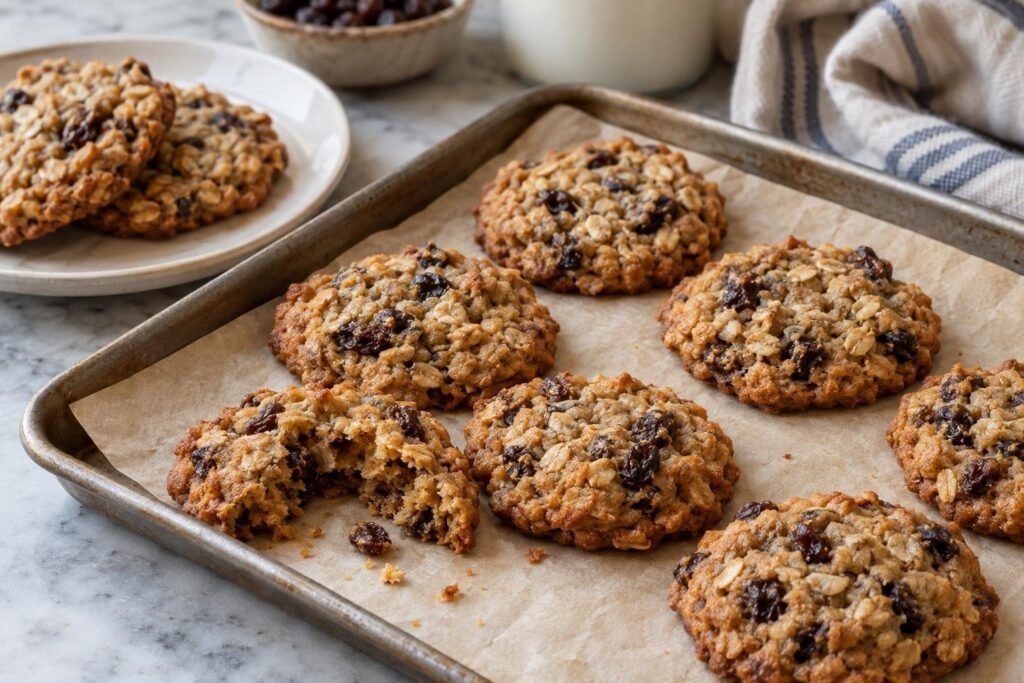
Sometimes eight cookies are exactly what I need, especially when I’m craving something homemade without a mountain of leftovers! These small-batch oatmeal raisin cookies have everything I enjoy about the old-fashioned classic: warm cinnamon, plump raisins, hearty oats, and those slightly crisp, buttery edges surrounding a soft, chewy center. I use more brown sugar than white sugar because it brings a deeper caramel flavor and helps keep the cookies moist. An extra egg yolk instead of a whole egg gives the dough richness without making it too soft, and a short chill helps the oats absorb moisture while keeping the cookies from spreading too much. I also like weighing each portion so all eight bake evenly. There’s nothing quite like pulling a tray of golden oatmeal cookies from the oven, especially when the kitchen smells like butter, cinnamon, and brown sugar!

Why This Recipe Frickin’ Works
- One egg yolk is all you need: For a batch of just eight cookies, a whole egg would add more moisture than the dough needs. I use the yolk instead because it brings richness and helps hold everything together without making the cookies spread too thin.
- Brown sugar brings the chew: I use more brown sugar than granulated sugar for that deeper, caramel-like flavor and soft, chewy middle. The little bit of white sugar helps the edges bake up golden and slightly crisp. It’s the contrast that makes a good oatmeal raisin cookie so hard to resist!
- Give those oats a little time to settle in: A 30-minute chill lets the rolled oats absorb some moisture while the butter firms up. I find it makes the dough easier to handle and helps the cookies hold their shape in the oven instead of spreading into thin, flat discs.
- Eight cookies, no guessing games: I divide the dough into eight portions of approximately 44 g each. Weighing them might seem a little fussy for such a small batch, but it means every cookie bakes evenly, with nicely golden edges and soft centers. Nobody gets stuck with the tiny, overbaked one!
- Don’t wait for the centers to look completely firm: One of the easiest ways to dry out oatmeal cookies is leaving them in the oven too long. I take them out when the edges are set and the centers still look a little soft. They continue firming up on the hot baking sheet as they cool, leaving you with that wonderful chewy middle instead of a dry, crumbly cookie.
Ingredient Notes for Small-Batch Oatmeal Raisin Cookies
- Unsalted butter: Softened butter traps small air pockets during creaming, but it should still feel cool and resist slightly when pressed. Melted or greasy butter will encourage excessive spread.
- Brown sugar: Light brown sugar contributes molasses flavor and moisture, helping the centers remain chewy after the cookies cool.
- Granulated sugar: This smaller sugar portion promotes spreading and edge crispness without overpowering the brown sugar’s caramel character.
- Egg yolk: The yolk binds and enriches this small quantity of dough while limiting the extra water and protein a whole egg would add.
- All-purpose flour: Flour supplies the structure needed to hold the oats and raisins. Weigh it when possible because too much produces thick, dry cookies.
- Old-fashioned rolled oats: Rolled oats provide a substantial chew and recognizable oatmeal texture. Quick oats absorb moisture differently and are not a direct match for this formula.
- Raisins: Separate any clumps before measuring so the fruit distributes evenly. Soft, supple raisins work best because very dry fruit can pull moisture from the dough.
- Cinnamon and vanilla: Cinnamon gives the cookies warmth, while vanilla rounds out the butter, molasses, and raisin flavors without making the cookies taste heavily spiced.
A Few Good Things to Know
- Respect the butter temperature: Butter warmer than 20°C can make the dough greasy and cause broad, thin cookies, so chill it briefly if it looks shiny.
- Judge the dough after chilling: Properly chilled dough should hold a rounded portion without slumping; give unusually soft dough another 10 minutes before shaping.
- Leave breathing room on the pan: Eight portions fit on a large sheet with at least 5 centimeters between them, preventing neighboring cookies from merging as they spread.
- Read the center, not only the clock: Pull the cookies when their centers are soft and matte rather than liquid-looking; waiting for firm centers creates dry cookies after cooling.
- Revive the chewy texture gently: If stored cookies become firm, warm one for 5 to 8 seconds in the microwave and let it stand briefly before eating.
Ingredients for Small-Batch Oatmeal Raisin Cookies
- 57 g unsalted butter (1/4 cup, softened to about 18 to 20°C)
- 50 g light brown sugar (1/4 cup, firmly packed)
- 20 g granulated sugar (1 tablespoon plus 2 teaspoons)
- 1 large egg yolk (about 18 g, at room temperature)
- 1 teaspoon pure vanilla extract
- 70 g all-purpose flour (1/2 cup plus 1 tablespoon, spooned and leveled if measured by volume)
- 1/2 teaspoon ground cinnamon
- 1/4 teaspoon baking soda (level measure)
- 1/4 teaspoon fine sea salt
- 65 g old-fashioned rolled oats (about 3/4 cup)
- 55 g raisins (about 1/3 cup, separated if clumped)
How to Make Small-Batch Oatmeal Raisin Cookies
- STEP 1). Prepare the baking sheet and dry ingredients Line a large rimmed baking sheet with parchment paper. In a small bowl, whisk the flour, cinnamon, baking soda, and salt until the cinnamon is evenly dispersed and no soda lumps remain. Add the rolled oats and whisk again. Keeping the leavener evenly distributed matters in this small dough because even a concentrated pinch can cause uneven browning or a soapy flavor.
- STEP 2). Cream the butter and sugars Place the softened butter, brown sugar, and granulated sugar in a medium bowl. Using an electric hand mixer on medium speed, beat for 90 seconds to 2 minutes, scraping the bowl once, until the mixture looks creamy and slightly lighter but not fluffy like cake batter. Add the egg yolk and vanilla, then beat for 30 seconds until smooth, glossy, and fully emulsified with no visible yolk streaks.
- STEP 3). Finish and chill the dough Add the oat mixture to the butter mixture and mix on low speed, or fold with a sturdy spatula, just until only a few dry flour streaks remain. Fold in the raisins until evenly distributed and no loose flour remains. The dough should be thick, tacky, and easy to mound, not wet or crumbly. Cover the bowl and refrigerate for 30 minutes so the oats hydrate and the butter firms enough to control spreading.
- STEP 4). Portion while the oven preheats Set an oven rack in the center and preheat the oven to 175°C, or 350°F, for at least 20 minutes. Divide the chilled dough into eight 44-gram portions using a scale or a firmly packed 2-tablespoon scoop. Roll each portion gently into a ball, place them at least 5 centimeters apart on the prepared sheet, and press each to a thick disc about 2 centimeters tall. The dough should feel cool and firm but should not crack around the edges.
- STEP 5). Bake and cool for chewy centers Bake the cookies on the center rack for 11 to 13 minutes, rotating the pan from front to back after 8 minutes. They are ready when the edges are golden and set, the tops look dry around the perimeter, and the centers remain slightly puffed and soft but not shiny or wet. Let them cool on the pan for 10 minutes, where residual heat finishes the centers, then transfer carefully to a wire rack and cool for at least 5 minutes before serving.
Storage and Freezing
- Storage: Keep completely cooled cookies in an airtight container at room temperature for up to 4 days. Place parchment between layers to prevent sticking.
- Freezing baked cookies: Freeze cooled cookies in a sealed freezer container for up to 2 months, separating layers with parchment.
- Freezing cookie dough: Freeze the shaped 44-gram dough portions on a lined tray until firm, then transfer them to an airtight freezer bag for up to 2 months.
- Thawing and baking: Thaw frozen dough portions in the refrigerator overnight, press them into thick discs, and bake as directed while using the visual doneness cues.
- Serving: Let frozen baked cookies thaw in their closed container at room temperature so condensation forms on the container rather than on the cookies.
Frequently Asked Questions
Why did my small-batch oatmeal raisin cookies spread too much?
Overly warm butter or insufficient chilling usually causes excessive spread. The creamed butter should look smooth but not shiny, and the chilled dough portions should remain rounded rather than slump on the tray.
Also check the flour weight and avoid placing dough on a warm baking sheet. Undermeasured flour, hot pans, or butter softened past 20°C can all produce thin, greasy edges.
How do I keep oatmeal raisin cookies soft and chewy?
Remove the cookies when the edges are golden and stable but the centers still look slightly soft and puffed. They continue cooking on the hot sheet during the 10-minute cooling period.
Brown sugar and egg yolk help retain tenderness, but storage matters too. Seal the fully cooled cookies promptly because prolonged exposure to air allows their limited moisture to escape.
What size should each small-batch cookie dough portion be?
Each portion should weigh about 44 grams, roughly a firmly packed 2 tablespoons of dough. Pressing it into a thick disc about 2 centimeters tall encourages controlled, even spreading.
Portions of this size should finish around 7 to 8 centimeters wide. Uneven scoops bake at different rates, leaving smaller cookies dry before larger centers are safely set.
Can I bake the cookie dough directly from frozen?
Thawing the portions overnight in the refrigerator gives the most predictable spread for this formula. Once thawed, press each mound into a thick disc and bake according to the original temperature and visual cues.
Dough baked while solidly frozen may brown at the edges before the center spreads and cooks evenly. Avoid compensating with a hotter oven, which can exaggerate that difference.
Why are my oatmeal raisin cookies dry or crumbly?
Too much flour, overbaking, or using quick oats in place of rolled oats can leave these cookies dry. Weigh the flour and stop mixing as soon as the last dry streaks disappear.
The baked centers should still yield gently when the pan leaves the oven. If they already feel firm at that point, residual heat will push them beyond the intended chewy texture.
More Ridiculously Delicious Cookies
- Small-Batch Double Chocolate Cookies with Soft, Chewy Centers
- Small-Batch Shortbread Cookies with Crisp Buttery Edges
- Small-Batch Soft Sugar Cookies with Soft, Chewy Centers
- Small-Batch Lemon Cookies with Soft, Chewy Centers
- Small Batch Chocolate Chip Cookies with Chewy Centers and Crisp Edges
Small-Batch Oatmeal Raisin Cookies
Ingredients
Equipment
Method
- Line a large rimmed baking sheet with parchment paper. In a small bowl, whisk the flour, cinnamon, baking soda, and salt until the cinnamon is evenly dispersed and no soda lumps remain. Add the rolled oats and whisk again. Keeping the leavener evenly distributed matters in this small dough because even a concentrated pinch can cause uneven browning or a soapy flavor.
- Place the softened butter, brown sugar, and granulated sugar in a medium bowl. Using an electric hand mixer on medium speed, beat for 90 seconds to 2 minutes, scraping the bowl once, until the mixture looks creamy and slightly lighter but not fluffy like cake batter. Add the egg yolk and vanilla, then beat for 30 seconds until smooth, glossy, and fully emulsified with no visible yolk streaks.
- Add the oat mixture to the butter mixture and mix on low speed, or fold with a sturdy spatula, just until only a few dry flour streaks remain. Fold in the raisins until evenly distributed and no loose flour remains. The dough should be thick, tacky, and easy to mound, not wet or crumbly. Cover the bowl and refrigerate for 30 minutes so the oats hydrate and the butter firms enough to control spreading.
- Set an oven rack in the center and preheat the oven to 175°C, or 350°F, for at least 20 minutes. Divide the chilled dough into eight 44-gram portions using a scale or a firmly packed 2-tablespoon scoop. Roll each portion gently into a ball, place them at least 5 centimeters apart on the prepared sheet, and press each to a thick disc about 2 centimeters tall. The dough should feel cool and firm but should not crack around the edges.
- Bake the cookies on the center rack for 11 to 13 minutes, rotating the pan from front to back after 8 minutes. They are ready when the edges are golden and set, the tops look dry around the perimeter, and the centers remain slightly puffed and soft but not shiny or wet. Let them cool on the pan for 10 minutes, where residual heat finishes the centers, then transfer carefully to a wire rack and cool for at least 5 minutes before serving.
Notes
- Respect the butter temperature: Butter warmer than 20°C can make the dough greasy and cause broad, thin cookies, so chill it briefly if it looks shiny.
- Judge the dough after chilling: Properly chilled dough should hold a rounded portion without slumping; give unusually soft dough another 10 minutes before shaping.
- Leave breathing room on the pan: Eight portions fit on a large sheet with at least 5 centimeters between them, preventing neighboring cookies from merging as they spread.
- Read the center, not only the clock: Pull the cookies when their centers are soft and matte rather than liquid-looking; waiting for firm centers creates dry cookies after cooling.
- Revive the chewy texture gently: If stored cookies become firm, warm one for 5 to 8 seconds in the microwave and let it stand briefly before eating.