Table of Contents
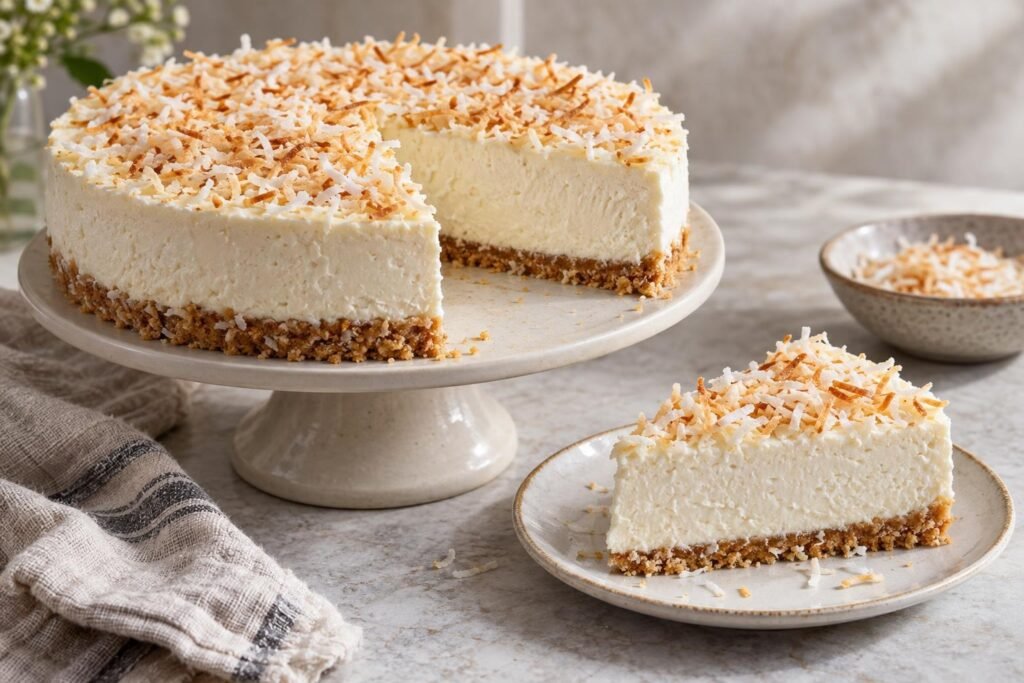
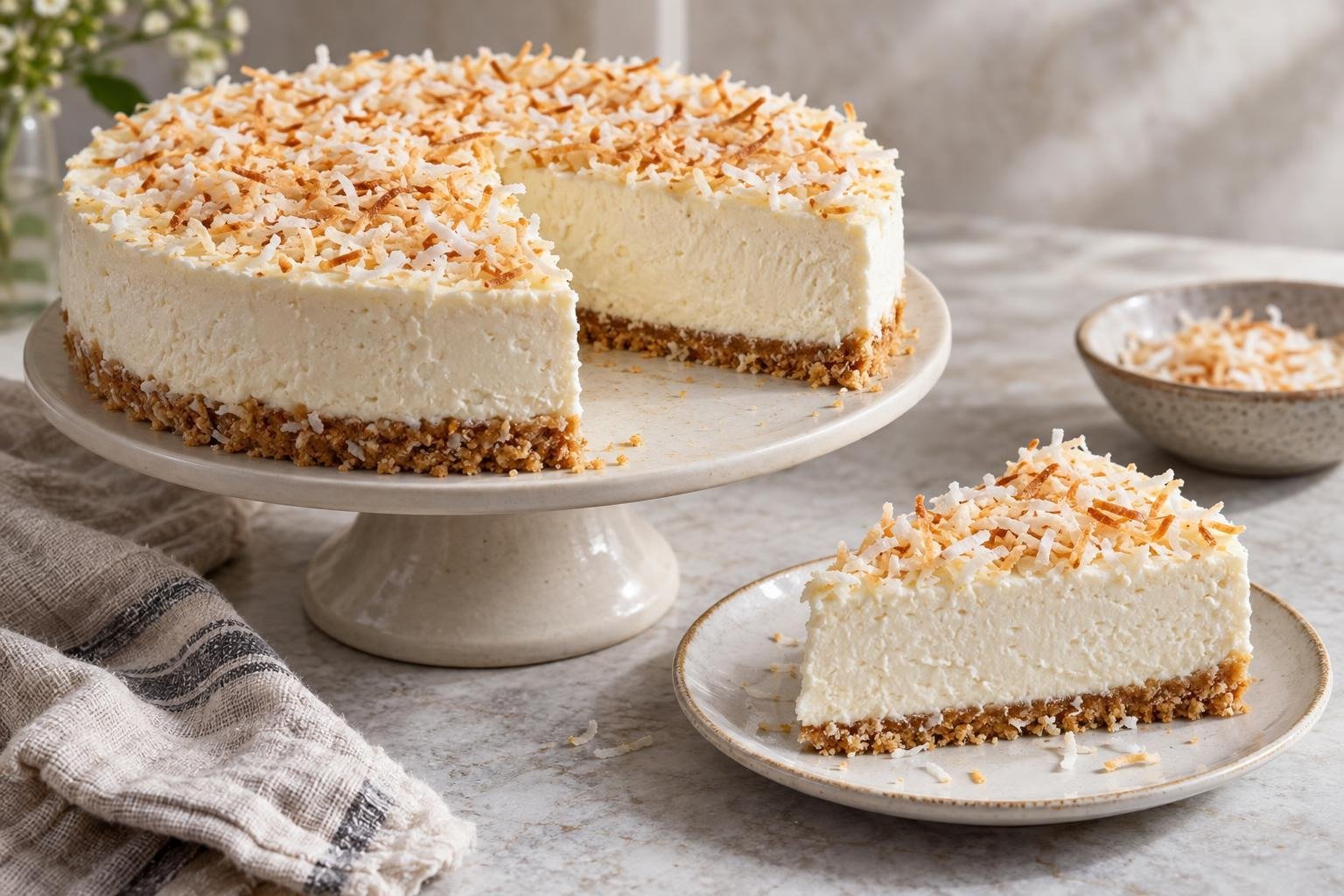
Cool coconut cream, tangy cream cheese, and a buttery graham crust give this no-bake coconut cheesecake a lush texture without making it feel heavy or sticky. Toasted unsweetened coconut brings a nutty aroma and gentle chew to both the crust and the finish, while vanilla and coconut extract round out the flavor instead of letting the filling taste flat.
I use full-fat block cream cheese for structure, then dissolve bloomed gelatin in a small portion of warm coconut cream so it disperses evenly. The whipped cream is folded in only to medium peaks, which keeps the filling creamy rather than foamy. Give the cheesecake the full six-hour chill and watch the center, not just the clock: it should remain still when nudged and release a clean slice from a warm, dry knife.
Why This Coconut Cheesecake Recipe Frickin’ Works
- Bloomed gelatin provides enough structure for defined slices while preserving the creamy mouthfeel expected from a no-bake cheesecake.
- Warming only part of the coconut cream dissolves the gelatin without heating the cream cheese or collapsing the whipped cream.
- Full-fat block cream cheese supplies concentrated fat and milk proteins, giving the filling more body than spreadable tub-style cheese.
- Medium-peak whipped cream lightens the dense cream cheese base without introducing large air pockets that would weaken clean slices.
- Toasting the unsweetened coconut deepens its nutty flavor and removes some surface moisture before it enters the crust or touches the filling.
Ingredient Notes for No-Bake Coconut Cheesecake with Creamy Filling
- Full-fat block cream cheese: Use firm, brick-style cream cheese and bring it completely to room temperature. Cold cream cheese stays lumpy, while whipped or tub-style products contain more air and moisture than this filling is designed to hold.
- Coconut cream: Choose unsweetened coconut cream, not sweetened cream of coconut. Stir the contents of the can until uniform before measuring because the coconut fat often separates during storage.
- Unflavored powdered gelatin: Gelatin creates the clean-slice set without baking. Sprinkle it evenly over cold water and allow every granule to hydrate before warming; dry pockets can produce rubbery bits.
- Heavy whipping cream: Keep the cream cold so it whips efficiently. Medium peaks provide enough aeration to lighten the filling while remaining flexible enough to fold in smoothly.
- Unsweetened shredded coconut: Unsweetened coconut controls the dessert's sugar level and toasts more predictably. Cool it fully before adding it to the crust or garnish so residual heat does not soften the filling.
- Graham cracker crumbs and butter: Finely ground crumbs absorb the melted butter evenly and compact into a stable base. The measured butter binds the crust without leaving it greasy.
My Kitchen Tips
- Bring the cream cheese to a true room-temperature consistency before mixing. It should yield easily to finger pressure but must not look oily or partially melted.
- Stir the coconut cream inside its can before measuring. Using only the solid fat or only the watery portion changes both the coconut flavor and the filling's final set.
- Cool the dissolved gelatin only until lukewarm. Very hot liquid can soften the cream cheese base, while gelatin allowed to become cold and thick may form threads during mixing.
- Stop whipping the heavy cream at medium peaks. Stiff cream is harder to fold evenly and can leave dry-looking clumps or excess air pockets in the cheesecake.
- Do not judge the set by the outer edge alone. The center must remain still when the pan is gently nudged; a visible ripple means the cheesecake needs more chilling time.
Ingredients for No-Bake Coconut Cheesecake
- 50 g unsweetened shredded coconut (About 1/2 cup, for the crust)
- 200 g fine graham cracker crumbs (About 2 cups)
- 25 g granulated sugar (2 tablespoons)
- 85 g unsalted butter (6 tablespoons, melted and slightly cooled)
- 7 g unflavored powdered gelatin (2 1/4 teaspoons or one standard packet)
- 45 ml cold water (3 tablespoons, for blooming the gelatin)
- 180 ml unsweetened coconut cream (3/4 cup, stirred until uniform and divided)
- 680 g full-fat block cream cheese (24 ounces, softened to room temperature)
- 150 g powdered sugar (About 1 1/4 cups, sifted if lumpy)
- 5 ml pure vanilla extract (1 teaspoon)
- 5 ml coconut extract (1 teaspoon)
- 1/4 teaspoon fine sea salt (Balances the sweetness)
- 240 ml cold heavy whipping cream (1 cup, at least 35 percent milk fat)
- 30 g unsweetened shredded coconut (About 1/3 cup, for the topping)
How to Make No-Bake Coconut Cheesecake
- STEP 1). Prepare the pan and toast the coconut Line the base of a 9-inch springform pan with parchment and lightly grease the inner wall. Set a 10-inch dry skillet over medium-low heat. Toast the 50 g crust portion of coconut for 3 to 4 minutes, stirring constantly, until fragrant and lightly golden; transfer it to a plate. Toast the 30 g topping portion for another 2 to 3 minutes. Keep the portions separate and cool them completely so trapped heat does not soften the crust or filling.
- STEP 2). Press and chill the coconut graham crust Combine the graham cracker crumbs, granulated sugar, and cooled 50 g portion of toasted coconut in a medium bowl. Pour in the melted butter and stir until every crumb looks evenly moistened and holds together when squeezed. Tip the mixture into the prepared pan. Use the flat base of a measuring cup to press it firmly and evenly across the bottom, without packing it up the sides. Refrigerate for at least 20 minutes while preparing the filling.
- STEP 3). Bloom and dissolve the gelatin Pour the cold water into a small heatproof bowl and sprinkle the gelatin evenly over the surface rather than dropping it in one mound. Let it stand for 5 minutes, until swollen and no dry powder remains. Warm 60 ml of the coconut cream in a small saucepan over low heat until steaming gently, about 1 to 2 minutes; do not boil it. Remove from the heat, add the bloomed gelatin, and stir until completely fluid and clear of granules. Cool for 5 minutes until lukewarm.
- STEP 4). Mix the smooth coconut cream cheese base Place the room-temperature cream cheese in a large bowl and beat with an electric mixer on medium-low speed for 1 minute, scraping the bowl and beaters halfway through. Add the powdered sugar and beat for 1 to 2 minutes, stopping once the mixture is smooth and free of visible lumps. Mix in the remaining 120 ml coconut cream, vanilla, coconut extract, and salt on low speed. The base should look glossy, thick, and completely uniform without unmixed streaks along the bowl.
- STEP 5). Whip the cream and finish the filling With the mixer running on low, slowly stream the lukewarm gelatin mixture into the cream cheese base and mix for 30 seconds. Scrape the bowl thoroughly, then mix for another 20 seconds so the gelatin is evenly distributed. In a clean medium bowl, whip the cold heavy cream on medium-high speed for 2 to 3 minutes, until it forms flexible medium peaks. Fold one-third into the cream cheese mixture to loosen it, then gently fold in the remainder until no white streaks remain.
- STEP 6). Fill the pan and chill until firmly set Remove the crust from the refrigerator and scrape the filling into the springform pan. Spread it to the edges with an offset spatula, pressing gently to eliminate hidden air pockets, then smooth the top. Tap the pan twice on a folded kitchen towel to release larger bubbles. Cover without touching the surface and refrigerate for at least 6 hours, preferably overnight. The cheesecake is set when the center stays still as the pan is nudged and feels firm but slightly springy.
- STEP 7). Unmold, garnish, and cut clean slices Run a thin knife around the chilled cheesecake, keeping the blade against the pan wall, then release and lift away the springform ring. Transfer the cheesecake, still on its pan base, to a serving plate or carefully slide it off using a wide spatula. Scatter the reserved toasted coconut evenly over the top. For clean slices, warm a thin knife under hot water, dry it completely, and cut straight down. Wipe, warm, and dry the blade between portions; keep unserved slices refrigerated.
Storage and Freezing
- Refrigeration: Cover the cheesecake or place slices in an airtight container and refrigerate for up to 4 days. Keep it cold until shortly before serving because the gelatin set softens as it warms.
- Freezing: Freeze the fully set, ungarnished cheesecake whole or in individual slices. Wrap it tightly in plastic wrap, then foil, and freeze for up to 1 month.
- Thawing: Unwrap the frozen cheesecake and thaw it in the refrigerator for 8 to 12 hours. Add the toasted coconut topping after thawing so it stays crisp.
- Serving: For the cleanest texture and slices, serve directly from the refrigerator or let portions stand at room temperature for no more than 15 minutes before eating.
Frequently Asked Questions
How long should no-bake coconut cheesecake chill before slicing?
Allow at least 6 hours of uninterrupted refrigeration after filling the pan. An overnight chill is useful when the cheesecake needs to be transported or served at a precise time.
The center should remain still when the pan is gently nudged. If it ripples beneath the surface or clings heavily to a test knife, return it to the refrigerator rather than trying to unmold it early.
How do you tell when no-bake coconut cheesecake is set?
Look for a level surface, firm edges, and a center that does not wobble independently when the pan is moved. A light fingertip touch near the center should leave only a faint impression, not pick up liquid filling.
A warm, dry knife should pass through with defined edges and minimal filling dragged onto the blade. Clean slicing is the most useful final cue because a chilled top can appear firm before the middle has set.
Why did my no-bake cheesecake filling turn lumpy?
Cold cream cheese is the most common cause. It resists blending with the coconut cream and leaves small white curds even after extended mixing. Let the blocks soften evenly, then beat them smooth before adding any liquid.
Gelatin can also create tiny rubbery flecks if it was not fully bloomed, dissolved, or cooled to lukewarm. Stream it into the moving mixer and scrape the bowl promptly so it disperses before setting.
What kind of coconut cream works in this cheesecake?
Use unsweetened canned coconut cream with a rich, spoonable consistency. Stir the entire can until its separated fat and liquid are uniform, then measure the required amount. This gives the filling consistent moisture and coconut flavor.
Sweetened cream of coconut is a different product and is not suitable for this formula. Its added sugar and syrupy consistency would make the filling sweeter and change the balance needed for a defined set.
Can I freeze no-bake coconut cheesecake?
Freeze the cheesecake only after it has completed its refrigerator set. Leave off the toasted coconut topping, wrap the whole cake or individual slices tightly, and add a second protective layer of foil to limit freezer odors and surface drying.
Thaw it slowly in the refrigerator for 8 to 12 hours rather than at room temperature. Slow thawing helps the creamy filling retain its structure. Garnish with toasted coconut immediately before serving.
More Ridiculously Delicious Cheesecakes
- Chocolate No-Bake Cheesecake Bars with a Creamy Filling
- Lemon Cheesecake with Creamy Citrus Filling
- Raspberry Cheesecake with a Creamy Berry Filling
- Cherry Cheesecake with a Creamy Filling
- Classic New York Cheesecake with a Dense, Creamy Filling
- Mini Red Velvet Cheesecakes with Creamy Filling
No-Bake Coconut Cheesecake with Creamy Filling
Ingredients
Equipment
Method
- Line the base of a 9-inch springform pan with parchment and lightly grease the inner wall. Set a 10-inch dry skillet over medium-low heat. Toast the 50 g crust portion of coconut for 3 to 4 minutes, stirring constantly, until fragrant and lightly golden; transfer it to a plate. Toast the 30 g topping portion for another 2 to 3 minutes. Keep the portions separate and cool them completely so trapped heat does not soften the crust or filling.
- Combine the graham cracker crumbs, granulated sugar, and cooled 50 g portion of toasted coconut in a medium bowl. Pour in the melted butter and stir until every crumb looks evenly moistened and holds together when squeezed. Tip the mixture into the prepared pan. Use the flat base of a measuring cup to press it firmly and evenly across the bottom, without packing it up the sides. Refrigerate for at least 20 minutes while preparing the filling.
- Pour the cold water into a small heatproof bowl and sprinkle the gelatin evenly over the surface rather than dropping it in one mound. Let it stand for 5 minutes, until swollen and no dry powder remains. Warm 60 ml of the coconut cream in a small saucepan over low heat until steaming gently, about 1 to 2 minutes; do not boil it. Remove from the heat, add the bloomed gelatin, and stir until completely fluid and clear of granules. Cool for 5 minutes until lukewarm.
- Place the room-temperature cream cheese in a large bowl and beat with an electric mixer on medium-low speed for 1 minute, scraping the bowl and beaters halfway through. Add the powdered sugar and beat for 1 to 2 minutes, stopping once the mixture is smooth and free of visible lumps. Mix in the remaining 120 ml coconut cream, vanilla, coconut extract, and salt on low speed. The base should look glossy, thick, and completely uniform without unmixed streaks along the bowl.
- With the mixer running on low, slowly stream the lukewarm gelatin mixture into the cream cheese base and mix for 30 seconds. Scrape the bowl thoroughly, then mix for another 20 seconds so the gelatin is evenly distributed. In a clean medium bowl, whip the cold heavy cream on medium-high speed for 2 to 3 minutes, until it forms flexible medium peaks. Fold one-third into the cream cheese mixture to loosen it, then gently fold in the remainder until no white streaks remain.
- Remove the crust from the refrigerator and scrape the filling into the springform pan. Spread it to the edges with an offset spatula, pressing gently to eliminate hidden air pockets, then smooth the top. Tap the pan twice on a folded kitchen towel to release larger bubbles. Cover without touching the surface and refrigerate for at least 6 hours, preferably overnight. The cheesecake is set when the center stays still as the pan is nudged and feels firm but slightly springy.
- Run a thin knife around the chilled cheesecake, keeping the blade against the pan wall, then release and lift away the springform ring. Transfer the cheesecake, still on its pan base, to a serving plate or carefully slide it off using a wide spatula. Scatter the reserved toasted coconut evenly over the top. For clean slices, warm a thin knife under hot water, dry it completely, and cut straight down. Wipe, warm, and dry the blade between portions; keep unserved slices refrigerated.
Notes
- Bring the cream cheese to a true room-temperature consistency before mixing. It should yield easily to finger pressure but must not look oily or partially melted.
- Stir the coconut cream inside its can before measuring. Using only the solid fat or only the watery portion changes both the coconut flavor and the filling's final set.
- Cool the dissolved gelatin only until lukewarm. Very hot liquid can soften the cream cheese base, while gelatin allowed to become cold and thick may form threads during mixing.
- Stop whipping the heavy cream at medium peaks. Stiff cream is harder to fold evenly and can leave dry-looking clumps or excess air pockets in the cheesecake.
- Do not judge the set by the outer edge alone. The center must remain still when the pan is gently nudged; a visible ripple means the cheesecake needs more chilling time.