Table of Contents
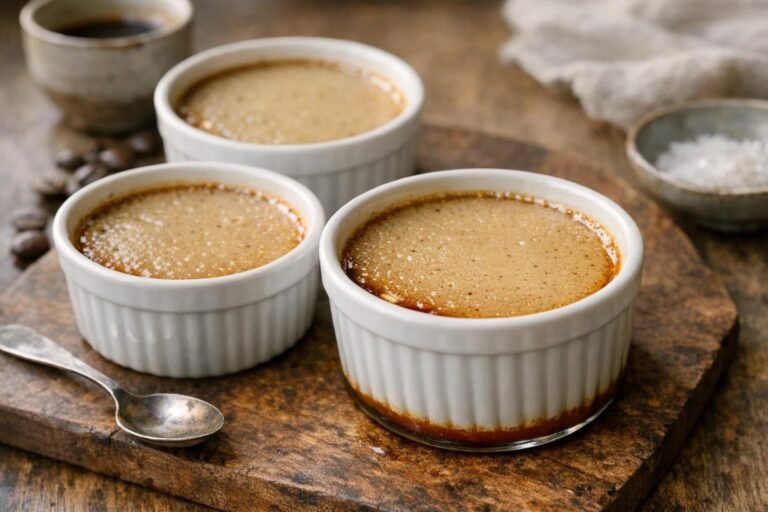
Deep roasted-coffee aroma, cool satin-smooth custard, and a glossy ribbon of bittersweet caramel make this coffee flan feel sophisticated without losing the comforting character of classic crème caramel. Instant espresso powder gives the custard a clear coffee flavor without introducing grounds or excess liquid, while whole milk and cream keep each spoonful creamy rather than heavy.
I use gentle heat at every stage: the dairy is warmed rather than boiled, the eggs are stirred without whipping, and the filled pan bakes in a hot-water bath at 325°F. The important cues are physical, not just numerical. The outside should look set, the center should wobble as one cohesive section, and the chilled custard should release cleanly after the caramel is loosened with brief warmth.

What Makes this Coffee Flan Deliciously Ridiculous
- Instant espresso powder dissolves completely in the warm dairy, delivering concentrated coffee flavor without gritty particles or enough added liquid to weaken the custard.
- Four whole eggs provide the main protein structure, while two additional yolks supply fat and emulsifiers for a silkier, richer set.
- A combination of whole milk and heavy cream balances fluidity and richness, so the flan holds its shape after unmolding without becoming dense.
- The water bath buffers the oven’s direct heat and helps the custard cook evenly from the outside toward the center, reducing curdling and edge bubbles.
- A full six-hour chill firms the egg-protein network, liquefies more of the caramel, and makes the delicate flan substantially easier to unmold.
Ingredient Notes for Coffee Flan with Silky Caramel Custard
- Granulated sugar: Sugar forms both the caramel sauce and the sweetened custard. For the caramel, use clean white sugar so the amber color is easy to judge, and avoid stirring once boiling begins because agitation can encourage crystallization.
- Whole milk: Whole milk supplies water and milk proteins for a custard that sets cleanly. Lower-fat milk is not part of this formula and would produce a less creamy result.
- Heavy cream: Cream softens the egg-protein network with milk fat, giving the coffee flan a rounder mouthfeel. Use fluid heavy cream containing about 35 to 36 percent fat, not whipped cream.
- Instant espresso powder: Use a powder formulated to dissolve, not ground coffee or espresso beans. Ground coffee would remain gritty, while brewed coffee would add enough extra water to alter the custard ratio.
- Whole eggs: Eggs create the flan’s structure as their proteins set in the oven. Room-temperature eggs combine more readily with the warm dairy and reduce the temperature shock during tempering.
- Egg yolks: Extra yolks add emulsifiers and fat, producing a smoother custard without making it as firm as additional whole eggs would.
- Vanilla extract: Vanilla rounds out the roasted bitterness of the espresso and caramel. Add it to the custard away from direct heat so its aroma remains noticeable.
- Fine sea salt: A small amount sharpens the coffee and caramel flavors without making the custard taste salty. Fine salt disperses more evenly than coarse crystals.
A Few Baking Tips
- Choose a solid cake pan rather than a springform pan. The thin caramel can leak through a removable base, and water from the bath can work its way into the custard.
- Stop the caramel at deep amber rather than waiting for brown smoke. Caramel continues cooking from residual heat after it leaves the burner, and burned sugar will dominate the coffee flavor.
- Whisk the eggs gently and skim visible foam before baking. Trapped air expands in the oven and leaves unwanted bubbles or a porous layer in an otherwise silky custard.
- Add the hot water after the roasting pan is on the oven rack. This minimizes carrying a heavy pan of hot water and reduces the chance of splashing water into the custard.
- Judge doneness by the cohesive center wobble and temperature together. A liquid wave needs more time, while a puffed, rigid center usually indicates that the egg proteins have tightened too far.
Ingredients for Coffee Flan
- 150 g granulated sugar (for the caramel)
- 45 ml water (for the caramel)
- 480 ml whole milk (room temperature)
- 240 ml heavy cream (35 to 36 percent milk fat)
- 12 g instant espresso powder (not ground coffee)
- 100 g granulated sugar (for the custard)
- 4 large eggs (room temperature)
- 2 large egg yolks (room temperature)
- 10 ml pure vanilla extract (2 teaspoons)
- 1 g fine sea salt (about 1/4 teaspoon)
- 1.5 liters hot water (approximately, for the water bath)
How to Make Coffee Flan
- STEP 1). Prepare the oven and pans Position a rack in the center of the oven and preheat to 325°F. Set an ungreased 8-inch round cake pan inside a large roasting pan to confirm there is clearance around it, then remove the cake pan. Heat about 1.5 liters of water until steaming hot but not violently boiling. Keep the roasting pan nearby because the filled flan pan will be easier and safer to place inside it before adding the water.
- STEP 2). Cook and pour the caramel Combine the 150 grams sugar and 45 milliliters water in a clean, heavy-bottomed saucepan. Cook over medium heat without stirring, gently swirling the pan only if the color develops unevenly. After about 8 to 10 minutes, the syrup should become a deep amber and smell toasted, not burned. Immediately pour it into the cake pan and carefully tilt the pan to coat the bottom. Use oven mitts because both the syrup and pan become extremely hot.
- STEP 3). Infuse the dairy with coffee Combine the whole milk, heavy cream, espresso powder, and 100 grams sugar in a medium saucepan. Heat over medium-low heat, whisking occasionally, until the espresso and sugar dissolve and the mixture reaches about 160°F, looks steamy, and shows tiny bubbles around the edge, 5 to 7 minutes. Do not boil it, since excessive heat can create a cooked-milk flavor and makes tempering the eggs less forgiving. Remove the saucepan from the heat.
- STEP 4). Mix and temper the eggs Place the whole eggs, yolks, vanilla, and salt in a large heatproof bowl. Whisk slowly just until the whites and yolks are fully blended, keeping the whisk beneath the surface to avoid incorporating foam. While whisking continuously, add about one-third of the warm dairy in a thin stream. Gradually whisk in the remainder. Slow tempering raises the egg temperature without creating curds, and the finished mixture should be fluid, uniform, and only lightly frothy.
- STEP 5). Strain and assemble the water bath Pour the custard through a fine-mesh sieve into a large measuring jug or clean bowl, catching any chalazae or small cooked egg particles. Set the caramel-lined cake pan inside the roasting pan, then pour in the strained custard. Skim surface foam with a spoon and loosely cover the cake pan with foil. Transfer the roasting pan to the oven, then carefully add hot water until it reaches halfway up the cake pan’s sides without splashing into the custard.
- STEP 6). Bake until gently set Bake the coffee flan for 55 to 65 minutes. Begin checking at 50 minutes without shaking the roasting pan aggressively. The outer 2 inches should look set, while the center should wobble together like soft gelatin rather than ripple like liquid. An instant-read thermometer inserted near the center should register 170 to 175°F. Remove the cake pan from the water bath with dry oven mitts and place it on a wire rack, leaving the hot water in the oven until safe to handle.
- STEP 7). Cool and chill thoroughly Remove the foil and let the flan cool in its pan on the rack for about 1 hour, until no longer warm and steam is no longer rising from the surface. Cover the pan without pressing the covering against the custard, then refrigerate for at least 6 hours or overnight. This chilling period is part of the setting process, not optional waiting time. The flan should feel cold and firm at the edges before you attempt to release it.
- STEP 8). Loosen and unmold the flan Run a thin paring knife around the edge of the chilled flan, keeping the blade against the pan so the custard is not gouged. Dip only the bottom of the pan into a shallow bowl of warm water for 10 to 15 seconds to soften the caramel. Dry the pan, center a large rimmed plate over it, and invert both together in one confident motion. Lift the pan slowly, allowing the liquid caramel to flow over the custard before slicing.
Storage and Freezing
- Refrigerate: Cover the flan or transfer slices to an airtight container and refrigerate for up to 4 days. Keep the caramel sauce with the custard so exposed surfaces do not dry out.
- Freeze: Freezing is not recommended because thawing can make the egg custard release water and develop a grainy, spongy texture.
- Serving: Serve the flan cold or let individual slices stand at room temperature for 10 to 15 minutes to soften slightly. Do not leave it unrefrigerated for more than 2 hours.
Frequently Asked Questions
How do you tell when coffee flan is done?
The outer portion should look set, while the center moves as one soft, cohesive section when the pan is nudged. It should not slosh or form liquid waves beneath the surface.
For an additional check, insert an instant-read thermometer near the center. A reading of 170 to 175°F confirms that the custard is sufficiently cooked while still leaving room for carryover heat as it cools.
Why did my coffee flan turn bubbly or rubbery?
A bubbly interior usually comes from vigorous whisking, unskimmed foam, boiling dairy, or oven heat reaching the custard too directly. A rubbery texture indicates that the egg proteins tightened excessively from overbaking or an inadequate water bath.
Mix beneath the surface, strain the custard, and keep the water halfway up the pan. Remove the flan while its center still has a controlled wobble rather than waiting until it becomes rigid.
How do you unmold coffee flan without breaking it?
Chill the flan for at least six hours so its structure is firm enough to support inversion. Loosen the circumference with a thin knife held against the pan, then warm only the pan’s base for 10 to 15 seconds.
Place a rimmed plate over the pan and invert both in one decisive movement. If the flan remains stuck, return the pan upright and warm the base for another few seconds rather than shaking it forcefully.
Can I make coffee flan ahead of serving?
Coffee flan is well suited to advance preparation because it requires a long chill before unmolding. Prepare it the day before serving, cool it for one hour, and refrigerate it in its pan for at least six hours or overnight.
For the cleanest presentation, unmold it shortly before serving. It can also be unmolded several hours ahead and refrigerated on a rimmed plate under a loose cover that does not touch the caramel-coated surface.
What type of coffee works best in coffee crème caramel?
Instant espresso powder works best in this formula because it dissolves directly into the warm milk and cream, producing concentrated flavor without particles. Choose an unsweetened powder so the recipe’s sugar balance remains intact.
Ground coffee is unsuitable because it makes the custard gritty, even after straining. Brewed coffee also changes the liquid-to-egg ratio, so adding it without reformulating the dairy can leave the flan softer than intended.
Try These Next, You’ll Frickin’ Love Them!
- Classic Vanilla Bean Flan with Silky Custard
- Chocolate Flan with Silky Cocoa Custard
- Vanilla Bean Creme Brulee with Crisp Caramelized Sugar
Coffee Flan with Silky Caramel Custard
Ingredients
Equipment
Method
- Position a rack in the center of the oven and preheat to 325°F. Set an ungreased 8-inch round cake pan inside a large roasting pan to confirm there is clearance around it, then remove the cake pan. Heat about 1.5 liters of water until steaming hot but not violently boiling. Keep the roasting pan nearby because the filled flan pan will be easier and safer to place inside it before adding the water.
- Combine the 150 grams sugar and 45 milliliters water in a clean, heavy-bottomed saucepan. Cook over medium heat without stirring, gently swirling the pan only if the color develops unevenly. After about 8 to 10 minutes, the syrup should become a deep amber and smell toasted, not burned. Immediately pour it into the cake pan and carefully tilt the pan to coat the bottom. Use oven mitts because both the syrup and pan become extremely hot.
- Combine the whole milk, heavy cream, espresso powder, and 100 grams sugar in a medium saucepan. Heat over medium-low heat, whisking occasionally, until the espresso and sugar dissolve and the mixture reaches about 160°F, looks steamy, and shows tiny bubbles around the edge, 5 to 7 minutes. Do not boil it, since excessive heat can create a cooked-milk flavor and makes tempering the eggs less forgiving. Remove the saucepan from the heat.
- Place the whole eggs, yolks, vanilla, and salt in a large heatproof bowl. Whisk slowly just until the whites and yolks are fully blended, keeping the whisk beneath the surface to avoid incorporating foam. While whisking continuously, add about one-third of the warm dairy in a thin stream. Gradually whisk in the remainder. Slow tempering raises the egg temperature without creating curds, and the finished mixture should be fluid, uniform, and only lightly frothy.
- Pour the custard through a fine-mesh sieve into a large measuring jug or clean bowl, catching any chalazae or small cooked egg particles. Set the caramel-lined cake pan inside the roasting pan, then pour in the strained custard. Skim surface foam with a spoon and loosely cover the cake pan with foil. Transfer the roasting pan to the oven, then carefully add hot water until it reaches halfway up the cake pan’s sides without splashing into the custard.
- Bake the coffee flan for 55 to 65 minutes. Begin checking at 50 minutes without shaking the roasting pan aggressively. The outer 2 inches should look set, while the center should wobble together like soft gelatin rather than ripple like liquid. An instant-read thermometer inserted near the center should register 170 to 175°F. Remove the cake pan from the water bath with dry oven mitts and place it on a wire rack, leaving the hot water in the oven until safe to handle.
- Remove the foil and let the flan cool in its pan on the rack for about 1 hour, until no longer warm and steam is no longer rising from the surface. Cover the pan without pressing the covering against the custard, then refrigerate for at least 6 hours or overnight. This chilling period is part of the setting process, not optional waiting time. The flan should feel cold and firm at the edges before you attempt to release it.
- Run a thin paring knife around the edge of the chilled flan, keeping the blade against the pan so the custard is not gouged. Dip only the bottom of the pan into a shallow bowl of warm water for 10 to 15 seconds to soften the caramel. Dry the pan, center a large rimmed plate over it, and invert both together in one confident motion. Lift the pan slowly, allowing the liquid caramel to flow over the custard before slicing.
Notes
- Choose a solid cake pan rather than a springform pan. The thin caramel can leak through a removable base, and water from the bath can work its way into the custard.
- Stop the caramel at deep amber rather than waiting for brown smoke. Caramel continues cooking from residual heat after it leaves the burner, and burned sugar will dominate the coffee flavor.
- Whisk the eggs gently and skim visible foam before baking. Trapped air expands in the oven and leaves unwanted bubbles or a porous layer in an otherwise silky custard.
- Add the hot water after the roasting pan is on the oven rack. This minimizes carrying a heavy pan of hot water and reduces the chance of splashing water into the custard.
- Judge doneness by the cohesive center wobble and temperature together. A liquid wave needs more time, while a puffed, rigid center usually indicates that the egg proteins have tightened too far.