Table of Contents
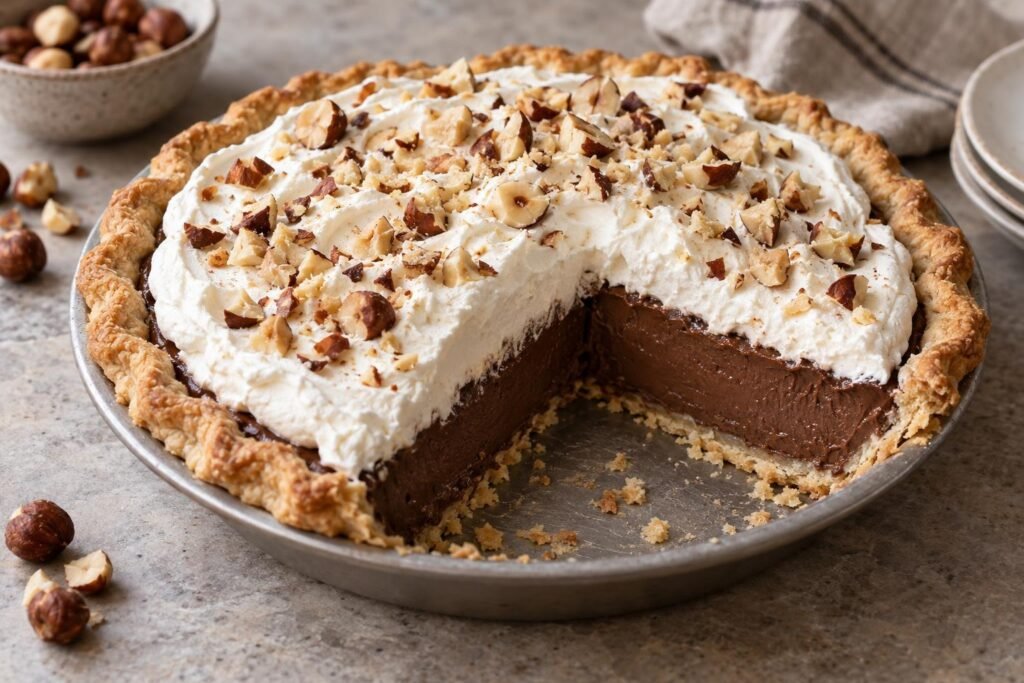
Deep cocoa, roasted hazelnut, and buttery pastry aromas meet in this chocolate hazelnut cream pie, with crisp golden layers surrounding a smooth filling that holds a clean slice. Dark chocolate keeps the custard balanced rather than candy-sweet, while whipped cream softens its intensity and toasted hazelnuts add a fragrant crunch.
I fully blind-bake the pastry before adding the stovetop custard because a wet filling cannot finish an underbaked base. For the filling, I whisk the cornstarch smoothly into the sugar and yolks, bring the tempered mixture to a deliberate boil, and watch for thick bubbles that briefly hold their shape. Those observable cues matter more than guesswork, and a full five-hour cooling period gives the chocolate hazelnut filling time to set properly.

Why This Recipe Is Deliciously Ridiculous
- The pastry contains enough butter for flaky layers but not so much water that the shell becomes difficult to shape or shrinks excessively during baking.
- A complete blind bake creates a deeply golden, dry shell before the moisture-rich chocolate custard is added, directly reducing the risk of a soggy bottom.
- Egg yolks provide richness and emulsification, while cornstarch thickens the milk and cream mixture firmly enough for neat slices after chilling.
- Bittersweet chocolate and unsweetened hazelnut paste supply cocoa butter and nut fat, which reinforce the custard as it cools without making it rubbery.
- Lightly sweetened whipped cream and toasted hazelnuts balance the dense filling with a cool, airy topping and crisp contrast.
Ingredient Notes for Chocolate Hazelnut Cream Pie with Golden Pastry
- All-purpose flour: Its moderate protein level gives the pastry enough strength to hold the custard without turning tough. Weigh it rather than packing it into a cup, which can add excess flour and produce a dry dough.
- Cold unsalted butter: Visible pieces of cold butter release steam in the oven and help form flaky layers. Keep the cubes refrigerated until mixing and stop cutting them in when the largest pieces are about pea-sized.
- Whole milk and heavy cream: This combination supplies enough water to hydrate the cornstarch and enough dairy fat for a smooth filling. Lower-fat dairy would change both the set and the mouthfeel of this formula.
- Egg yolks and cornstarch: Yolks emulsify the custard, while cornstarch provides its sliceable structure. Thorough boiling is necessary because starch reaches its full thickening potential only after the mixture visibly bubbles.
- Bittersweet chocolate: Use a bar containing 60 to 70 percent cacao and chop it finely so the hot custard melts it evenly. Chocolate chips contain stabilizers and may produce a less fluid, slightly waxier filling.
- Unsweetened hazelnut paste: Choose a smooth paste made from roasted hazelnuts without added sugar. Stir it thoroughly if natural oil has separated; sweetened chocolate hazelnut spread is not a direct replacement because it changes the sugar, fat, and chocolate balance.
- Hazelnuts: Toasting strengthens their aroma and makes the topping taste distinct from the creamy filling. Cool the nuts completely before chopping so their oils remain inside the pieces rather than smearing on the cutting board.
Baking Tips Worth Knowing
- Keep the shaped pastry cold until the oven is fully heated. Soft butter melts before the crust structure sets, which encourages slumping and reduces flakiness.
- Fill the parchment-lined shell all the way to the upper edge with pie weights. A shallow layer may hold down the base but does not support the sides against shrinkage.
- Whisk the custard continuously once it returns to the saucepan, paying particular attention to the bottom edge where the pan curves. That is where starch and yolk mixtures thicken first.
- Chop the chocolate finely and remove the custard from the heat before adding it. Direct burner heat can overheat the cocoa solids or cause the emulsion to look greasy.
- Do not judge the set while the pie is warm. Chocolate, cocoa butter, hazelnut fat, and cornstarch all firm as they cool, so the full chilling time is part of the structure rather than an optional pause.
Ingredients for Chocolate Hazelnut Cream Pie
- 190 g Pastry: all-purpose flour (plus a small amount for rolling)
- 12 g Pastry: granulated sugar
- 3 g Pastry: fine salt
- 113 g Pastry: unsalted butter (cold and cut into 1/2-inch cubes)
- 55 ml Pastry: ice water (keep chilled until needed)
- 15 g Pastry seal: liquid egg white (lightly beaten)
- 500 ml Filling: whole milk
- 120 ml Filling: heavy cream (35 percent milk fat)
- 100 g Filling: granulated sugar
- 30 g Filling: cornstarch
- 4 large Filling: egg yolks (about 72 g total)
- 2 g Filling: fine salt
- 140 g Filling: bittersweet chocolate (60 to 70 percent cacao, finely chopped)
- 120 g Filling: unsweetened roasted hazelnut paste (stirred smooth before measuring)
- 28 g Filling: unsalted butter (cut into small pieces)
- 5 ml Filling: pure vanilla extract
- 45 g Topping: raw hazelnuts (toasted, cooled, and coarsely chopped)
- 240 ml Topping: heavy cream (cold, 35 percent milk fat)
- 20 g Topping: confectioners' sugar (sifted if lumpy)
- 2.5 ml Topping: pure vanilla extract
How to Make Chocolate Hazelnut Cream Pie
- STEP 1). Mix the pastry dough Whisk the flour, sugar, and salt in a large bowl. Add the cold butter and cut it in with a pastry blender or fingertips until the mixture contains flat flakes and pea-sized pieces; do not work it into fine crumbs. Drizzle in the ice water while tossing with a fork. Squeeze a handful: it should hold together without feeling wet. Press the shaggy dough into a 1-inch-thick disk, wrap it tightly, and refrigerate for 60 minutes to hydrate the flour and relax the gluten.
- STEP 2). Roll and fit the pastry shell Lightly flour the counter and rolling pin, then roll the chilled dough from the center outward into a 12-inch circle about 1/8 inch thick. Rotate it frequently and add only enough flour to prevent sticking. Transfer the dough to a 9-inch metal pie plate without stretching it, press it gently into the corners, and trim the overhang to 1 inch. Fold the edge under and crimp firmly. Refrigerate the shaped shell for 20 minutes while heating the oven to 375°F or 190°C, conventional setting.
- STEP 3). Blind-bake and seal the crust Set the chilled pie plate on a rimmed baking sheet. Line the pastry with crumpled and flattened parchment, then fill it completely with pie weights so the sides stay supported. Bake on the lower-middle rack for 20 minutes. Lift out the parchment and weights, then bake for 12 to 16 minutes more, until the base looks dry and the entire shell is golden brown. Brush a thin, even coat of egg white over the hot interior and bake for 2 minutes to set the moisture barrier.
- STEP 4). Cool the shell and toast the hazelnuts Transfer the pie plate to a wire rack and let the crust cool completely for about 30 minutes; adding custard to a warm shell would trap steam and soften the base. Keep the oven at 375°F or 190°C. Spread the hazelnuts on the baking sheet and toast for 6 to 8 minutes, shaking once, until fragrant and lightly browned. Rub away loose skins with a clean towel, cool the nuts fully, and chop them coarsely for the topping.
- STEP 5). Temper and cook the custard base Combine the milk and 120 ml heavy cream in a medium heavy-bottomed saucepan and heat over medium until steaming, with small bubbles around the edge. Meanwhile, whisk the sugar, cornstarch, yolks, and salt in a heatproof bowl until completely smooth and slightly lighter. Slowly stream about one-third of the hot dairy into the yolk mixture while whisking continuously. Return everything to the saucepan through a fine-mesh sieve, then cook over medium heat, whisking across the bottom and corners to prevent scorched or undercooked patches.
- STEP 6). Thicken and finish the chocolate hazelnut filling Continue cooking until the custard reaches a full boil and thick bubbles break at the surface, usually 3 to 5 minutes after it begins steaming. Once bubbling, whisk constantly for 1 full minute; the custard should be glossy and leave defined trails that slowly close. Remove the pan from the heat. Add the chopped chocolate, hazelnut paste, butter, and 5 ml vanilla, then let them stand for 1 minute. Whisk from the center outward until the filling is completely smooth, uniform, and free of visible chocolate pieces.
- STEP 7). Fill and thoroughly chill the pie Pour the warm filling into the completely cooled pastry shell and spread it level with an offset spatula, taking care not to scrape any cooked residue from the saucepan into the pie. Press food-safe wrap directly against the surface to prevent a skin. Let the pie stand on a rack for 20 minutes, then refrigerate it on a level shelf for at least 5 hours. The center should feel firm under gentle pressure and should not ripple when the plate is moved before topping or slicing.
- STEP 8). Whip, garnish, and slice the pie Place the cold 240 ml heavy cream, confectioners' sugar, and 2.5 ml vanilla in a chilled bowl. Whip at medium speed until soft peaks form, then continue briefly until the peaks hold their shape but still look smooth; stop before the cream becomes grainy. Remove the wrap from the chilled pie, spread or spoon the cream over the filling, and scatter with the toasted hazelnuts. For clean portions, cut with a thin knife warmed in hot water and wiped dry between slices. Keep the pie chilled until serving.
Storage and Freezing
- Refrigeration: Cover the assembled chocolate hazelnut cream pie and refrigerate it for up to 4 days. Keep it away from strongly scented foods because the whipped cream and custard readily absorb odors.
- Freezing: I do not recommend freezing the finished pie because the cornstarch custard may release moisture after thawing and soften the pastry. The baked, unfilled shell can be wrapped airtight and frozen for up to 1 month.
- Thawing: Thaw a frozen baked shell at room temperature while still wrapped, then uncover and refresh it in a 325°F or 165°C oven for 5 to 7 minutes. Cool completely before filling.
- Serving: Serve the finished pie cold or let individual slices stand for 10 minutes for a slightly softer, creamier texture. Return leftovers to the refrigerator within 2 hours.
Frequently Asked Questions
How do you avoid a soggy bottom in chocolate hazelnut cream pie?
Fully blind-baking the shell is the critical step. The pastry base should look dry and the edges and bottom should be evenly golden before the filling goes anywhere near it. Pie weights must support the sides during the first stage of baking.
The thin egg-white coating sets in the hot oven and adds a moisture barrier. Just as importantly, cool the shell completely and avoid filling it far in advance of the required chilling period.
How long should chocolate hazelnut cream pie cool before slicing?
Allow about 30 minutes for the empty shell to cool, then give the filled pie at least 5 hours in the refrigerator. The custard may appear thick when poured, but its chocolate fat and starch structure need prolonged cooling before they can support a clean wedge.
A properly chilled center should not ripple when the plate is nudged. Cutting early produces soft, slumped slices even when the custard was cooked correctly.
Why is my chocolate hazelnut filling loose or runny?
An undercooked starch custard is the most common cause. The mixture must reach a visible full boil, followed by 1 minute of constant whisking, so the cornstarch hydrates and loses its raw, chalky character.
Incorrect dairy quantities, sweetened hazelnut spread, or insufficient chilling can also weaken the set. If the pie has already chilled for 5 hours and still flows, additional refrigeration will not repair a custard that never boiled properly.
Can I use chocolate hazelnut spread instead of unsweetened hazelnut paste?
Commercial chocolate hazelnut spread is not a direct substitution in this formula. It contains substantial sugar and usually additional oil, milk solids, and cocoa, while unsweetened hazelnut paste contributes primarily roasted nuts and natural nut fat.
Using spread would alter sweetness, chocolate intensity, and the balance that helps the custard set. For the intended result, choose smooth unsweetened roasted hazelnut paste and stir any separated oil back into it before measuring.
What is the best way to make this cream pie ahead of time?
Bake the pastry shell and prepare the toasted hazelnuts up to one day ahead. Keep the cooled shell covered at room temperature and store the cooled nuts airtight so they remain crisp.
The filled pie may be refrigerated overnight with wrap touching the custard. Add the whipped cream and chopped hazelnuts within several hours of serving, since extended contact with the filling gradually softens both the cream decoration and nut topping.
More Ridiculously Delicious Pies & Tarts
- Lemon Cream Pie with Golden Pastry
- Peanut Butter Cream Pie with Golden Pastry
- Strawberry Cream Pie with Golden Pastry
- Coconut Cream Pie with Golden Pastry
- Banana Cream Pie with Golden Pastry
Chocolate Hazelnut Cream Pie with Golden Pastry
Ingredients
Equipment
Method
- Whisk the flour, sugar, and salt in a large bowl. Add the cold butter and cut it in with a pastry blender or fingertips until the mixture contains flat flakes and pea-sized pieces; do not work it into fine crumbs. Drizzle in the ice water while tossing with a fork. Squeeze a handful: it should hold together without feeling wet. Press the shaggy dough into a 1-inch-thick disk, wrap it tightly, and refrigerate for 60 minutes to hydrate the flour and relax the gluten.
- Lightly flour the counter and rolling pin, then roll the chilled dough from the center outward into a 12-inch circle about 1/8 inch thick. Rotate it frequently and add only enough flour to prevent sticking. Transfer the dough to a 9-inch metal pie plate without stretching it, press it gently into the corners, and trim the overhang to 1 inch. Fold the edge under and crimp firmly. Refrigerate the shaped shell for 20 minutes while heating the oven to 375°F or 190°C, conventional setting.
- Set the chilled pie plate on a rimmed baking sheet. Line the pastry with crumpled and flattened parchment, then fill it completely with pie weights so the sides stay supported. Bake on the lower-middle rack for 20 minutes. Lift out the parchment and weights, then bake for 12 to 16 minutes more, until the base looks dry and the entire shell is golden brown. Brush a thin, even coat of egg white over the hot interior and bake for 2 minutes to set the moisture barrier.
- Transfer the pie plate to a wire rack and let the crust cool completely for about 30 minutes; adding custard to a warm shell would trap steam and soften the base. Keep the oven at 375°F or 190°C. Spread the hazelnuts on the baking sheet and toast for 6 to 8 minutes, shaking once, until fragrant and lightly browned. Rub away loose skins with a clean towel, cool the nuts fully, and chop them coarsely for the topping.
- Combine the milk and 120 ml heavy cream in a medium heavy-bottomed saucepan and heat over medium until steaming, with small bubbles around the edge. Meanwhile, whisk the sugar, cornstarch, yolks, and salt in a heatproof bowl until completely smooth and slightly lighter. Slowly stream about one-third of the hot dairy into the yolk mixture while whisking continuously. Return everything to the saucepan through a fine-mesh sieve, then cook over medium heat, whisking across the bottom and corners to prevent scorched or undercooked patches.
- Continue cooking until the custard reaches a full boil and thick bubbles break at the surface, usually 3 to 5 minutes after it begins steaming. Once bubbling, whisk constantly for 1 full minute; the custard should be glossy and leave defined trails that slowly close. Remove the pan from the heat. Add the chopped chocolate, hazelnut paste, butter, and 5 ml vanilla, then let them stand for 1 minute. Whisk from the center outward until the filling is completely smooth, uniform, and free of visible chocolate pieces.
- Pour the warm filling into the completely cooled pastry shell and spread it level with an offset spatula, taking care not to scrape any cooked residue from the saucepan into the pie. Press food-safe wrap directly against the surface to prevent a skin. Let the pie stand on a rack for 20 minutes, then refrigerate it on a level shelf for at least 5 hours. The center should feel firm under gentle pressure and should not ripple when the plate is moved before topping or slicing.
- Place the cold 240 ml heavy cream, confectioners' sugar, and 2.5 ml vanilla in a chilled bowl. Whip at medium speed until soft peaks form, then continue briefly until the peaks hold their shape but still look smooth; stop before the cream becomes grainy. Remove the wrap from the chilled pie, spread or spoon the cream over the filling, and scatter with the toasted hazelnuts. For clean portions, cut with a thin knife warmed in hot water and wiped dry between slices. Keep the pie chilled until serving.
Notes
- Keep the shaped pastry cold until the oven is fully heated. Soft butter melts before the crust structure sets, which encourages slumping and reduces flakiness.
- Fill the parchment-lined shell all the way to the upper edge with pie weights. A shallow layer may hold down the base but does not support the sides against shrinkage.
- Whisk the custard continuously once it returns to the saucepan, paying particular attention to the bottom edge where the pan curves. That is where starch and yolk mixtures thicken first.
- Chop the chocolate finely and remove the custard from the heat before adding it. Direct burner heat can overheat the cocoa solids or cause the emulsion to look greasy.
- Do not judge the set while the pie is warm. Chocolate, cocoa butter, hazelnut fat, and cornstarch all firm as they cool, so the full chilling time is part of the structure rather than an optional pause.