Table of Contents
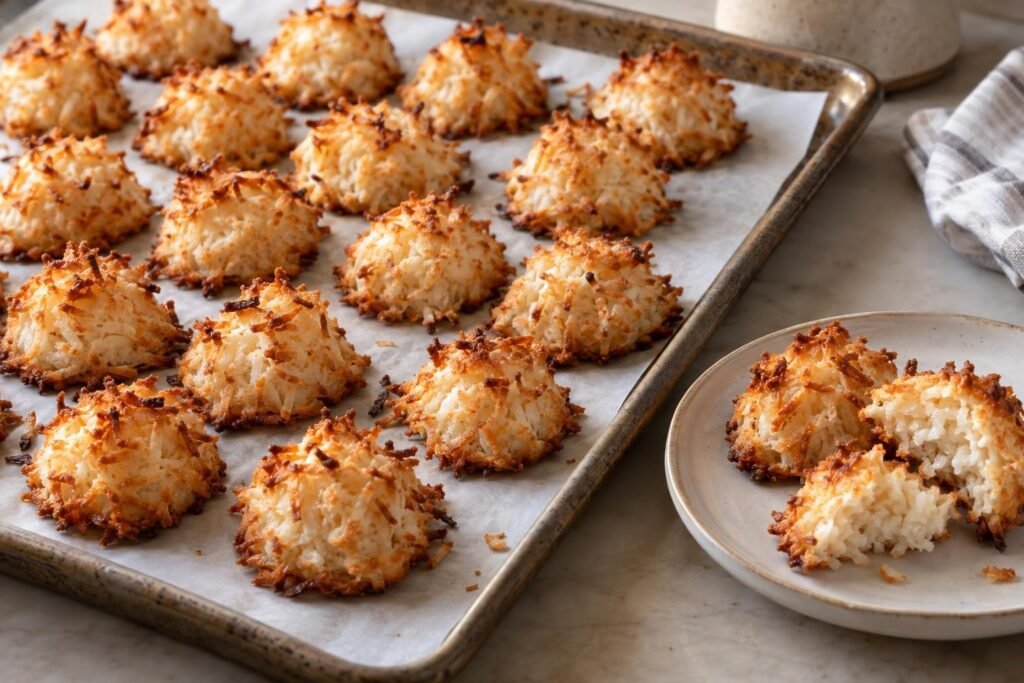
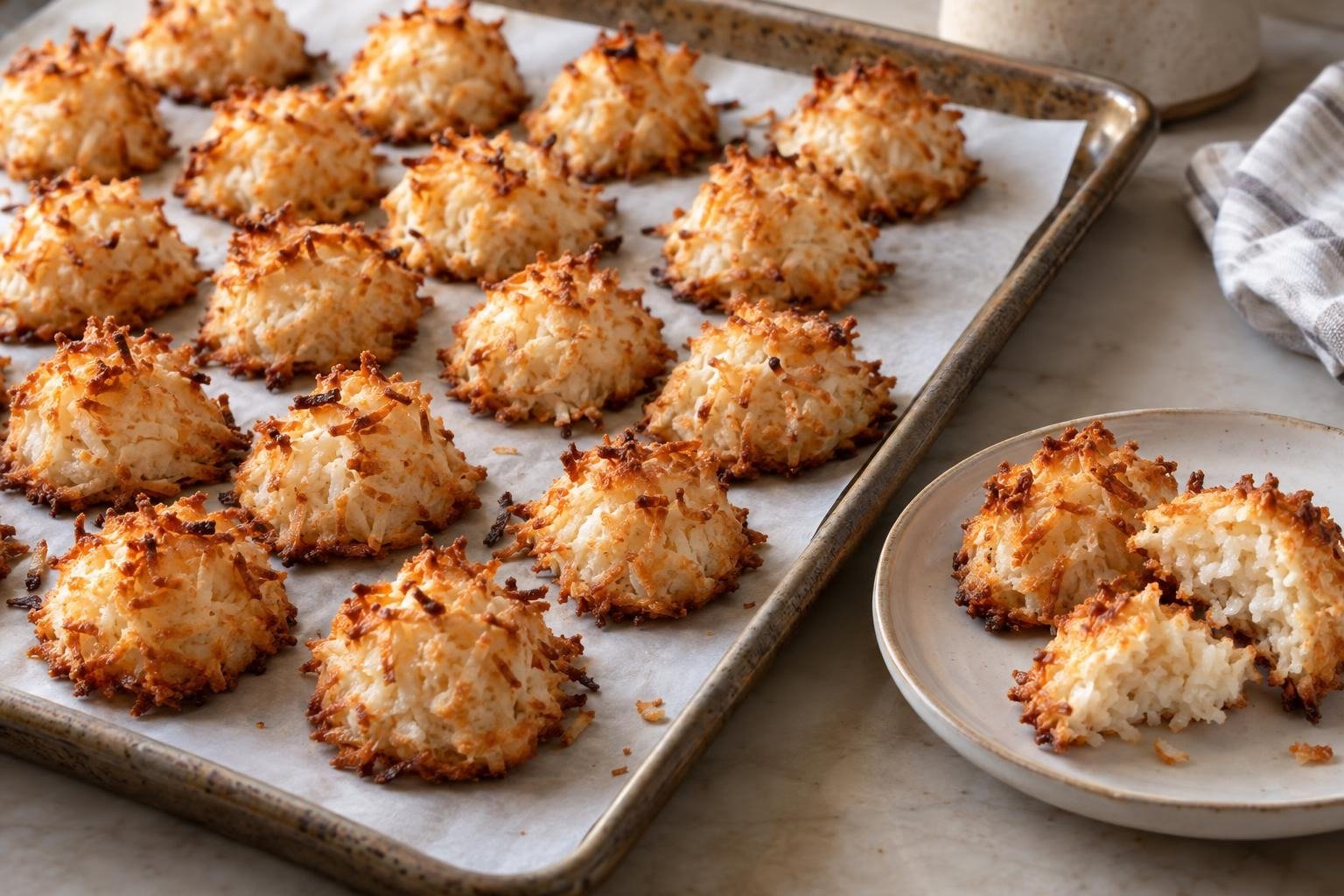
I’ve never understood why coconut macaroons sometimes get a reputation for being dry, because a good one should be anything but! These coconut macaroons have beautifully golden, toasted edges, little crispy coconut tips, and soft, chewy centers packed with sweet coconut flavor. I use sweetened condensed milk to keep the coconut moist and bring everything together, while whipped egg whites give the cookies a lighter texture without making them cakey. One thing I’m particular about is shaping the mixture into compact little mounds so they hold together as they bake, with plenty of coconut strands sticking out to turn golden and crisp. A pinch of salt and a little vanilla help balance all that sweetness. They’re wonderfully simple cookies, but getting that contrast between the crunchy outside and chewy middle is what makes me reach for a second one!
What Makes These Coconut Cookies Deliciously Ridiculous
- Sweetened condensed milk is the secret to that chewy center: I use 300 g of condensed milk because it brings just the right amount of moisture and sweetness to hold the coconut together. You get rich, chewy macaroons that stay soft inside instead of turning into dry little coconut piles. And honestly, nobody wants to bite into a cookie that tastes like shredded cardboard!
- Whipped egg whites make them surprisingly light: Three egg whites, whipped to medium-stiff peaks, give the coconut mixture a little lift without taking away that signature chewy texture. I fold them in gently because I want the macaroons tender inside, not dense and heavy.
- Give the coconut ten minutes to soak things up: Before folding in the egg whites, I let the coconut and condensed milk rest for about 10 minutes. The coconut absorbs some of that moisture, making the mixture easier to shape and less likely to crumble. It’s a small step that saves a lot of frustration when portioning the cookies.
- Those little coconut peaks are the best part: I portion the mixture into compact 35 g mounds, keeping the bases together while leaving some coconut strands sticking out. Those exposed tips turn beautifully golden and crisp in the oven, giving each macaroon that irresistible contrast between crunchy edges and a soft, chewy middle.
- A gentler oven gives you the best of both textures: I bake these at 325°F (163°C) so the coconut has time to toast gradually while the egg whites set. Too much heat can darken those delicate strands before the centers are ready. I look for deeply golden edges and lightly crisp ridges, with the middle still tender rather than dry.
Ingredient Notes for Coconut Macaroons
- Sweetened shredded coconut: Its added sugar and retained moisture create a cohesive, chewy macaroon. Separate any compressed clumps before measuring so the condensed milk coats the strands evenly.
- Sweetened condensed milk: This supplies sugar, milk solids, and concentrated moisture in one ingredient. Weigh it carefully because too much encourages spreading and sticky, under-set centers.
- Egg whites: Whipping the whites adds structure and controlled aeration. Use cleanly separated whites at room temperature, since even a smear of yolk can weaken the foam.
- Cream of tartar: This mild acid stabilizes the egg-white foam, making it less likely to collapse while being folded through the heavy coconut mixture.
- Vanilla extract: Vanilla rounds out the toasted coconut and dairy flavors. Use pure vanilla extract and mix it into the condensed milk for even distribution.
- Fine sea salt: A small amount sharpens the coconut flavor and balances the concentrated sweetness without making the cookies taste noticeably salty.
A Few Golden Rules for Coconut Macaroons
- A kitchen scale makes better macaroons: I portion each cookie to approximately 35 g so they bake at the same rate. It’s tempting to grab a spoon and guess, but evenly sized mounds mean the centers set properly while those coconut strands turn golden and crisp. No tiny burnt cookies hiding beside oversized, underbaked ones!
- Keep an eye on those golden bottoms: Coconut can go from beautifully toasted to unpleasantly burnt faster than you’d expect. I start checking around the 20-minute mark, paying particular attention to the bases and exposed edges. Once they’re evenly golden, it’s time to take them out.
- Whip the egg whites, but don’t overdo it: I stop when the egg whites look glossy and hold peaks with tips that bend slightly. If you beat them until they’re dry and clumpy, they’ll be much harder to fold into the sticky coconut mixture. We want a little airiness, not pockets of unmixed egg white!
- Don’t forget what’s hiding at the bottom of the bowl: Sweetened condensed milk is thick and tends to settle beneath the coconut. When folding in the whipped egg whites, I sweep my spatula right across the bottom and gently lift the mixture over itself. That keeps everything evenly combined without knocking out all the air we’ve just whipped in.
- Give the cookies a moment before moving them: Freshly baked macaroons are surprisingly delicate, even when their edges look beautifully crisp. I leave them on the baking sheet for about 10 minutes so they can firm up before transferring them to a cooling rack. Try lifting them too early, and you might leave half your macaroon stuck to the parchment!
My Best Tips for Shaping Coconut Macaroons
One of my favorite things about coconut macaroons is that they’re supposed to look a little rustic. Those golden, uneven coconut tips are part of their charm! But after working with plenty of sticky coconut mixtures, I’ve learned that a little care when shaping makes all the difference between beautifully formed macaroons and a tray of coconut crumbs.
- Give each macaroon a sturdy little base: I pack the mixture firmly into my cookie scoop before releasing it onto the parchment-lined baking sheet. A compact bottom helps the macaroon hold together while the outside turns golden and crisp. There’s no need to flatten it or press out all that lovely texture.
- Let a few coconut strands stick out: Those crispy, toasted coconut tips are one of the best parts! I gently lift a few strands to give each macaroon its craggy appearance, but I avoid leaving long, wispy pieces sticking too far out. They’ll burn before the center has finished baking, and burnt coconut isn’t quite the flavor we’re going for.
- Don’t let sticky coconut win the battle: If the mixture starts clinging to the cookie scoop, I dip it briefly in cool water and shake off the excess before portioning again. It helps the macaroons release neatly without pulling them apart. Just don’t leave water sitting in the scoop, since we don’t want to add extra moisture to the mixture.
- Rescue any mounds that start spreading: If a portion looks a little loose, I gently press the sides inward with slightly damp fingertips to bring it back into shape. There’s no need to add more shredded coconut, which could change the texture. A little gentle reshaping usually does the trick.
The goal isn’t to make every macaroon look identical. I want them to have sturdy bottoms, soft centers, and plenty of golden coconut ridges. A little personality in their shape makes them even more tempting once they’re baked!
Ingredients for Coconut Macaroons
- 340 g sweetened shredded coconut (about 4 1/2 cups, gently loosened before weighing)
- 300 g sweetened condensed milk (about 1 cup, weighed for accurate consistency)
- 2 tsp pure vanilla extract (stirred into the condensed milk)
- 1/4 tsp fine sea salt (divided between the coconut mixture and egg whites)
- 90 g large egg whites (about 3 large whites, room temperature)
- 1/4 tsp cream of tartar (for stabilizing the whipped egg whites)
How to Make Coconut Macaroons
- STEP 1). Prepare the oven and baking sheets Arrange racks in the upper and lower thirds of the oven and preheat to 325°F (163°C). Line two large rimmed baking sheets with parchment paper, keeping the paper flat so the macaroons sit level. Avoid greasing the parchment because added fat can encourage spreading. Check that the mixing bowl and whisk for the egg whites are completely clean and grease-free, then separate the room-temperature whites without allowing any yolk into the bowl.
- STEP 2). Hydrate the coconut mixture Place the loosened sweetened shredded coconut in a large mixing bowl. In a separate cup, stir the condensed milk, vanilla, and half of the salt until smooth, then scrape this mixture over the coconut. Fold with a flexible spatula until every strand looks evenly moistened and no dry pockets remain. Let the mixture stand at room temperature for 10 minutes; it should become cohesive and hold together when squeezed, but it will still feel thick and sticky.
- STEP 3). Whip and fold the egg whites Add the cream of tartar and remaining salt to the egg whites. Using an electric mixer, beat on medium speed until foamy, then increase to medium-high and continue for 2 to 3 minutes. Stop when the whites form glossy medium-stiff peaks that stand with slightly curved tips. Fold one-third of the foam into the coconut mixture to loosen it, then gently fold in the remainder in two additions until no white streaks remain and the mixture feels lighter.
- STEP 4). Portion and shape compact mounds Using a 2-tablespoon cookie scoop and the digital scale, portion the mixture into 24 mounds weighing about 35 grams each. Pack each scoop firmly enough to create a stable base, then place the macaroons at least 1 1/2 inches apart on the prepared baking sheets. With slightly damp fingertips, press any loose sides inward and pinch a few strands upward for craggy tops. Do not leave long, wispy pieces exposed because they can scorch before the centers set.
- STEP 5). Bake until deeply golden and cool Bake for 20 to 24 minutes, rotating the pans from front to back and switching their rack positions after 12 minutes. The macaroons are done when the bases and outer ridges are deep golden brown, the tops feel dry, and the centers resist gentle pressure without feeling liquid or collapsing. An instant-read thermometer inserted into a center should register at least 160°F (71°C). Cool on the pans for 10 minutes, then transfer carefully to a wire rack and cool for 25 minutes before serving.
Storage and Freezing
- Storage: Keep completely cooled coconut macaroons in an airtight container at room temperature for up to 3 days, placing parchment between layers to protect the ridges.
- Refrigeration: For up to 1 week, refrigerate the airtight container and let the macaroons stand at room temperature for 20 minutes before serving so their centers regain a softer chew.
- Freezing: Freeze cooled macaroons in a single layer until firm, then transfer them to a freezer-safe container with parchment between layers for up to 2 months.
- Thawing: Thaw the macaroons inside their closed container at room temperature for 1 to 2 hours, which limits surface condensation and protects the crisp edges.
- Serving: For a lightly refreshed exterior, warm thawed or room-temperature macaroons on a parchment-lined pan at 300°F (149°C) for 4 to 5 minutes, then cool briefly.
Frequently Asked Questions
Why do coconut macaroons spread in the oven?
Spreading usually comes from excess condensed milk, loosely measured coconut, under-whipped egg whites, or portions that were not packed firmly. The unbaked mixture should hold a mound rather than slowly slumping outward.
Weigh the coconut and condensed milk, whip the whites until glossy peaks hold, and give the coconut its full 10-minute hydration rest. If a shaped portion relaxes immediately, press it inward before baking rather than adding unmeasured coconut.
How do you know when coconut macaroons are fully baked?
Look for deep golden bases, toasted outer ridges, and dry-looking tops. The center should yield slightly when pressed but should not collapse, ooze, or feel wet beneath the crust.
Because the mixture contains egg whites, the interior must be set rather than raw. An optional instant-read thermometer should register at least 160°F (71°C) in the center of a macaroon.
Can I use unsweetened coconut instead of sweetened shredded coconut?
Unsweetened coconut is not a direct replacement in this formula because it contains less sugar and is often considerably drier. That change affects moisture absorption, binding, browning, and the final chew.
Using it without reformulating may produce crumbly mounds or encourage the coconut to pull too much moisture from the condensed milk. For the intended cohesive centers and caramelized edges, use sweetened shredded coconut.
Why are my coconut macaroons falling apart?
Crumbly macaroons often result from coconut that was not fully coated, egg whites that were folded unevenly, or scoops that were portioned too loosely. The mixture should compress into a cohesive clump before it reaches the baking sheet.
Press the mixture firmly into the scoop and compact the sides with damp fingertips. Allow baked macaroons to rest on the pan for 10 minutes because moving them while piping hot can break their still-soft bases.
What size should coconut macaroons be for even baking?
Each portion should weigh about 35 grams, which is roughly a firmly packed 2-tablespoon scoop. This size provides enough thickness for a chewy center while exposing plenty of coconut ridges for browning.
Much smaller macaroons can dry out before their edges develop full color, while oversized portions may brown outside before their egg-white centers set. Consistent weight also keeps the 20 to 24 minute baking window reliable.
Coconut Macaroons
Ingredients
Equipment
Method
- Arrange racks in the upper and lower thirds of the oven and preheat to 325°F (163°C). Line two large rimmed baking sheets with parchment paper, keeping the paper flat so the macaroons sit level. Avoid greasing the parchment because added fat can encourage spreading. Check that the mixing bowl and whisk for the egg whites are completely clean and grease-free, then separate the room-temperature whites without allowing any yolk into the bowl.
- Place the loosened sweetened shredded coconut in a large mixing bowl. In a separate cup, stir the condensed milk, vanilla, and half of the salt until smooth, then scrape this mixture over the coconut. Fold with a flexible spatula until every strand looks evenly moistened and no dry pockets remain. Let the mixture stand at room temperature for 10 minutes; it should become cohesive and hold together when squeezed, but it will still feel thick and sticky.
- Add the cream of tartar and remaining salt to the egg whites. Using an electric mixer, beat on medium speed until foamy, then increase to medium-high and continue for 2 to 3 minutes. Stop when the whites form glossy medium-stiff peaks that stand with slightly curved tips. Fold one-third of the foam into the coconut mixture to loosen it, then gently fold in the remainder in two additions until no white streaks remain and the mixture feels lighter.
- Using a 2-tablespoon cookie scoop and the digital scale, portion the mixture into 24 mounds weighing about 35 grams each. Pack each scoop firmly enough to create a stable base, then place the macaroons at least 1 1/2 inches apart on the prepared baking sheets. With slightly damp fingertips, press any loose sides inward and pinch a few strands upward for craggy tops. Do not leave long, wispy pieces exposed because they can scorch before the centers set.
- Bake for 20 to 24 minutes, rotating the pans from front to back and switching their rack positions after 12 minutes. The macaroons are done when the bases and outer ridges are deep golden brown, the tops feel dry, and the centers resist gentle pressure without feeling liquid or collapsing. An instant-read thermometer inserted into a center should register at least 160°F (71°C). Cool on the pans for 10 minutes, then transfer carefully to a wire rack and cool for 25 minutes before serving.
Notes
- Trust the scale over the scoop: Keeping each portion near 35 grams gives the centers enough time to set just as the exposed coconut reaches a deep golden brown.
- Watch the lower edges closely: Coconut can move from toasted to scorched quickly, so begin checking at 20 minutes and remove the pans once the bases are evenly browned.
- Keep the foam glossy: Stop whipping when the peaks hold with slightly bent tips; dry, clumpy egg whites are harder to fold evenly and can create hollow pockets.
- Fold from the bottom deliberately: The condensed milk settles beneath the coconut, so sweep the spatula fully under the mixture while preserving as much egg-white aeration as possible.
- Let the structure settle: Warm macaroons are fragile and may stick to the parchment, while a 10-minute pan rest allows the sugar and egg proteins to firm.