Table of Contents
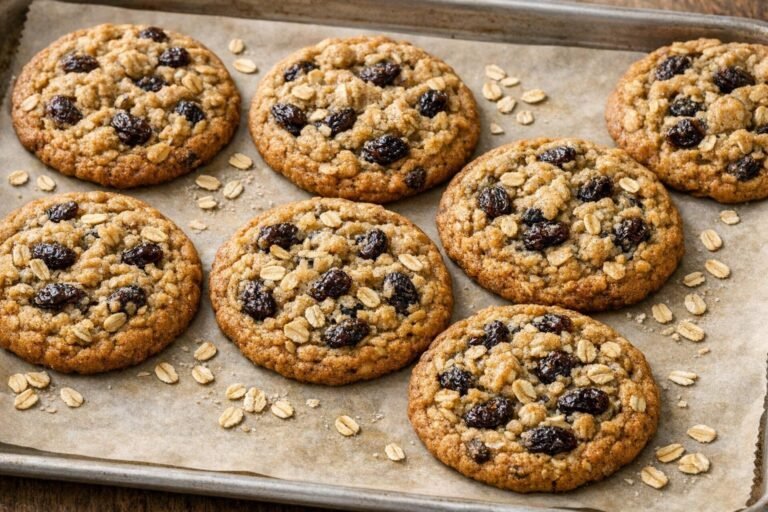
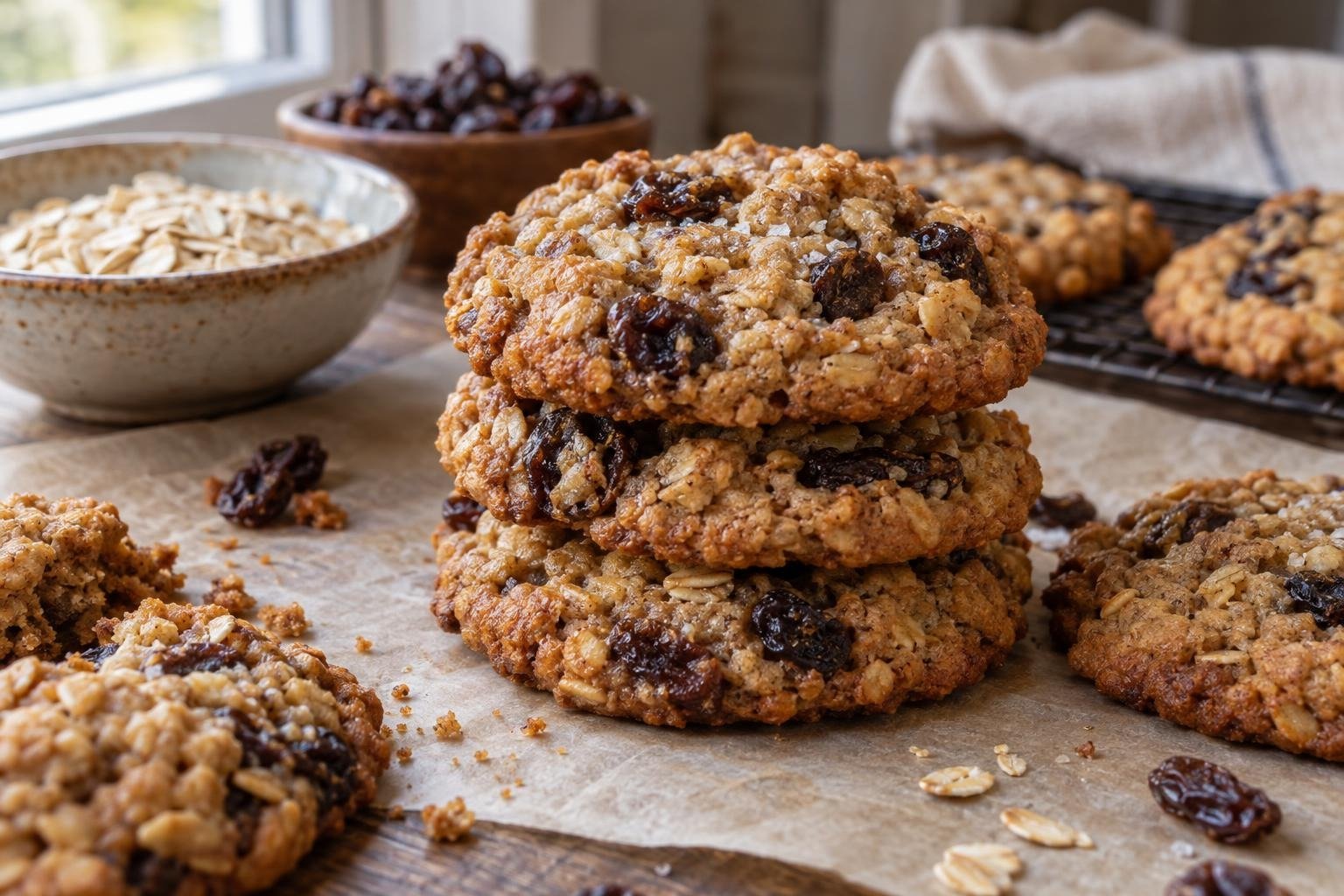
Old-fashioned oatmeal raisin cookies have a charm that never really goes out of style, and these bakery-style oatmeal raisin cookies remind me why. They’re generously sized, with golden, slightly crisp edges, soft chewy centers, and plenty of plump raisins tucked between the hearty oats. Brown sugar and warm cinnamon give them that familiar, cozy flavor, while the rolled oats add a lovely, slightly nutty texture that makes each cookie feel substantial. I’m particular about using old-fashioned oats here because they give the cookies more character than a finer oat would. Soaking the raisins also makes a difference, keeping them soft and juicy instead of dry and chewy. At 90 grams each, these are the kind of big, comforting cookies you’d be happy to find in a bakery display case, especially when they’re still a little warm.
Why You’ll Love these Cookies
- Big, 90g portions create bakery-style thickness and dramatic edge-to-center contrast.
- Chilled dough and high oat content control spread for thick, chewy cookies with crisp rim.
- Old-fashioned oats bring robust texture while still absorbing just enough moisture.
- Hydrated raisins stay juicy through baking, preventing dry pockets in the crumb.
- Brown sugar boosts flavor and chewy texture by holding onto moisture during baking.
Ingredient Notes for Bakery-Style Oatmeal Raisin Cookies with Chewy Centers
- Unsalted Butter: Softened just enough for easy creaming, this is the fat that creates lift and structure. Using unsalted lets you control the salt precisely for balanced flavor.
- Brown Sugar: Its moisture and mild molasses flavor keep cookies soft-centered and boost chewiness. Packed for accuracy, don’t skip this step.
- Granulated Sugar: Adds crispness to the edges and helps cookies spread just enough while balancing the flavor.
- Large Eggs: Binding and lifting the dough, they create structure so the cookies rise tall but don’t dry out.
- Vanilla Extract: Rounds out the spice and oat flavors; real extract makes a difference in complex recipes like this.
- All-Purpose Flour: Just enough to bind, too much yields dry results, too little means flat cookies.
- Old-Fashioned Rolled Oats: The key for that bakery crumble and chew. Quick oats go mushy here; stick with rolled.
- Cinnamon & Nutmeg: Cinnamon for warmth and spice, nutmeg for a little bakery-style depth. Freshly grated if you can.
- Salt & Baking Soda: Salt sharpens every flavor, while baking soda gives just enough rise and the classic bakery crackle.
- Raisins: Hydrate in hot water before mixing to keep them soft, so they don’t harden in the bake. You want plump, not dry.
- Optional Flaky Sea Salt: A quick sprinkle after baking heightens the oaty-sweetness and spicing, it’s my go-to bakery finish.
Expert Baking Tips
- Always hydrate raisins before baking to guarantee a softer, bakery-style interior.
- Use a digital scale to portion exactly 90g dough for every cookie, uniform size is key for even baking and bakery aesthetics.
- Don’t skip chilling your scooped dough; it limits spread and ensures thick, chewy centers every time.
- Rotate your baking sheet halfway for even browning, especially with oversized bakery cookies.
- Let cookies finish setting on the baking sheet after baking; this step is as crucial as getting the bake time right for chewy, non-gummy centers.
Ingredients for Bakery-Style Oatmeal Raisin Cookies
- 1 cup (227g) unsalted butter (softened to cool room temperature)
- 1 1/4 cups (265g) packed dark brown sugar
- 1/3 cup (65g) granulated sugar
- 2 large eggs (room temperature)
- 2 teaspoons vanilla extract
- 2 cups (250g) all-purpose flour
- 2 teaspoons ground cinnamon
- 1/8 teaspoon ground nutmeg (freshly grated if possible)
- 1 teaspoon baking soda
- 3/4 teaspoon fine sea salt
- 3 cups (270g) old-fashioned rolled oats
- 1 1/2 cups (210g) raisins (soaked in hot water, drained and patted dry)
- flaky sea salt (Optional, for finishing)
How to Make Bakery-Style Oatmeal Raisin Cookies
- STEP 1). Hydrate raisins and prepare equipment. Pour hot tap water over the raisins in a bowl and let them sit for 10 minutes to plump. Drain well and pat thoroughly dry with paper towels. Meanwhile, line two large baking sheets with parchment and fit your stand mixer with the paddle. Set aside.
- STEP 2). Cream butter and sugars. In the mixer bowl, beat softened butter, brown sugar, and granulated sugar on medium-high for 3 minutes until pale and fluffy. Scrape bowl as needed. Proper creaming traps air, creating lightness and structure essential for thick bakery-style cookies.
- STEP 3). Add eggs and vanilla. Beat in eggs, one at a time, allowing each to fully incorporate before adding the next. Mix in the vanilla extract until the mixture is smooth, cohesive, and slightly glossy. This stage sets up an even crumb and ensures a consistent thick bake.
- STEP 4). Mix dry ingredients. Whisk together flour, cinnamon, nutmeg, baking soda, and salt in a medium bowl. With mixer on low, add the dry blend in two additions. Mix just until no dry streaks remain, overmixing here toughens the crumb and can cause excess spread.
- STEP 5). Incorporate oats and raisins. Add oats and prepared raisins to the dough. Use a spatula to fold by hand just until evenly distributed. At this stage, the dough will be dense and rough. Aim for even mix-ins with no dry pockets, stop as soon as the oats and raisins are spread throughout.
- STEP 6). Portion and chill. Divide dough with a 90g scoop or large kitchen scale, placing mounds 2 1/2 inches apart on prepared sheets. Chill trays, uncovered, for 45 minutes (or up to 24 hours covered). This step controls spread and yields defined edges with plush centers.
- STEP 7). Bake until edges set and centers are puffed. Preheat oven to 350°F (180°C) with racks in upper and lower thirds. Bake cookies, one sheet at a time, for 16-18 minutes, rotating halfway. Cookies are done when edges are deep golden and set, and centers look puffed and light golden but still a touch underdone.
- STEP 8). Cool on sheet before transferring. Let cookies cool on the baking sheet for 8-10 minutes to finish setting. Centers will firm up as residual heat carries through. Use a wide spatula to transfer the cookies to a wire rack to cool completely and preserve their thick, chewy texture.
Storage and Freezing
- Store cookies in an airtight container at room temperature up to 4 days.
- To freeze baked cookies: cool completely, layer with parchment in a freezer-safe bag, and freeze up to 2 months.
- To freeze dough: portion, freeze on trays until firm, then store in freezer bags up to 2 months. Bake straight from frozen, adding 2-3 minutes to bake time.
- Serve cookies at room temperature or very lightly warmed for best texture.
Frequently Asked Questions
How do I tell when bakery-style oatmeal raisin cookies are done?
Doneness is all about visual and tactile cues: the edges should look deep golden and fully set, while the centers will still appear light golden and slightly underbaked. They’ll puff in the oven but settle flatter with a chewy middle as they cool.
If they’re paler and domed after the bake, give them an extra 1-2 minutes. Be careful not to overbake, the cookies will keep cooking from residual heat during their cool-on-sheet rest.
What size scoop for real bakery-style oatmeal raisin cookies?
True bakery-style cookies are dramatically oversized, use a 90g (around 3-oz) scoop or portion by weight with a scale for even results.
This yields thick, chunky cookies with defined edge-to-center texture, just like in a bakery display. Smaller spoons will work, but the hallmark edge and center contrast really needs a bold portion for proper textural payoff.
Why did my oatmeal raisin cookies spread too much?
Excessive spread is usually tied to warm dough, too little flour, or insufficient chilling. Chilled dough and precise flour measuring are crucial to keep the cookies thick.
Also, watch butter consistency, if it's too soft or melted, the cookies will flatten out more than you want. A high percentage of oats and proper chilling before baking both work to limit spread and maintain plush bakery thickness.
Are there ingredient substitutions for this bakery-style oatmeal raisin cookies recipe?
For a true bakery finish, I don't recommend swapping the old-fashioned oats, quick oats will make the cookies mushy and lose their characteristic bite. You can safely use golden raisins or a mix with regular ones for a twist, but keep ratios the same.
For a slightly firmer edge, you may substitute light brown sugar for dark, but the flavor will lose a little depth. Stick to real butter for the structure and taste you want.
Can you freeze dough for bakery-style oatmeal raisin cookies?
Freezing this dough is practical and doesn't sacrifice the bakery-style texture. After scooping, freeze the dough balls on a sheet until solid, then bag up, bake directly from frozen, just add 2-3 minutes to bake time to compensate for the colder start.
The finished cookies freeze well too; layer with parchment to prevent sticking and thaw at room temp to serve. Both options deliver bakery results when handled right.
More Ridiculously Delicious Cookies
- Chewy Ginger Molasses Cookies with Warm Spices
- Oatmeal Cream Pies with Soft Cookie Sandwiches
- Small Batch Chocolate Chip Cookies with Chewy Centers and Crisp Edges
- Fudgy Chocolate Crinkle Cookies with Crackled Sugar Tops
- Raspberry Jam Sandwich Cookies with Buttery Layers
- Bakery-Style Lemon Crinkle Cookies with Soft Centers
- Chewy Coconut Cookies with Soft, Chewy Centers
- Apricot Thumbprint Cookies with Soft, Chewy Centers
Bakery-Style Oatmeal Raisin Cookies with Chewy Centers
Ingredients
Equipment
Method
- Pour hot tap water over the raisins in a bowl and let them sit for 10 minutes to plump. Drain well and pat thoroughly dry with paper towels. Meanwhile, line two large baking sheets with parchment and fit your stand mixer with the paddle. Set aside.
- In the mixer bowl, beat softened butter, brown sugar, and granulated sugar on medium-high for 3 minutes until pale and fluffy. Scrape bowl as needed. Proper creaming traps air, creating lightness and structure essential for thick bakery-style cookies.
- Beat in eggs, one at a time, allowing each to fully incorporate before adding the next. Mix in the vanilla extract until the mixture is smooth, cohesive, and slightly glossy. This stage sets up an even crumb and ensures a consistent thick bake.
- Whisk together flour, cinnamon, nutmeg, baking soda, and salt in a medium bowl. With mixer on low, add the dry blend in two additions. Mix just until no dry streaks remain, overmixing here toughens the crumb and can cause excess spread.
- Add oats and prepared raisins to the dough. Use a spatula to fold by hand just until evenly distributed. At this stage, the dough will be dense and rough. Aim for even mix-ins with no dry pockets, stop as soon as the oats and raisins are spread throughout.
- Divide dough with a 90g scoop or large kitchen scale, placing mounds 2 1/2 inches apart on prepared sheets. Chill trays, uncovered, for 45 minutes (or up to 24 hours covered). This step controls spread and yields defined edges with plush centers.
- Preheat oven to 350°F (180°C) with racks in upper and lower thirds. Bake cookies, one sheet at a time, for 16-18 minutes, rotating halfway. Cookies are done when edges are deep golden and set, and centers look puffed and light golden but still a touch underdone.
- Let cookies cool on the baking sheet for 8-10 minutes to finish setting. Centers will firm up as residual heat carries through. Use a wide spatula to transfer the cookies to a wire rack to cool completely and preserve their thick, chewy texture.
Notes
- Always hydrate raisins before baking to guarantee a softer, bakery-style interior.
- Use a digital scale to portion exactly 90g dough for every cookie, uniform size is key for even baking and bakery aesthetics.
- Don’t skip chilling your scooped dough; it limits spread and ensures thick, chewy centers every time.
- Rotate your baking sheet halfway for even browning, especially with oversized bakery cookies.
- Let cookies finish setting on the baking sheet after baking; this step is as crucial as getting the bake time right for chewy, non-gummy centers.