Table of Contents
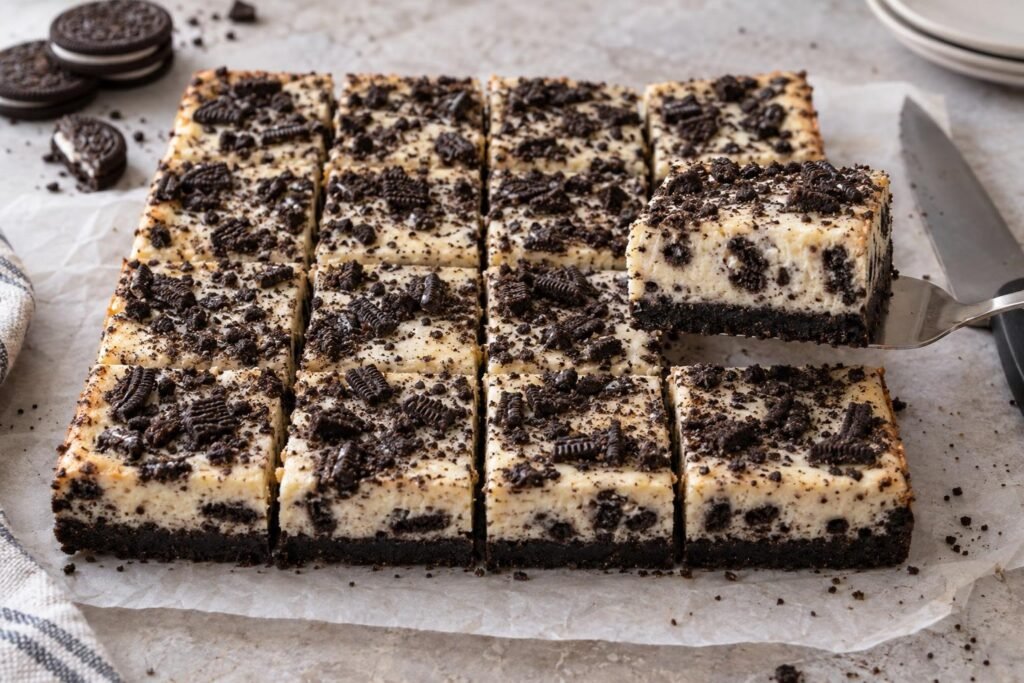
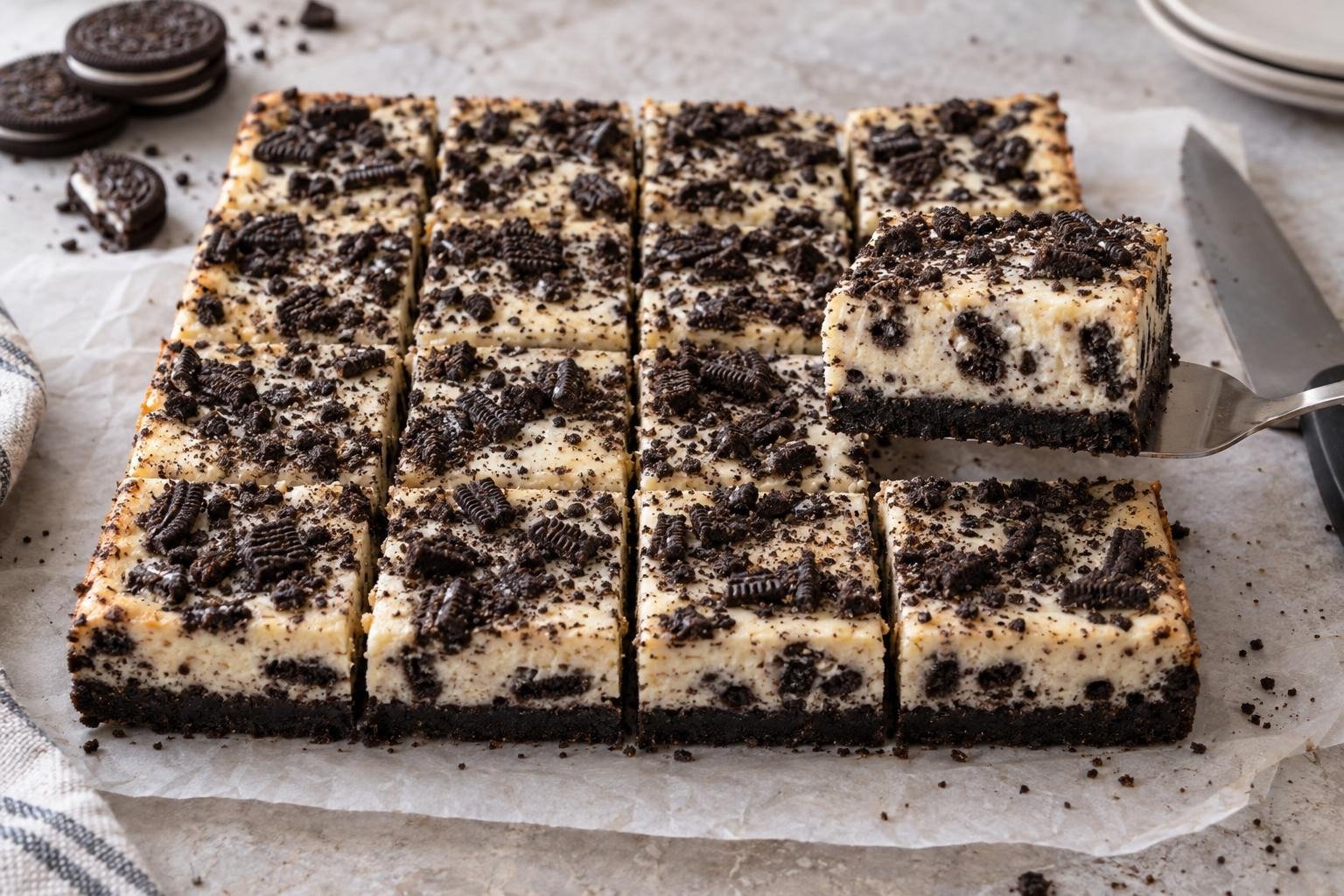
Oreo cookies have a way of making an already good dessert even harder to resist, and these Oreo cheesecake bars are proof! Between the dark chocolate cookie crust and creamy vanilla cheesecake filling, there’s plenty of cookies-and-cream flavor in every square. I especially enjoy biting into those little Oreo pieces tucked inside the filling, while the tangy cream cheese keeps everything from tasting overly sweet. Unlike my no-bake cheesecakes, these bars go into the oven, and I’ve found that gentle mixing makes a real difference to their smooth, creamy texture. I add the eggs last and keep the mixer on low to avoid whipping too much air into the batter. The hardest part is giving them a full six hours in the refrigerator before slicing, but that patience pays off with beautifully neat squares. And if you’re craving that same cookies-and-cream goodness without turning on the oven, my No-Bake Oreo Cheesecake is another delicious option!
This Is Why You’ll Love These Oreo Cheesecake Bars
- Creamy cheesecake with just the right tang: I use three parts cream cheese to one part sour cream because I want a rich filling that still feels smooth and creamy rather than heavy. The sour cream adds a gentle tang that balances the sweetness of the Oreo cookies, making these bars tempting enough to reach for a second square.
- An Oreo crust that actually holds together: I bake the chocolate cookie crust before adding the cheesecake filling. Giving it that little head start helps the crumbs bind together and creates a sturdier base beneath the creamy filling. Nobody wants the bottom of their cheesecake bar falling apart before it reaches their mouth!
- Gentle mixing makes a difference: Cheesecake batter doesn’t need to be whipped into a frenzy. I mix the cream cheese on low speed and add the eggs last to avoid incorporating too much air. That helps prevent excessive puffing, sinking, and cracking while the bars bake and cool.
- A gentle bake keeps the filling silky: Baking at 325°F (163°C) allows the cheesecake to set gradually without drying out the edges. I look for a firm outer edge and a center that still has a slight, unified wobble when the pan is gently nudged. It’s one of those little visual cues that’s much more useful than watching the clock alone.
- The secret to those clean, bakery-style squares: I let the cheesecake cool gradually before refrigerating it for at least six hours. That gives the filling time to firm up properly without losing its creamy texture. Once thoroughly chilled, the bars are much easier to cut into neat squares instead of ending up with a delicious but rather messy pile of cookies and cheesecake!
Ingredient Notes for Oreo Cheesecake Bars
- Original Oreo cookies: Use standard filled cookies and keep the cream centers intact. They provide sugar and binding fat as well as cocoa flavor. Double Stuf cookies contain more filling and can make the crust softer and greasier.
- Unsalted butter: Melted butter binds the finely ground crust crumbs. Let it cool slightly before mixing so it coats the crumbs rather than making them oily.
- Full-fat brick cream cheese: Brick-style cream cheese supplies the fat and protein structure needed for clean bars. Bring it to 68 to 72°F so it blends smoothly without prolonged whipping.
- Granulated sugar: Fine crystals dissolve into the softened cream cheese while controlling sweetness. Scraping the bowl after mixing prevents gritty pockets along the bottom.
- Full-fat sour cream: Sour cream contributes moisture and acidity, loosening the dense cream cheese without making the filling runny. It should be at room temperature to prevent small lumps.
- Large eggs: Eggs set the filling through heat-coagulated proteins. Add them one at a time on low speed and stop as soon as the last streak disappears to avoid an aerated, puffy cheesecake.
My Baking Tips
- Use a metal pan rather than a deep ceramic dish. Metal transfers heat more predictably, helping the center set before the edges become dry.
- Press the crust firmly but keep it level. Thin corners can crumble during lifting, while heavily compacted patches become difficult to cut.
- If the cream cheese remains cool and stiff, pause rather than beating faster. High-speed mixing traps air that can make the cheesecake puff and crack.
- Judge doneness by the movement of the whole center, not by waiting for a rigid surface. A liquid ripple needs more baking, but a soft unified wobble will finish setting as the bars cool.
- Schedule the recipe one day before serving when possible. Overnight refrigeration gives the filling its cleanest texture and makes portioning less rushed.
Ingredients for Oreo Cheesecake Bars
- 20 cookies original Oreo sandwich cookies (about 226 g, cookies and filling included, for the crust)
- 57 g unsalted butter (4 tablespoons, melted and cooled slightly)
- 680 g full-fat brick cream cheese (three 8-ounce bricks, softened to 68 to 72°F)
- 150 g granulated sugar (3/4 cup)
- 120 g full-fat sour cream (1/2 cup, at room temperature)
- 10 ml pure vanilla extract (2 teaspoons)
- 1.5 g fine sea salt (1/4 teaspoon)
- 3 large eggs eggs (at room temperature)
- 10 cookies original Oreo sandwich cookies (about 113 g, cut into rough quarters for the filling)
- 6 cookies original Oreo sandwich cookies (about 68 g, coarsely crushed for the top)
How to Make Oreo Cheesecake Bars for Clean Slices
- STEP 1). Prepare the ingredients, oven, and pan Set the cream cheese out for about 60 minutes and the sour cream and eggs for about 30 minutes, aiming for cool room temperature rather than warmth. Heat the oven to 325°F with a rack in the center. Lightly grease a 9-inch square metal pan with sides at least 2 inches deep. Line it with two crossing parchment strips, leaving enough overhang to lift the chilled cheesecake out without bending it.
- STEP 2). Process, press, and bake the Oreo crust Place the 20 crust cookies, including their cream centers, in a food processor and pulse until they resemble fine, evenly dark sand with no large pieces. Add the 57 g melted butter and pulse until the crumbs look uniformly moistened and hold when squeezed. Press them firmly across the pan with a flat-bottomed measuring cup, paying attention to the corners. Bake for 10 minutes, then place the pan on a wire rack while preparing the filling. Keep the oven at 325°F.
- STEP 3). Mix the cheesecake filling without incorporating excess air Place the softened cream cheese in a large bowl or stand mixer fitted with the paddle. Mix on low speed for 1 to 2 minutes, scraping the bowl and paddle, until completely smooth with no firm lumps. Add the sugar and mix on low for 1 minute. Blend in the sour cream, vanilla, and salt just until uniform. Add the eggs one at a time, mixing on low only until each yolk disappears. Scrape the bottom and fold several times by hand; the finished batter should be glossy, thick, and minimally aerated.
- STEP 4). Fold in the cookies and assemble the bars Reserve a small handful of the quartered filling cookies, then fold the remainder into the cheesecake batter with a flexible spatula using broad, gentle strokes. Pour the batter over the warm or room-temperature crust and spread it into an even layer without pressing out the cookie pieces. Tap the pan lightly on the counter two or three times to release large air pockets. Scatter the reserved quartered cookies and all 6 coarsely crushed topping cookies evenly over the surface.
- STEP 5). Bake until gently set, then cool gradually Bake at 325°F for 38 to 44 minutes. The outer 2 inches should look set and slightly puffed, while the center should move as one soft, shallow wobble when the pan is nudged. It must not ripple like liquid or show wet batter. An instant-read thermometer inserted away from a cookie piece should register about 155°F. Turn off the oven, crack the door, and leave the pan inside for 15 minutes. Transfer it to a wire rack and cool uncovered for 45 minutes, keeping the cheesecake in its pan.
- STEP 6). Chill thoroughly and cut clean squares Cover the pan once it no longer feels warm and refrigerate for at least 6 hours, preferably overnight. Lift the firm cheesecake out by the parchment and place it on a cutting board. For 16 bars, trim nothing, then make four equal columns and four equal rows. Dip a large sharp knife in hot water, wipe it completely dry, and press straight down for each cut. Clean and rewarm the blade between cuts so cookie crumbs and filling do not drag across the pale edges.
Storage and Freezing
- Refrigeration: Store the cut bars in a single layer in an airtight container for up to 5 days. Keep them chilled because the filling contains cream cheese, sour cream, and eggs.
- Freezing: Freeze fully chilled bars on a parchment-lined tray until firm, then wrap them individually and place them in an airtight freezer container for up to 2 months.
- Thawing: Unwrap the bars and thaw them in a covered container in the refrigerator overnight. This limits condensation on the cookie topping.
- Serving: Serve cold for the sharpest slices, or let individual bars stand at room temperature for 10 to 15 minutes for a softer, creamier texture. Do not leave them unrefrigerated for more than 2 hours.
Frequently Asked Questions
How long do Oreo cheesecake bars need to chill?
These bars need at least 6 hours in the refrigerator after their initial room-temperature cooling period. The filling may look set sooner, but its cream cheese fat and egg protein structure need time to firm throughout.
Overnight chilling is the most practical serving schedule. Keep the cheesecake in the pan while it chills, then lift and slice it shortly before serving.
What pan size and depth work best for Oreo cheesecake bars?
A 9-inch square metal pan with sides at least 2 inches deep provides the intended filling thickness and baking time. A shallower pan risks overflow, while a larger pan produces thinner bars that bake faster.
The crossed parchment sling should extend above the pan edges. That support lets you lift the completely chilled slab without turning it over or damaging the cookie topping.
Why did my Oreo cheesecake squares crack or sink?
Cracking and sinking usually come from excess air, excessive heat, or overbaking. Beat the softened cream cheese on low, add the eggs last, and stop mixing as soon as the batter becomes uniform.
Remove the bars from active heat while the center still has a cohesive wobble. The short rest in the switched-off oven slows contraction, while gradual rack cooling reduces the abrupt temperature change that encourages cracks.
How do you cut Oreo cheesecake bars cleanly?
Start with cheesecake that has chilled for at least 6 hours. Lift the whole slab onto a stable cutting board, then use a large, thin-edged chef's knife to press straight down instead of sawing.
Warm the blade in hot water and wipe it completely dry before every cut. Cleaning away cream cheese and cookie crumbs each time prevents dark streaks and ragged edges.
Can I make Oreo cheesecake bars ahead of serving?
Preparing them one or two days ahead works especially well because the cheesecake has ample time to set. Chill the uncut slab covered in its pan, keeping the covering from touching the cookie-topped surface.
Slice the bars on the day of serving for the neatest exposed edges. If they must be portioned earlier, arrange them in one layer in an airtight container so the topping is not crushed.
More Ridiculously Delicious Cheesecakes
- Best Creamy Mini Oreo Cheesecakes
- Creamy Chocolate Chip Cheesecake Bars
- Strawberry Pretzel Cheesecake Bars with Clean Slices
- Creamy Blueberry Cheesecake Bars
- Chocolate No-Bake Cheesecake Bars with a Creamy Filling
Easy Oreo Cheesecake Bars Recipe
Ingredients
Equipment
Method
- Set the cream cheese out for about 60 minutes and the sour cream and eggs for about 30 minutes, aiming for cool room temperature rather than warmth. Heat the oven to 325°F with a rack in the center. Lightly grease a 9-inch square metal pan with sides at least 2 inches deep. Line it with two crossing parchment strips, leaving enough overhang to lift the chilled cheesecake out without bending it.
- Place the 20 crust cookies, including their cream centers, in a food processor and pulse until they resemble fine, evenly dark sand with no large pieces. Add the 57 g melted butter and pulse until the crumbs look uniformly moistened and hold when squeezed. Press them firmly across the pan with a flat-bottomed measuring cup, paying attention to the corners. Bake for 10 minutes, then place the pan on a wire rack while preparing the filling. Keep the oven at 325°F.
- Place the softened cream cheese in a large bowl or stand mixer fitted with the paddle. Mix on low speed for 1 to 2 minutes, scraping the bowl and paddle, until completely smooth with no firm lumps. Add the sugar and mix on low for 1 minute. Blend in the sour cream, vanilla, and salt just until uniform. Add the eggs one at a time, mixing on low only until each yolk disappears. Scrape the bottom and fold several times by hand; the finished batter should be glossy, thick, and minimally aerated.
- Reserve a small handful of the quartered filling cookies, then fold the remainder into the cheesecake batter with a flexible spatula using broad, gentle strokes. Pour the batter over the warm or room-temperature crust and spread it into an even layer without pressing out the cookie pieces. Tap the pan lightly on the counter two or three times to release large air pockets. Scatter the reserved quartered cookies and all 6 coarsely crushed topping cookies evenly over the surface.
- Bake at 325°F for 38 to 44 minutes. The outer 2 inches should look set and slightly puffed, while the center should move as one soft, shallow wobble when the pan is nudged. It must not ripple like liquid or show wet batter. An instant-read thermometer inserted away from a cookie piece should register about 155°F. Turn off the oven, crack the door, and leave the pan inside for 15 minutes. Transfer it to a wire rack and cool uncovered for 45 minutes, keeping the cheesecake in its pan.
- Cover the pan once it no longer feels warm and refrigerate for at least 6 hours, preferably overnight. Lift the firm cheesecake out by the parchment and place it on a cutting board. For 16 bars, trim nothing, then make four equal columns and four equal rows. Dip a large sharp knife in hot water, wipe it completely dry, and press straight down for each cut. Clean and rewarm the blade between cuts so cookie crumbs and filling do not drag across the pale edges.
Notes
- Use a metal pan rather than a deep ceramic dish. Metal transfers heat more predictably, helping the center set before the edges become dry.
- Press the crust firmly but keep it level. Thin corners can crumble during lifting, while heavily compacted patches become difficult to cut.
- If the cream cheese remains cool and stiff, pause rather than beating faster. High-speed mixing traps air that can make the cheesecake puff and crack.
- Judge doneness by the movement of the whole center, not by waiting for a rigid surface. A liquid ripple needs more baking, but a soft unified wobble will finish setting as the bars cool.
- Schedule the recipe one day before serving when possible. Overnight refrigeration gives the filling its cleanest texture and makes portioning less rushed.