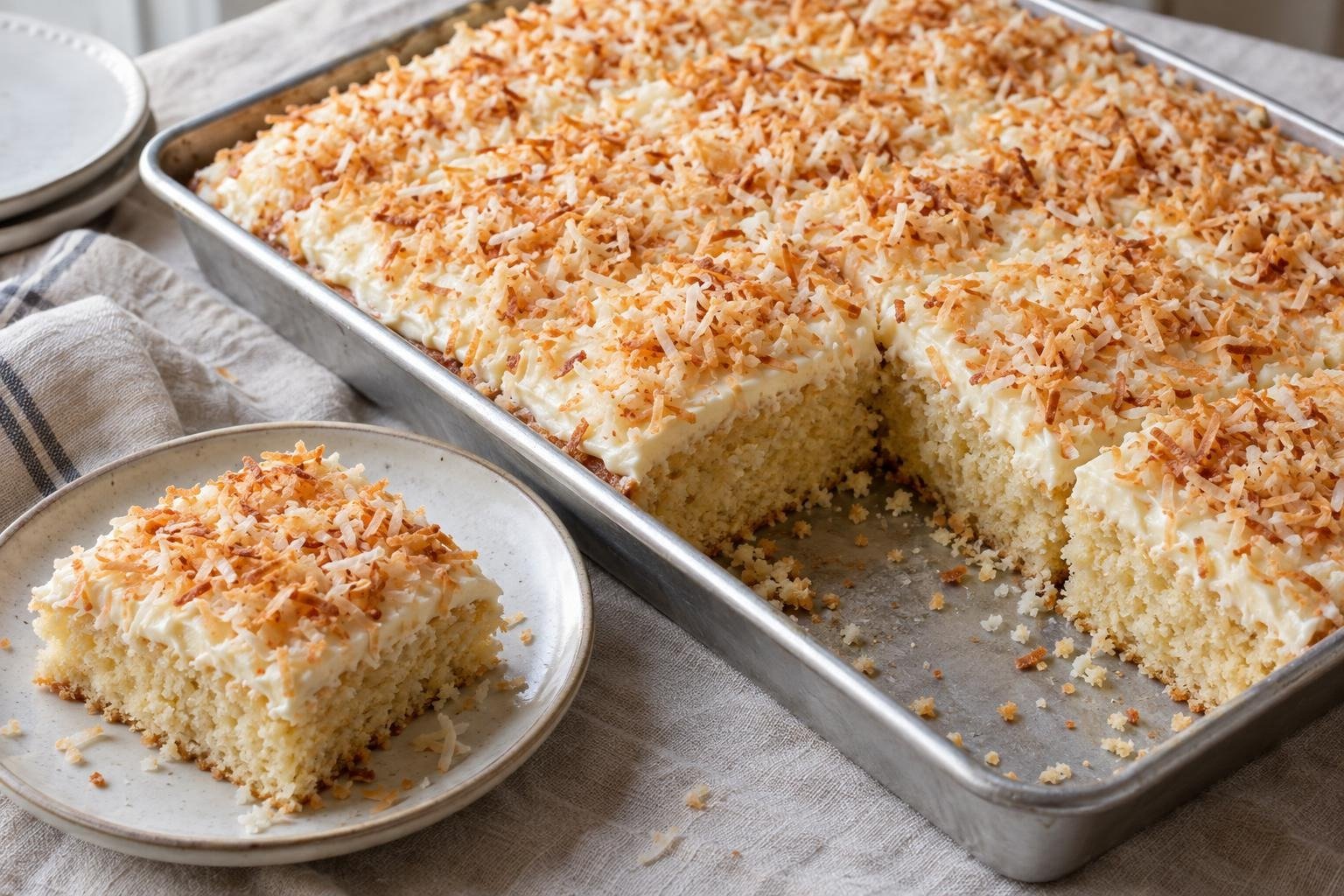
Set an oven rack in the center and heat the oven to 350°F. Lightly grease a 13 x 18-inch rimmed half-sheet pan, line the bottom with parchment, and grease the parchment. Spread the 110 g topping coconut on a second unlined baking sheet. Toast it for 5 to 7 minutes, stirring every 2 minutes, until evenly golden rather than dark brown. Transfer the coconut immediately to a cool plate so residual pan heat does not burn it.
In a medium bowl, whisk the flour, baking powder, and 5 g salt for at least 30 seconds. Break up any visible pockets of leavening against the side of the bowl. This distribution matters in a shallow cake because concentrated baking powder can produce tunneling or bitter spots. In a separate jug, stir the coconut milk until the solid cream and watery portion form one smooth, pourable liquid, then keep it at room temperature.
Place the 170 g softened butter and granulated sugar in the bowl of a stand mixer fitted with the paddle. Beat on medium speed for 3 minutes, stopping once to scrape the bowl and paddle, until the mixture is visibly paler and fluffy. With the mixer on medium-low, stream in the oil over about 30 seconds. Continue mixing for 1 minute, until glossy and uniform. The mixture should look aerated, not melted or greasy around the bowl.
Beat the eggs lightly in a small bowl. Add them to the butter mixture in four portions on medium-low speed, allowing each addition to disappear before adding the next. Scrape the bowl after the second and final additions, reaching across the bottom where dense butter can collect. Mix in the vanilla and 2.5 ml coconut extract. The emulsion should look thick and creamy; slight curdling is acceptable, but large slippery clumps indicate that the ingredients were too cold.
Run the mixer on low and add one-third of the flour mixture, followed by half of the coconut milk. Repeat, then add the remaining flour. Mix only until narrow flour streaks remain, about 15 seconds after the final addition. Remove the bowl and fold with a flexible spatula, scraping the bottom while adding the 85 g shredded coconut. Spread the batter evenly in the prepared pan and work it into the corners without repeatedly compressing the aerated mixture.
Bake at 350°F for 22 to 27 minutes, rotating the pan after 16 minutes if the oven browns unevenly. The center should spring back after a light touch, the edges should be pale gold, and a tester inserted in the middle should carry a few moist crumbs but no wet batter. An instant-read thermometer will generally register about 200 to 205°F. Cool completely in the pan on a wire rack for at least 60 minutes before frosting.
Beat the softened 170 g butter with the paddle on medium speed for 2 minutes until creamy. Add the cream cheese and beat on medium-low just until smooth, about 1 minute. Add the confectioners’ sugar in three additions on low speed, then mix in the vanilla, remaining coconut extract, and 1 g salt. Beat for 30 seconds until spreadable, not loose. Frost the cooled cake in the pan, scatter with toasted coconut, chill for 30 minutes, and cut into 24 pieces with a clean knife.