Combine the flour, sugar, and salt in a food processor and pulse briefly. Add the cold butter and pulse until most pieces resemble small peas, with a few flatter pieces remaining. Drizzle in 35 g of the ice water and pulse just until damp clumps form, adding the remaining water only if the dough stays powdery when squeezed. Turn it onto the counter, press it into a 1-inch-thick disk, wrap, and refrigerate for 60 minutes.
Lightly flour the counter and roll the chilled dough into a 12-inch circle about 1/8 inch thick, rotating it frequently to prevent sticking. Transfer it to a 9-inch metal pie plate without stretching the dough. Ease it firmly into the bottom corners, trim the overhang to 1 inch, fold it under, and crimp the rim. Refrigerate the lined plate for 30 minutes, until the butter is firm and the pastry no longer feels soft.
Set an oven rack in the lower third, place a rimmed baking sheet on it, and heat the oven to 400°F. Line the chilled shell with crumpled parchment and fill it to the rim with pie weights. Set the plate on the hot sheet and bake for 20 minutes. Lift out the parchment and weights, then bake for 8 to 10 minutes more, until the bottom looks dry and pale golden rather than raw or translucent.
Use a pastry brush to apply a thin, even coating of whisked egg white over the hot crust's bottom and inner sides, avoiding puddles. Return the shell to the oven for 2 minutes, until the coating looks dry and slightly glossy. Remove the pie plate to a heatproof surface and reduce the oven to 350°F, leaving the baking sheet inside so it stays hot enough to encourage continued browning underneath.
Heat the milk and cream in a medium saucepan over medium-low heat until steaming and tiny bubbles appear around the edge, about 4 to 6 minutes; do not boil. In a heatproof bowl, whisk the sugar, cornstarch, and salt thoroughly, then whisk in the four eggs without incorporating excess foam. Slowly add the hot dairy while whisking constantly. Stir in both extracts, strain the mixture through a fine-mesh sieve, and fold in the loosened shredded coconut.
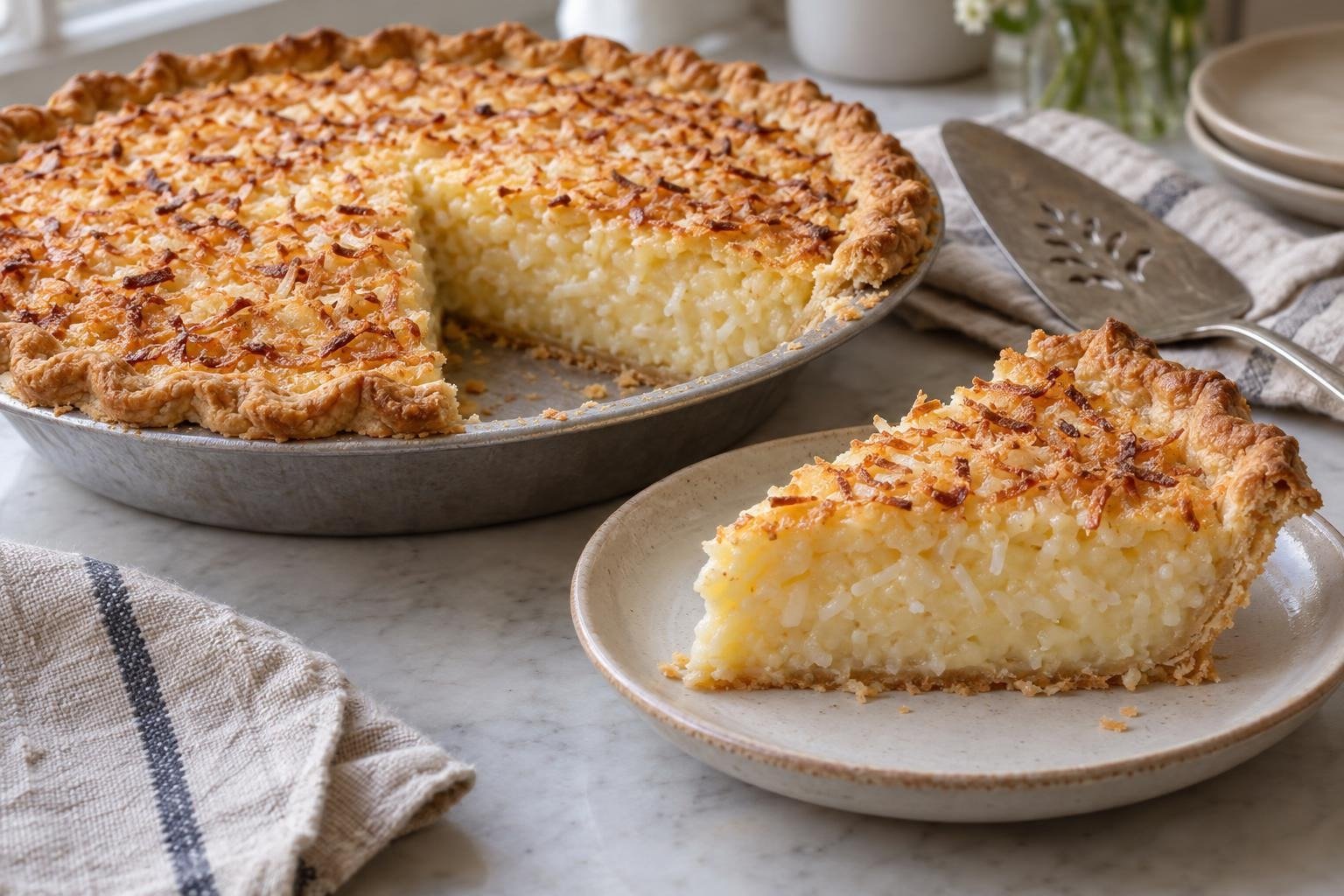
Pour the warm filling into the warm pastry shell and distribute the coconut evenly with a fork if it gathers in one area. Carefully return the pie to the hot sheet pan in the 350°F oven. Bake for 38 to 44 minutes, shielding the rim with foil if it darkens too quickly. The outer filling should be set, while the center 2 inches wobble together without liquid ripples. An instant-read thermometer inserted near the center should register about 175°F.
Transfer the pie plate to a wire rack and leave it undisturbed at room temperature for 2 hours. The center will continue setting as residual heat dissipates, so cutting now would release warm, loose custard. Refrigerate the uncovered pie for another 2 hours, then cover it once fully cold. For tidy portions, wipe a thin sharp knife between cuts and lift each slice with a narrow pie server, supporting the tender pastry base.