Line two 13 by 18-inch baking sheets with parchment paper. In a medium bowl, whisk the flour, cornstarch, baking powder, baking soda, and fine sea salt for about 30 seconds. Break apart any visible cornstarch lumps against the side of the bowl. Thorough distribution matters because these cookies are large, and a concentrated pocket of leavener can create uneven rising, coarse holes, or an unpleasant alkaline flavor.
Fit a stand mixer with the paddle attachment. Beat the softened butter and cool, pliable cream cheese on medium speed for 30 seconds, scraping the bowl and paddle once. Add the granulated sugar and confectioners’ sugar, then mix on medium speed for 2 to 3 minutes. Stop when the mixture is smooth, slightly lighter in color, and creamy but not warm or shiny. Excessive aeration can make the cookies rise dramatically and then collapse.
Add the whole egg, egg yolk, and vanilla extract to the creamed mixture. Mix on medium-low speed for 30 to 45 seconds, stopping once to scrape the bottom and sides of the bowl. Continue only until the mixture looks uniform and emulsified, with no slippery streaks of egg remaining. If it appears slightly curdled, keep mixing briefly at low speed rather than increasing the speed, which could warm the butter.
Add the dry ingredients and mix on the lowest speed until most of the flour disappears, about 20 seconds. Finish folding with a silicone spatula, scraping the bowl’s base until no dry flour remains. The dough should be thick, soft, and slightly tacky. Divide it into 12 portions of about 70 grams each, shape them into tall balls, and arrange them on one lined pan. Cover and refrigerate for at least 2 hours or up to 48 hours.
Set an oven rack in the center position and heat the oven to 350°F, allowing at least 20 minutes for stable heat. Place the coating sugar in a shallow bowl. Roll each chilled portion briefly between your palms to smooth the surface, then coat it completely in sugar. Arrange six portions on each prepared baking sheet with at least 3 inches between them. Keep the second pan refrigerated while the first pan bakes.
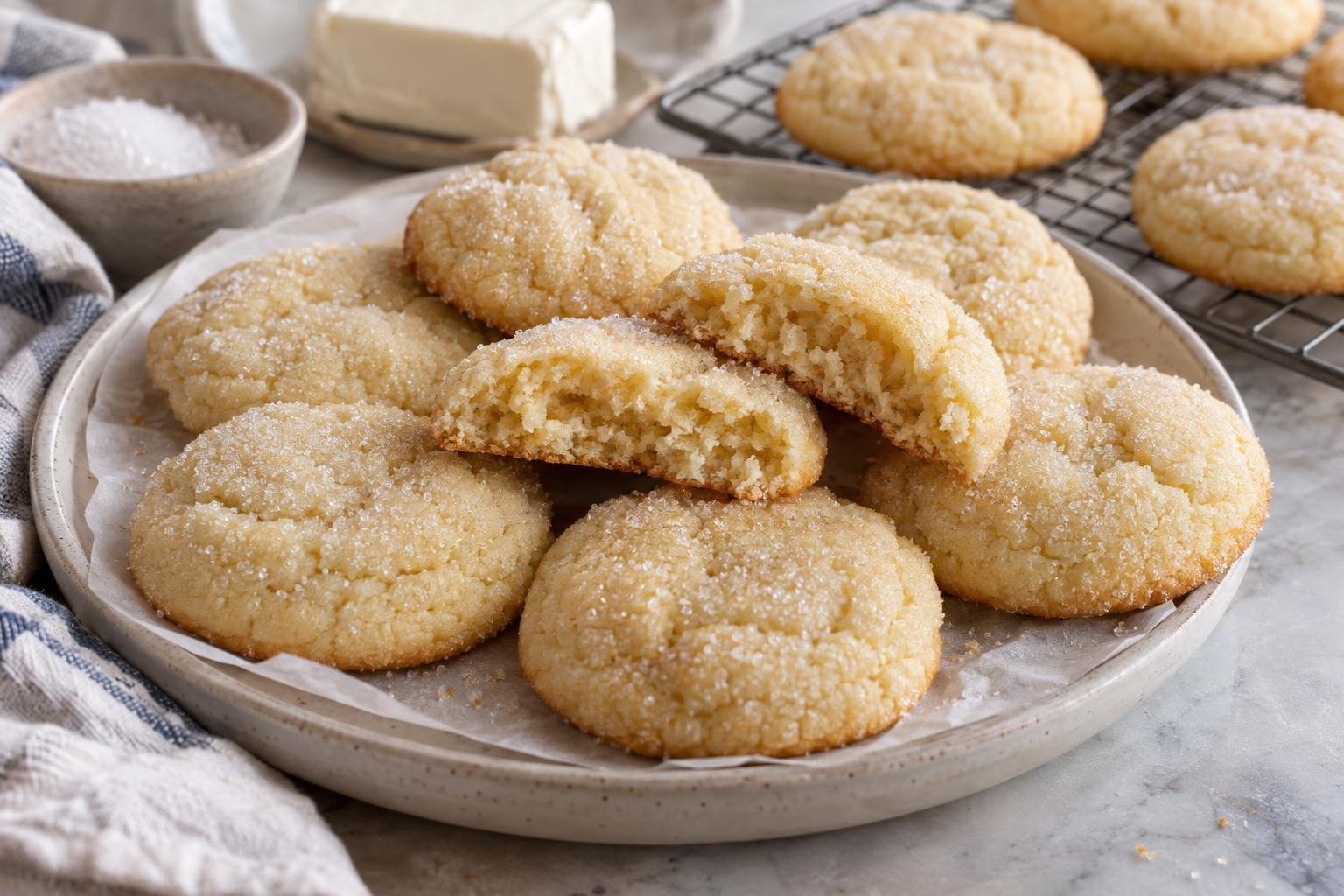
Bake one sheet at a time for 10 to 12 minutes, rotating it from front to back after 7 minutes. The cookies are done when the edges look set, the tops are puffed and matte, and the centers no longer appear wet; the bottoms should be pale golden. An optional center temperature is about 190 to 195°F. Cool on the pan for 10 minutes, then transfer carefully to a wire rack and cool for at least 20 minutes before serving.