Table of Contents
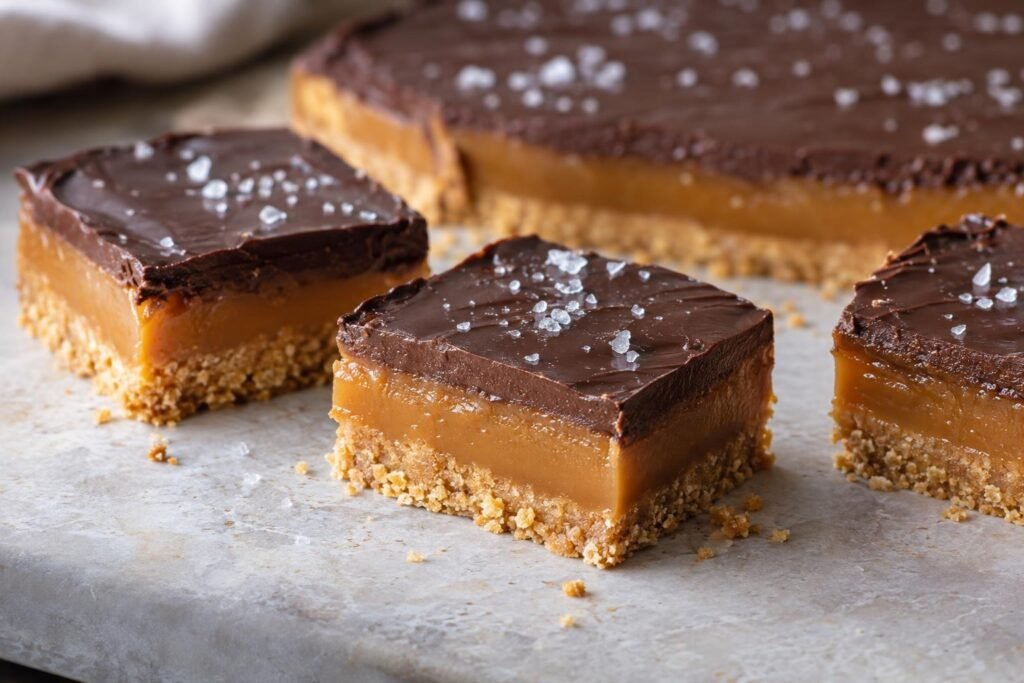
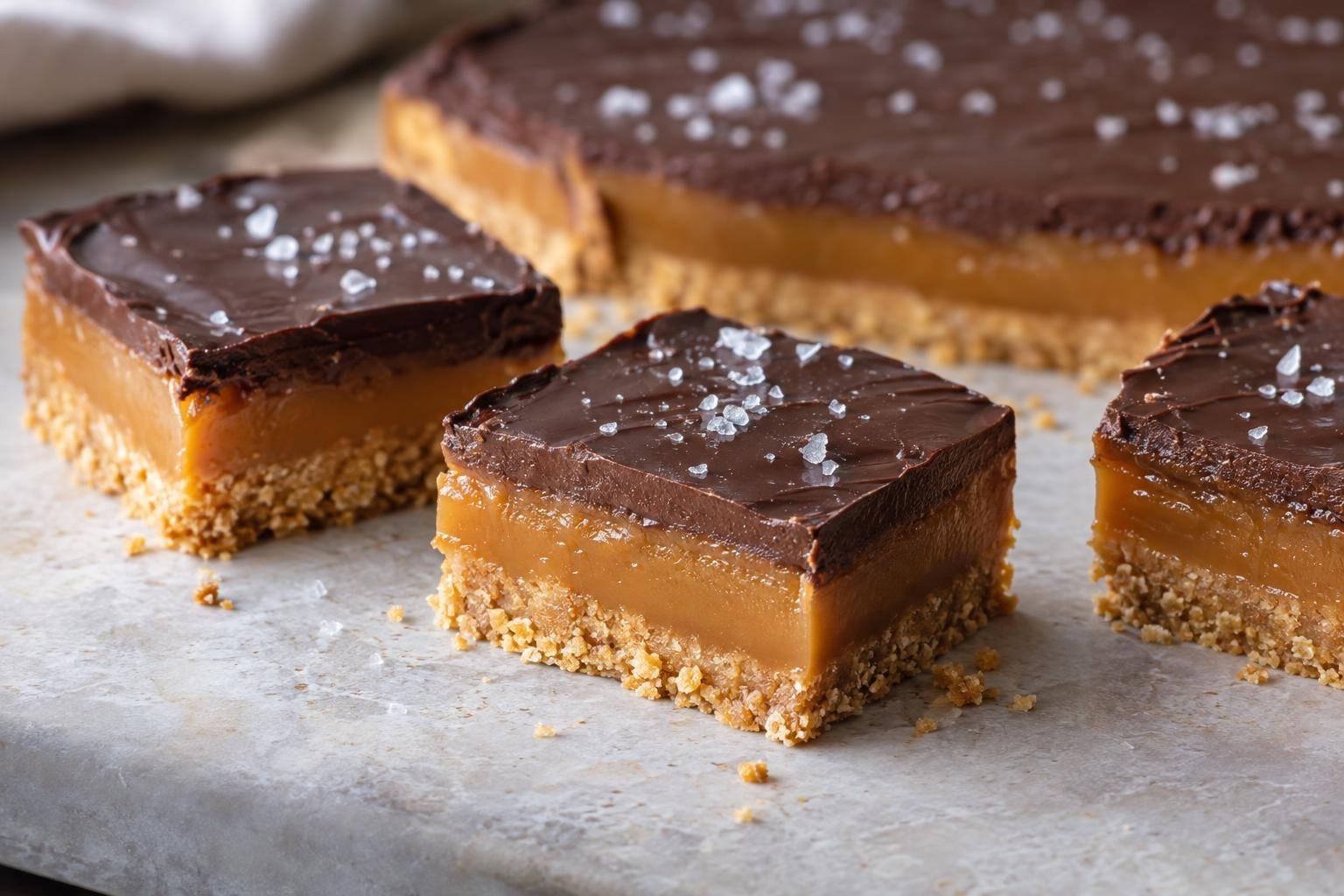
A crisp, buttery crumb base, a dense ribbon of salty caramel, and a silky chocolate top give these salted caramel no-bake dessert bars three distinct textures in every chilled bite. The caramel stays pleasantly chewy rather than sticky or runny, while a restrained sprinkle of flaky salt sharpens the brown sugar and dark chocolate flavors.
I concentrate the caramel on the stovetop to 225 to 228°F, then use refrigeration to set both the caramel and ganache layers. Temperature matters more than the clock here: the caramel should boil thickly and leave a brief trail behind the spatula, while the finished center should feel firm but not rock-hard before slicing. A short rest at room temperature gives the bars their best creamy, chewy texture.
Why This Bar Recipe Frickin’ Works
- A 250 gram crumb to 115 gram butter ratio creates a compact base that holds together when cold without becoming greasy or excessively hard.
- Cooking the caramel to 225 to 228°F removes enough water for a chewy chilled set, while sweetened condensed milk keeps the texture smooth and milky.
- Light corn syrup limits unwanted sugar crystallization, so the caramel remains glossy instead of turning sandy as it cools.
- The 5 to 3 ratio of semisweet chocolate to heavy cream produces a ganache that cuts cleanly from the refrigerator but softens pleasantly before serving.
- Staged chilling prevents the warm caramel from blending into the ganache and gives each layer enough structure for straight, clearly defined slices.
Ingredient Notes for Salted Caramel No-Bake Dessert Bars with a Chilled Base
- Graham crackers or digestive biscuits: Either option works by weight because both provide dry, finely milled crumbs that absorb the melted butter. Process them to a sand-like consistency so large pieces do not create weak spots in the base.
- Unsalted butter: Butter binds the base and gives the caramel body. Using unsalted butter keeps the total salt predictable, which is especially important when flaky salt is added to the finished bars.
- Sweetened condensed milk: Its concentrated milk solids and sugar create a creamy caramel without requiring a separate dairy reduction. Use sweetened condensed milk, not evaporated milk, because the two have very different sugar and water contents.
- Dark brown sugar: Molasses contributes moisture, color, and a deeper caramel flavor. Pack it firmly when using a volume measure, or weigh it for more consistent concentration.
- Light corn syrup: This interferes with sucrose crystallization and helps the caramel remain smooth. It also supplies enough viscosity to support a chewy, sliceable layer after chilling.
- Semisweet chocolate: Chocolate containing approximately 55 to 65 percent cacao balances the sweet caramel and sets reliably with the stated cream quantity. Chop bars finely so the hot cream can melt them without aggressive stirring.
- Fine and flaky salt: Fine salt dissolves evenly inside the caramel, while flaky salt provides small, crisp bursts on top. They serve different purposes and should not be measured interchangeably.
A Few Good Things to Know
- Weigh the crumbs instead of counting crackers. Different brands and breakage patterns change volume, but the butter ratio depends on the actual crumb weight.
- Keep the caramel heat moderate and scrape the saucepan continuously. Flecks of dark brown on the spatula indicate scorching, not desirable caramelization, and they will taste bitter in the chilled layer.
- Position the thermometer tip in the center of the caramel without touching the pan. Contact with the metal can give a misleadingly high reading and cause an undercooked, loose set.
- Do not pour ganache over caramel that still feels warm. Residual heat can soften the ganache and blur the boundary between the layers.
- For sharp portions, cut the slab directly from the refrigerator with a hot, dry knife. Temper the individual bars afterward rather than softening the whole slab before cutting.
Ingredients for Salted Caramel No-Bake Dessert Bars
- 250 g fine graham cracker or digestive biscuit crumbs (About 2 1/2 cups; process to a uniform, sand-like texture.)
- 30 g light brown sugar (About 2 packed tablespoons; for the chilled crumb base.)
- 115 g unsalted butter for the base (Melted and cooled until warm, about 1/2 cup.)
- 397 g sweetened condensed milk (One standard 14-ounce can; do not use evaporated milk.)
- 170 g dark brown sugar (About 3/4 packed cup; break up any hard lumps.)
- 115 g unsalted butter for the caramel (Cut into small pieces, about 1/2 cup.)
- 60 g light corn syrup (About 3 tablespoons; measure directly into the saucepan.)
- 3 g fine sea salt (About 1/2 teaspoon; for the caramel.)
- 1 tsp pure vanilla extract (Stir in after the caramel leaves the heat.)
- 200 g semisweet chocolate (55 to 65 percent cacao, finely chopped.)
- 120 g heavy cream (About 1/2 cup; use cream with at least 35 percent milk fat.)
- 15 g unsalted butter for the ganache (About 1 tablespoon, softened and cut into small pieces.)
- 2 g flaky sea salt (About 1/2 teaspoon, or enough for a light, even finish.)
How to Make Salted Caramel No-Bake Dessert Bars
- STEP 1). Prepare the pan and compact the crumb base Lightly grease a 9-inch square metal pan, then line it with two crossed parchment strips, leaving enough overhang to lift the finished slab. Combine the fine cracker crumbs and light brown sugar in a medium bowl. Pour in the melted base butter and stir until every crumb looks evenly moistened and clumps when squeezed. Transfer the mixture to the pan and compress it firmly into a level layer with a flat-bottomed measuring cup, paying particular attention to the corners and edges.
- STEP 2). Chill the base until firm Refrigerate the prepared base for 20 minutes while organizing the caramel ingredients. The butter needs to resolidify so the crumbs do not shift when the hot caramel is added. At the end of chilling, the surface should look matte and feel firm under light fingertip pressure, with no loose crumbs moving around the edges. Keep the lined pan in the refrigerator until the caramel is completely cooked and ready to pour.
- STEP 3). Cook the salted caramel to its setting temperature Combine the sweetened condensed milk, dark brown sugar, caramel butter, corn syrup, and fine sea salt in a heavy 3-quart saucepan. Cook over medium-low heat, stirring continuously with a heatproof spatula and scraping the bottom and corners to prevent scorching. Once the mixture reaches a steady boil, continue cooking for 7 to 10 minutes, until it reaches 225 to 228°F. The caramel should be glossy, noticeably thick, and leave a brief trail when stirred. Remove it from the heat and carefully mix in the vanilla.
- STEP 4). Pour and chill the caramel layer Remove the cold base from the refrigerator and immediately pour the hot caramel over it, keeping your hands clear of the steam and molten sugar. Spread the caramel into an even layer with an offset spatula, working promptly before it thickens. Let the pan stand at room temperature for 15 minutes so the strongest heat dissipates, then refrigerate uncovered for 2 hours. The center should feel cool, firm, and only slightly yielding before the chocolate layer is added.
- STEP 5). Make and spread the chocolate ganache Place the finely chopped semisweet chocolate in a dry heatproof bowl. Heat the heavy cream in a small saucepan over medium-low heat until steaming and bubbling gently around the edge, but do not boil it vigorously. Pour the cream over the chocolate and leave it undisturbed for 2 minutes. Stir slowly from the center until glossy, then mix in the softened ganache butter. Spread over the cold caramel, sprinkle with flaky salt, and refrigerate for 2 hours, until the surface is firm and no longer tacky.
- STEP 6). Lift, slice, and temper for serving Run a thin knife along any unlined edges, then use the parchment overhang to lift the chilled slab onto a cutting board. Warm a large chef’s knife under hot water, wipe it completely dry, and make four straight cuts in each direction to create 16 bars. Clean and rewarm the knife between cuts so caramel does not drag through the ganache. Let the portions stand at room temperature for 10 to 15 minutes before serving, when the caramel will be chewy and the chocolate softly creamy.
Storage and Freezing
- Refrigeration: Store the cut bars in a single layer in an airtight container for up to 5 days. Place parchment between layers if stacking is unavoidable.
- Freezing: Freeze the fully set and sliced bars on a parchment-lined tray, then wrap each bar and transfer it to an airtight container for up to 1 month.
- Thawing: Unwrap frozen bars and thaw them in a covered container in the refrigerator overnight to limit condensation on the ganache.
- Serving: Let refrigerated bars stand at room temperature for 10 to 15 minutes. The caramel should bend slightly when bitten but should not slump from the base.
Frequently Asked Questions
How long do salted caramel no-bake dessert bars need to chill?
Allow 20 minutes for the crumb base, 2 hours for the caramel layer, and another 2 hours after adding the ganache. These separate chilling periods keep the layers from blending and give the caramel time to become sliceable.
The bars are ready when the center feels firm with slight resistance and the ganache is no longer tacky. Cutting earlier may cause the caramel to bulge and the chocolate to smear.
What makes the caramel set without baking the bars?
The caramel sets because stovetop cooking removes water and concentrates the sugar, milk solids, and fat. Reaching 225 to 228°F creates a soft, chewy consistency once the mixture cools, while corn syrup helps prevent grainy sugar crystals.
Refrigeration then firms the butter and increases the caramel’s viscosity. Chilling alone cannot correct severely undercooked caramel, so the temperature and thick, trailing texture are both important doneness cues.
Why are my no-bake caramel bars too soft to slice?
Soft bars usually come from caramel that did not reach the stated temperature, insufficient chilling, or inaccurate quantities. Confirm that the thermometer tip is suspended in the caramel rather than touching the saucepan, and give the layer the full 2-hour chill.
If only the ganache smears, the knife or room may be too warm. Chill the slab until firm, then use a hot knife that has been wiped completely dry before every cut.
Can I freeze salted caramel no-bake dessert bars?
Fully set bars may be frozen for up to 1 month. Slice them while cold, freeze the portions on a lined tray until firm, then wrap them individually and place them in an airtight container to protect the chocolate from odors and freezer burn.
Thaw the wrapped bars overnight in the refrigerator, then unwrap and temper them for 10 to 15 minutes before serving. Slow thawing helps prevent condensation from marking the ganache.
Which ingredient substitutions work in this salted caramel no-bake dessert bars recipe?
The crumb base may use either graham crackers or digestive biscuits because the formula specifies their weight rather than a package count. Semisweet chocolate between 55 and 65 percent cacao also fits the stated cream ratio without making the ganache excessively soft or bitter.
Sweetened condensed milk should not be replaced with evaporated milk, and omitting the corn syrup may encourage crystallization. Those changes alter the water and sugar balance that controls the caramel’s set.
Salted Caramel No-Bake Dessert Bars with a Chilled Base
Ingredients
Equipment
Method
- Lightly grease a 9-inch square metal pan, then line it with two crossed parchment strips, leaving enough overhang to lift the finished slab. Combine the fine cracker crumbs and light brown sugar in a medium bowl. Pour in the melted base butter and stir until every crumb looks evenly moistened and clumps when squeezed. Transfer the mixture to the pan and compress it firmly into a level layer with a flat-bottomed measuring cup, paying particular attention to the corners and edges.
- Refrigerate the prepared base for 20 minutes while organizing the caramel ingredients. The butter needs to resolidify so the crumbs do not shift when the hot caramel is added. At the end of chilling, the surface should look matte and feel firm under light fingertip pressure, with no loose crumbs moving around the edges. Keep the lined pan in the refrigerator until the caramel is completely cooked and ready to pour.
- Combine the sweetened condensed milk, dark brown sugar, caramel butter, corn syrup, and fine sea salt in a heavy 3-quart saucepan. Cook over medium-low heat, stirring continuously with a heatproof spatula and scraping the bottom and corners to prevent scorching. Once the mixture reaches a steady boil, continue cooking for 7 to 10 minutes, until it reaches 225 to 228°F. The caramel should be glossy, noticeably thick, and leave a brief trail when stirred. Remove it from the heat and carefully mix in the vanilla.
- Remove the cold base from the refrigerator and immediately pour the hot caramel over it, keeping your hands clear of the steam and molten sugar. Spread the caramel into an even layer with an offset spatula, working promptly before it thickens. Let the pan stand at room temperature for 15 minutes so the strongest heat dissipates, then refrigerate uncovered for 2 hours. The center should feel cool, firm, and only slightly yielding before the chocolate layer is added.
- Place the finely chopped semisweet chocolate in a dry heatproof bowl. Heat the heavy cream in a small saucepan over medium-low heat until steaming and bubbling gently around the edge, but do not boil it vigorously. Pour the cream over the chocolate and leave it undisturbed for 2 minutes. Stir slowly from the center until glossy, then mix in the softened ganache butter. Spread over the cold caramel, sprinkle with flaky salt, and refrigerate for 2 hours, until the surface is firm and no longer tacky.
- Run a thin knife along any unlined edges, then use the parchment overhang to lift the chilled slab onto a cutting board. Warm a large chef’s knife under hot water, wipe it completely dry, and make four straight cuts in each direction to create 16 bars. Clean and rewarm the knife between cuts so caramel does not drag through the ganache. Let the portions stand at room temperature for 10 to 15 minutes before serving, when the caramel will be chewy and the chocolate softly creamy.
Notes
- Weigh the crumbs instead of counting crackers. Different brands and breakage patterns change volume, but the butter ratio depends on the actual crumb weight.
- Keep the caramel heat moderate and scrape the saucepan continuously. Flecks of dark brown on the spatula indicate scorching, not desirable caramelization, and they will taste bitter in the chilled layer.
- Position the thermometer tip in the center of the caramel without touching the pan. Contact with the metal can give a misleadingly high reading and cause an undercooked, loose set.
- Do not pour ganache over caramel that still feels warm. Residual heat can soften the ganache and blur the boundary between the layers.
- For sharp portions, cut the slab directly from the refrigerator with a hot, dry knife. Temper the individual bars afterward rather than softening the whole slab before cutting.