
Table of Contents
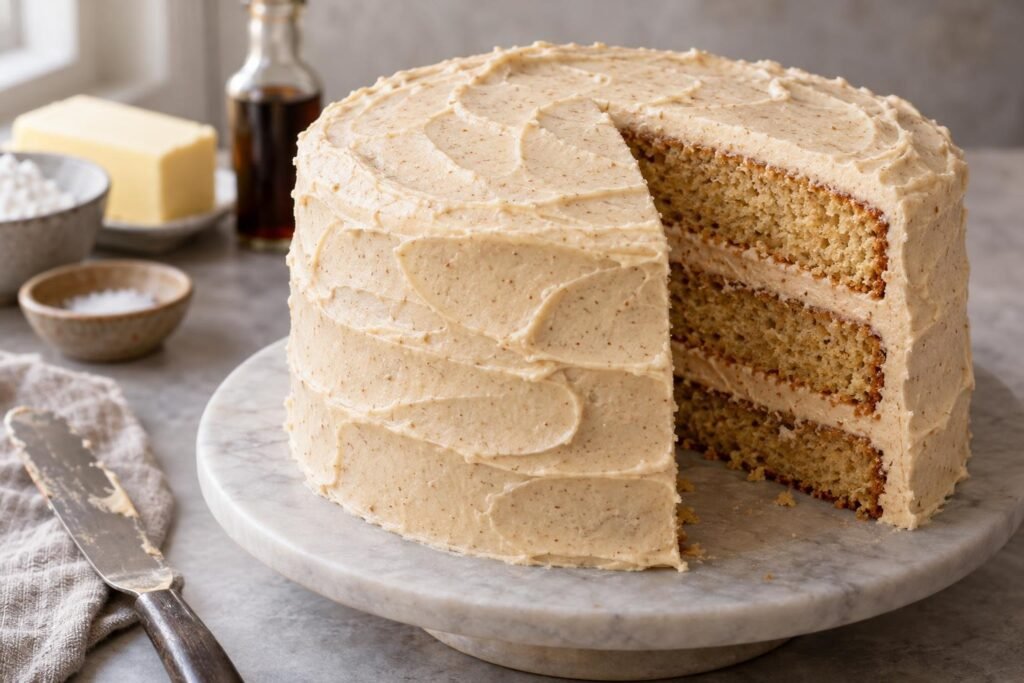
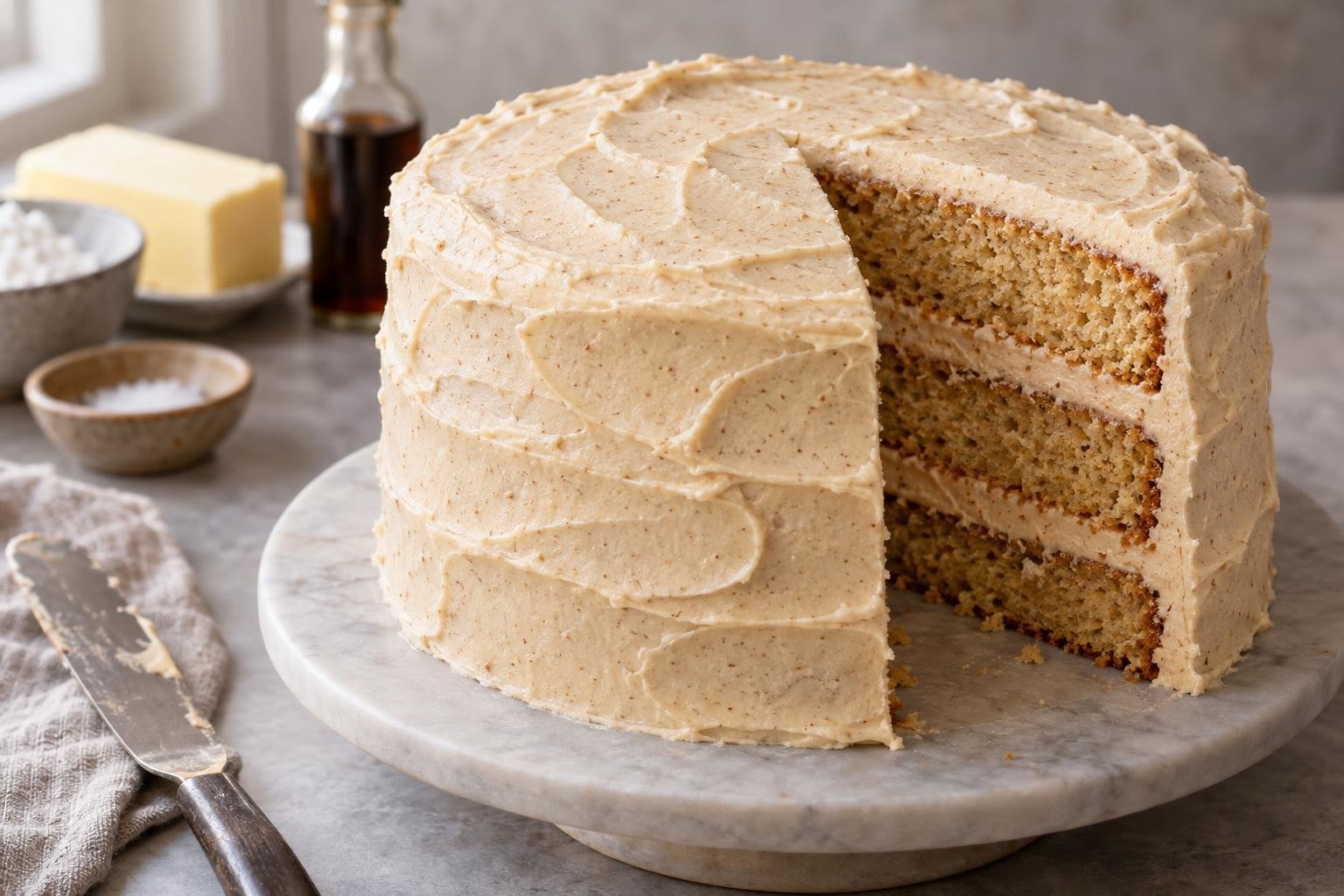
Toasty hazelnut aromas, caramel-like milk solids, and a subtle tang give this brown butter cream cheese frosting far more dimension than a standard vanilla frosting. Its texture is smooth and substantial rather than loose or fluffy, so it spreads cleanly between cake layers, holds simple cupcake swirls, and finishes without burying the flavor under excessive sugar.
I brown the butter until its milk solids are deep amber, then cool it until opaque and pliable before mixing. That temperature change matters: liquid butter can melt the cream cheese emulsion, while refrigerator-hard butter leaves greasy flecks. I also beat the confectioners’ sugar into the butter before adding cool cream cheese. This sequence limits overmixing and produces a stable frosting with clear visual cues for spreading, chilling, and serving.
Why This Brown Butter Cake Frickin’ Works
- Browning the butter removes some water while concentrating its toasted milk solids, producing a nutty flavor without adding liquid extracts or loose flavorings.
- Cooling the brown butter to an opaque, pliable consistency restores enough structure to support the cream cheese instead of melting it.
- Mixing the confectioners’ sugar into the butter first coats the sugar with fat and creates a firmer base before the moisture-rich cream cheese enters the bowl.
- Full-fat block cream cheese supplies the protein and fat needed for a smooth emulsion, while its mild acidity balances the sweetness.
- Brief, low-speed mixing after adding the cream cheese prevents the frosting from becoming glossy, slack, or difficult to hold between cake layers.
Ingredient Notes for Brown Butter Cream Cheese Frosting for Layer Cakes
- Unsalted butter: Browning concentrates the butter’s flavor as water evaporates and milk solids toast. Use all the browned bits because they carry most of the nutty flavor. Cool the butter until opaque and pliable before mixing.
- Full-fat block cream cheese: Block cream cheese has less free moisture and more structure than spreadable tub cream cheese. Let it lose its refrigerator hardness, but keep it cool enough that the cubes hold their shape before mixing.
- Confectioners’ sugar: Finely milled sugar dissolves without creating grit and provides essential thickening. Sifting removes hard lumps that would otherwise require extra mixing after the cream cheese is added.
- Vanilla extract: Vanilla rounds out the toasted dairy notes without masking them. Add it near the end so the frosting needs only a brief final mix.
- Fine sea salt: A small amount sharpens the caramel and tangy flavors. Fine salt disperses more evenly than coarse crystals in a frosting that receives limited final mixing.
My Kitchen Tips
- Watch the milk solids rather than relying only on time. Pull the saucepan from the heat at deep amber because the solids continue darkening until the butter is transferred.
- Use a light-colored saucepan so you can distinguish properly browned milk solids from burned black specks. A dark pan hides this critical color change.
- Match the butter and cream cheese temperatures as closely as practical. Cool, pliable ingredients combine more readily and reduce the risk of greasy flecks or a broken emulsion.
- Keep the mixer speed low after the cream cheese enters the bowl. More air and friction do not make this frosting stronger; they warm it and loosen its structure.
- Chill cake layers before assembly and apply a thin crumb coat first. Refrigerate the crumb-coated cake for 20 minutes before adding the final coat to prevent sliding and trapped crumbs.
Ingredients for Brown Butter Cream Cheese Frosting
- 1 cup unsalted butter (227 g, cut into tablespoon-size pieces)
- 8 ounces full-fat block cream cheese (226 g, cut into cubes and brought to a cool room temperature)
- 4 cups confectioners’ sugar (480 g, sifted after measuring)
- 2 teaspoons pure vanilla extract (10 ml)
- 1/4 teaspoon fine sea salt (about 1.5 g)
How to Make Brown Butter Cream Cheese Frosting
- STEP 1). Brown the butter to a deep amber color Place the butter in a light-colored medium saucepan and melt it over medium heat, stirring with a silicone spatula. Once it foams, continue cooking for 6 to 9 minutes, scraping the bottom frequently as the milk solids turn golden and then deep amber. Remove the pan when the butter smells nutty and the bubbling becomes quieter. Immediately scrape the butter and every browned speck into a heatproof bowl so the residual pan heat does not burn the solids.
- STEP 2). Cool the brown butter until opaque and pliable Leave the brown butter at room temperature for 20 minutes, then refrigerate it for 30 to 40 minutes, stirring every 10 minutes so the edges do not harden before the center. It is ready when opaque, softly solid, and about 18 to 20°C or 64 to 68°F. A spatula should leave a clean groove without encountering liquid or hard chunks. If it becomes firm, let it stand at room temperature until pliable before mixing.
- STEP 3). Build the sweetened brown butter base Transfer the cooled brown butter to the bowl of a stand mixer fitted with the paddle attachment. Beat on medium speed for 1 minute, scraping the bowl once, until creamy and uniform. Add the sifted confectioners’ sugar in three additions, mixing on low speed after each addition to prevent a sugar cloud. Add the salt, then beat on medium-low for 2 minutes. The mixture should look thick and matte, with no visible pockets of dry sugar or firm butter.
- STEP 4). Add the cream cheese without overmixing With the mixer on low speed, add the cool cream cheese one cube at a time, waiting a few seconds between additions. Scrape down the paddle and bowl, add the vanilla, and mix on low only until the frosting is smooth, about 30 to 45 seconds. Stop once no white cream cheese streaks remain. Avoid prolonged whipping because agitation warms the fat and releases moisture from the cream cheese, which can turn a sturdy frosting glossy, soft, or separated.
- STEP 5). Set the consistency and frost the cake Check the frosting with a spatula. It should form a soft peak that bends slightly but does not flow back into the bowl. If it feels warm or slides from the spatula, refrigerate the bowl for 10 to 15 minutes, then fold gently until smooth. If too firm, let it stand for 5 to 10 minutes before mixing briefly on low. Use immediately to fill and frost one chilled 8-inch, three-layer cake or pipe moderate swirls onto 24 cooled cupcakes.
Storage and Freezing
- Storage: Refrigerate unused frosting in an airtight container for up to 4 days. Press reusable wrap or parchment directly against the surface to limit crusting and refrigerator odors.
- Frosted cake: Refrigerate a finished cake in a covered cake box for up to 4 days. Keep it level so softened filling cannot shift between layers.
- Freezing: Freeze the frosting in an airtight container for up to 1 month. Leave a little headspace and protect the surface from air.
- Thawing: Thaw overnight in the refrigerator, then let the frosting stand at room temperature until pliable. Mix briefly on low speed only if it needs smoothing.
- Serving: For the creamiest texture, remove a refrigerated cake 30 to 45 minutes before serving. Do not leave cream cheese frosting at room temperature for more than 2 hours, or 1 hour in temperatures above 32°C or 90°F.
Frequently Asked Questions
Why does brown butter cream cheese frosting split or turn greasy?
Splitting usually comes from a temperature mismatch, liquid brown butter, or extended mixing after the cream cheese is added. Warm fat cannot support a stable emulsion, while very cold cream cheese may remain in small white lumps.
Stop mixing if the frosting becomes shiny or loose. Refrigerate it for 10 to 15 minutes, then fold or mix on low just until cohesive. Continuing to whip a warm frosting generally makes the separation more noticeable.
How thick should brown butter cream cheese frosting be for a layer cake?
Layer-cake frosting should hold a soft peak and remain on an angled spatula without running. It needs enough flexibility to spread without tearing the cake, but enough body that filled layers do not squeeze it out.
If the frosting slides or looks glossy, chill it briefly. If it is stiff enough to drag crumbs from the cake, let it warm for several minutes before stirring gently and reassessing.
What quantity of frosting does this recipe make for cakes and cupcakes?
This recipe makes approximately 4 1/2 cups of frosting. That is enough to fill, crumb coat, and moderately cover one 8-inch, three-layer cake without oversized borders or elaborate piping.
For cupcakes, one batch covers about 24 with moderate piped swirls. Tall bakery-style spirals use considerably more, so expect closer to 16 to 18 cupcakes when applying generous mounds.
When is brown butter cool enough to mix into cream cheese frosting?
The brown butter is ready when it looks opaque, feels pliable, and holds a groove from a spatula. A temperature near 18 to 20°C or 64 to 68°F is a useful guide, but texture is the more practical cue.
Liquid pools indicate it is still too warm, while hard edges can create greasy flecks. Stir during chilling so the browned butter cools evenly throughout the bowl.
Can I make brown butter cream cheese frosting ahead of decorating?
Making it up to 4 days ahead works well when the frosting is covered tightly and refrigerated. Its fat will become firm when cold, so it should not be spread directly from the refrigerator.
Let it soften until a spatula moves through it without resistance, then mix briefly on low speed if needed. Avoid rewhipping aggressively because added friction can warm and loosen the cream cheese.
Try These Next, You’ll Frickin’ Love Them!
- Brown Butter Cinnamon Coffee Cake with Soft, Tender Crumb
- Pumpkin Sheet Cake with Cream Cheese Frosting for a Crowd
- Pumpkin Roll Cake with Cream Cheese Swirls
- Silky Chocolate Buttercream Frosting for Cakes
- Moist Chocolate Fudge Layer Cake with Silky Fudge Frosting
Brown Butter Cream Cheese Frosting for Layer Cakes
Ingredients
Equipment
Method
- Place the butter in a light-colored medium saucepan and melt it over medium heat, stirring with a silicone spatula. Once it foams, continue cooking for 6 to 9 minutes, scraping the bottom frequently as the milk solids turn golden and then deep amber. Remove the pan when the butter smells nutty and the bubbling becomes quieter. Immediately scrape the butter and every browned speck into a heatproof bowl so the residual pan heat does not burn the solids.
- Leave the brown butter at room temperature for 20 minutes, then refrigerate it for 30 to 40 minutes, stirring every 10 minutes so the edges do not harden before the center. It is ready when opaque, softly solid, and about 18 to 20°C or 64 to 68°F. A spatula should leave a clean groove without encountering liquid or hard chunks. If it becomes firm, let it stand at room temperature until pliable before mixing.
- Transfer the cooled brown butter to the bowl of a stand mixer fitted with the paddle attachment. Beat on medium speed for 1 minute, scraping the bowl once, until creamy and uniform. Add the sifted confectioners’ sugar in three additions, mixing on low speed after each addition to prevent a sugar cloud. Add the salt, then beat on medium-low for 2 minutes. The mixture should look thick and matte, with no visible pockets of dry sugar or firm butter.
- With the mixer on low speed, add the cool cream cheese one cube at a time, waiting a few seconds between additions. Scrape down the paddle and bowl, add the vanilla, and mix on low only until the frosting is smooth, about 30 to 45 seconds. Stop once no white cream cheese streaks remain. Avoid prolonged whipping because agitation warms the fat and releases moisture from the cream cheese, which can turn a sturdy frosting glossy, soft, or separated.
- Check the frosting with a spatula. It should form a soft peak that bends slightly but does not flow back into the bowl. If it feels warm or slides from the spatula, refrigerate the bowl for 10 to 15 minutes, then fold gently until smooth. If too firm, let it stand for 5 to 10 minutes before mixing briefly on low. Use immediately to fill and frost one chilled 8-inch, three-layer cake or pipe moderate swirls onto 24 cooled cupcakes.
Notes
- Watch the milk solids rather than relying only on time. Pull the saucepan from the heat at deep amber because the solids continue darkening until the butter is transferred.
- Use a light-colored saucepan so you can distinguish properly browned milk solids from burned black specks. A dark pan hides this critical color change.
- Match the butter and cream cheese temperatures as closely as practical. Cool, pliable ingredients combine more readily and reduce the risk of greasy flecks or a broken emulsion.
- Keep the mixer speed low after the cream cheese enters the bowl. More air and friction do not make this frosting stronger; they warm it and loosen its structure.
- Chill cake layers before assembly and apply a thin crumb coat first. Refrigerate the crumb-coated cake for 20 minutes before adding the final coat to prevent sliding and trapped crumbs.



