Position a rack in the center of the oven and heat it to 325°F. Lightly grease an 8.5 x 4.5-inch metal loaf pan, then line the bottom and long sides with parchment, leaving enough overhang to lift the chilled cheesecake. Wrap the outside in a double layer of foil as splash protection. Set the loaf pan inside a 9 x 13-inch roasting pan, and heat a kettle of water for the bath.
Combine the graham cracker crumbs, 25 g sugar, and 1/8 teaspoon salt in a medium bowl. Stir in the melted butter until every crumb looks evenly moistened and the mixture holds together when squeezed. Press it firmly and evenly over the loaf pan bottom using a flat-bottomed cup. Bake for 10 minutes, until fragrant and slightly darker at the edges, then cool for 15 minutes while keeping the oven at 325°F.
Place the softened cream cheese in a mixing bowl and beat with a paddle or hand mixer on low speed for about 60 seconds, just until smooth. Whisk the 100 g sugar, cornstarch, and 1/8 teaspoon salt together, then add them gradually. Continue mixing on low for 1 to 2 minutes, stopping twice to scrape the bowl and beater. The base should look creamy and uniform, without visible cream cheese pebbles or a whipped, airy texture.
Mix the room-temperature sour cream into the cream cheese base on low speed until no white streaks remain. Add the eggs one at a time, mixing only until each yolk disappears before adding the next. Fold in the vanilla, lemon zest, and strained lemon juice with a silicone spatula, scraping across the bowl bottom. The finished batter should flow in a thick ribbon and look glossy, with minimal bubbles and no liquid pooling around the edges.
Pour the filling over the cooled crust and smooth the surface. Tap the loaf pan lightly on the counter two or three times, then pop any large surface bubbles with a toothpick. Place it in the roasting pan and carefully add hot water until it reaches halfway up the loaf pan sides. Bake at 325°F for 42 to 50 minutes. The edges should look set, while a roughly 2-inch center area wobbles cohesively rather than rippling like wet batter.
Turn off the oven, prop the door open about 2 inches with a wooden spoon, and leave the cheesecake in the water bath for 60 minutes. Carefully remove the roasting pan, lift out the loaf pan, and discard the foil if wet. Set the cheesecake on a wire rack for another 60 minutes, until it is near room temperature. Do not leave it out longer than 2 hours total after baking, since the dairy and egg filling must be refrigerated promptly.
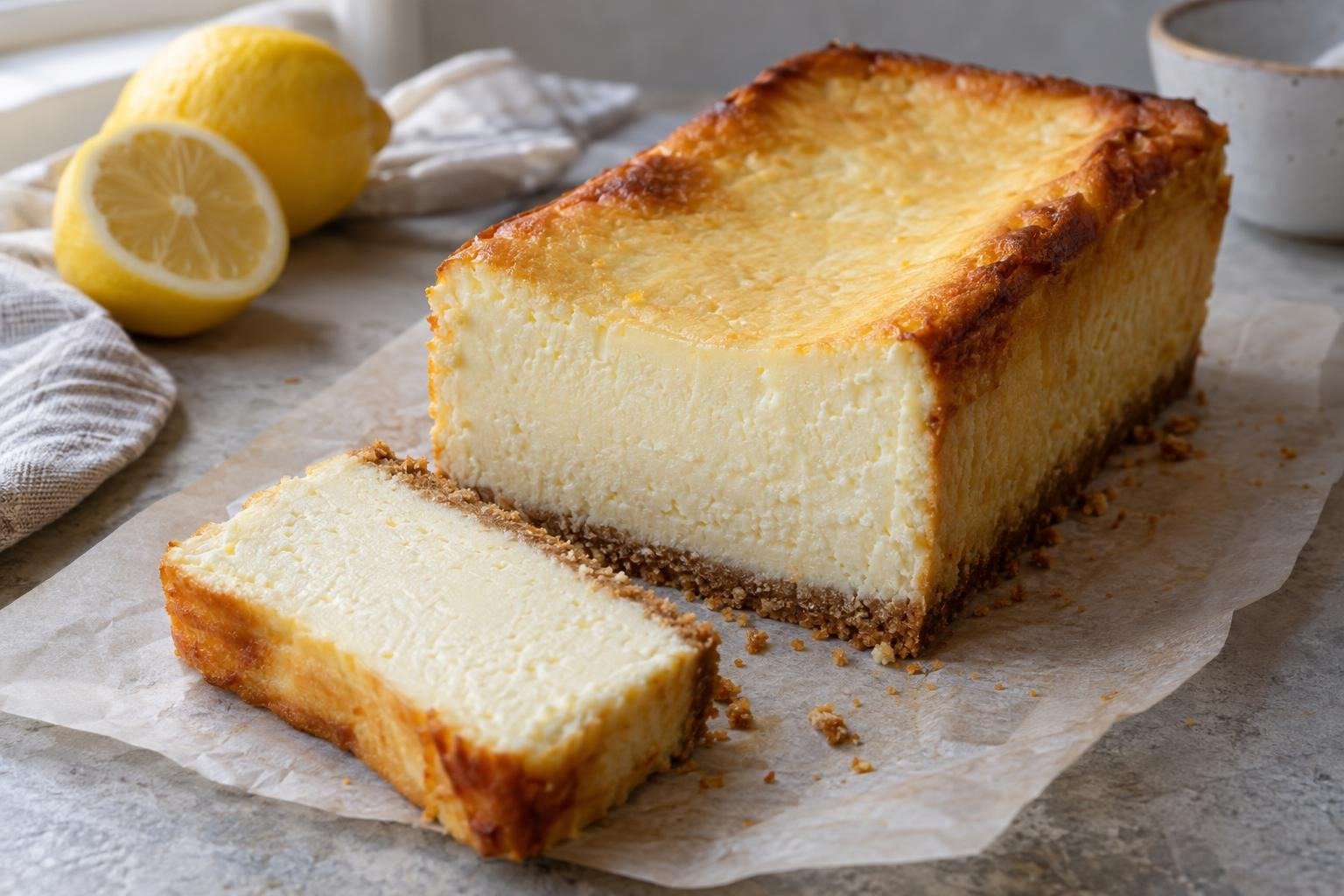
Cover the loaf pan without touching the surface and refrigerate the cheesecake for at least 6 hours, preferably overnight, until completely cold and firm. Run a thin knife along the unlined ends, then use the parchment overhang to lift the cheesecake onto a cutting board. If it resists, warm the outside of the pan briefly with a towel dipped in warm water. Cut six slices with a thin knife, wiping the blade clean between every cut for smooth edges.