Position a rack in the lower-middle of the oven and heat the oven to 325°F. Set an ungreased 9-inch by 2-inch round metal cake pan inside a deep roasting pan to confirm it fits with space around the sides, then remove the cake pan. Bring a kettle of water almost to a boil for the water bath. Have all custard ingredients measured before starting the caramel because the cooked sugar must be poured immediately.
Combine the granulated sugar and 45 ml water in a small heavy-bottomed saucepan. Cook over medium heat without stirring, gently swirling the pan only after the syrup begins coloring, until it becomes an even medium amber, about 7 to 9 minutes. Remove it from the heat before it turns dark brown or smells bitter. Immediately pour the caramel into the cake pan, tilting carefully to coat the bottom. Set the pan aside until the caramel hardens, about 10 minutes.
Place the pumpkin purée, sweetened condensed milk, evaporated milk, vanilla, cinnamon, ginger, nutmeg, cloves, and salt in a large mixing bowl. Whisk slowly until the pumpkin is fully dispersed and no condensed milk streaks remain, about 60 seconds. Keep the whisk below the surface instead of beating vigorously. A smooth base with minimal foam produces a finer custard, while excess incorporated air can leave bubbles and a porous layer after baking.
In a medium bowl, whisk the whole eggs and egg yolks just until the whites and yolks are blended, about 30 seconds. Do not whip them until frothy. Pour the eggs into the pumpkin mixture in three additions, whisking slowly after each addition until uniform. Scrape around the bottom and sides with a silicone spatula. The finished mixture should be fluid, evenly orange, and lightly glossy, with no visible ropes of egg white or dense pumpkin pockets.
Set a fine-mesh sieve over a large measuring jug or clean bowl and pour the custard through it, pressing gently with the spatula only until the liquid passes through. Discard fibrous pumpkin residue and any egg strands rather than forcing them through. Pour the strained custard slowly into the caramel-lined cake pan. Skim away surface foam with a spoon, then place the filled pan in the roasting pan. A mostly bubble-free surface will bake more evenly.
Transfer the roasting pan to the oven, then carefully pour the hot kettle water around the cake pan until it reaches halfway up the sides. Bake at 325°F for 55 to 65 minutes. The outer 2 inches should look set, while the center should wobble as one cohesive section when the pan is nudged, not ripple like liquid. An instant-read thermometer inserted near the center should register about 175°F. Remove the cake pan promptly to prevent residual heat from overcooking the custard.
Using oven mitts, lift the flan pan from the water bath and place it on a wire rack. Cool uncovered for 60 minutes, until the pan is no longer warm and the custard has settled. Run a clean paper towel lightly over any condensation without touching the flan, then cover the pan tightly. Refrigerate for at least 5 hours, preferably until the center feels thoroughly cold. This chilling period firms the custard and dissolves part of the caramel into sauce.
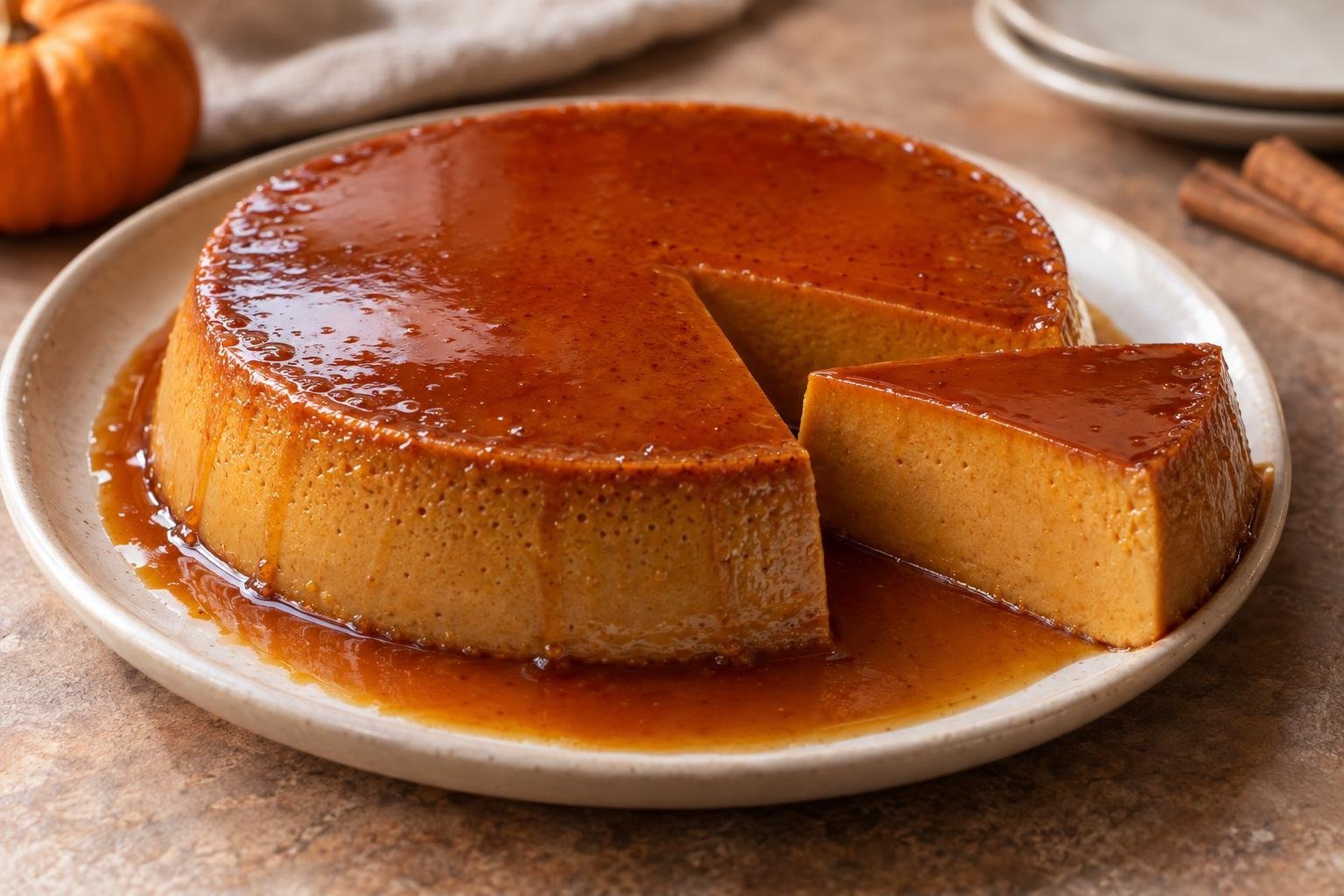
Remove the chilled flan from the refrigerator and run a thin paring knife just around the outer edge, keeping the blade against the pan so the custard stays neat. If the caramel seems firmly stuck, set the pan in 1 inch of warm water for 10 seconds, then dry the bottom. Center a large rimmed platter over the pan, hold both securely, and invert in one confident motion. Lift the pan slowly, spoon the caramel over the top, and cut into 10 chilled wedges.