Set an oven rack in the center and preheat the oven to 175°C. Grease three 8-inch round cake pans, line the bottoms with parchment, and lightly grease the parchment. Dust the sides with a small amount of cake flour and tap out the excess. Set the butter, eggs, sour cream, and milk out before mixing so they reach room temperature. Evenly tempered ingredients form a smoother emulsion and help the layers rise without greasy or rubbery patches.
Place the 180g pistachios and 40g of the measured cake flour in a food processor. Pulse in one-second bursts until the nuts resemble fine, slightly irregular sand, stopping before they become damp or pasty. Transfer the mixture to a large bowl. Sift in the remaining 260g cake flour, baking powder, baking soda, and salt, then whisk thoroughly for 30 seconds. Break apart any oily pistachio clumps with your fingertips so the nuts disperse evenly through the batter.
In a stand mixer fitted with the paddle, beat the 170g butter and 350g sugar on medium speed for 3 to 4 minutes, scraping the bowl halfway through, until pale, fluffy, and increased in volume. With the mixer running on medium-low, stream in the oil and mix until glossy. Add the eggs one at a time, mixing for about 20 seconds after each and scraping as needed. Mix in the vanilla and almond extracts; the mixture should look thick and emulsified, not separated or greasy.
Whisk the sour cream and milk together until smooth. With the mixer on low, add one-third of the pistachio flour mixture, followed by half of the milk mixture. Repeat, finishing with the final third of dry ingredients. Stop as soon as only a few flour streaks remain, then fold with a spatula, scraping the bottom where dry pockets hide. Divide the batter evenly among the prepared pans, about 575g per pan, and smooth the tops without pressing out the incorporated air.
Bake all three pans on the center rack for 25 to 30 minutes, rotating their positions after 20 minutes only if the oven browns unevenly. The cakes are done when the centers spring back lightly, the edges begin to pull from the pans, and a skewer shows moist crumbs but no wet batter. Cool in the pans for 15 minutes. Run a thin knife around the edges, invert onto racks, remove the parchment, and cool completely for at least 75 minutes before leveling or brushing.
While the cakes cool, combine the 100g sugar and 100g water in a small saucepan. Bring to a gentle boil over medium heat, stirring only until the sugar dissolves, then simmer for 2 minutes. Remove from the heat and cool for 10 minutes before stirring in the 10g rose water, which protects its volatile floral aroma from prolonged heat. Transfer the syrup to a heatproof container and cool completely. It should remain thin enough to soak into the cake rather than glaze the surface.
Combine the egg whites and 350g sugar in the clean mixer bowl. Set it over a saucepan containing 2.5cm of barely simmering water, keeping the bowl above the water, and whisk constantly until the mixture reaches 71°C and feels smooth between two fingers. Whip with the whisk on high for 8 to 12 minutes, until glossy stiff peaks form and the bowl cools below 32°C. Add the 454g butter gradually on medium speed, then beat in the rose water, vanilla, and salt until silky.
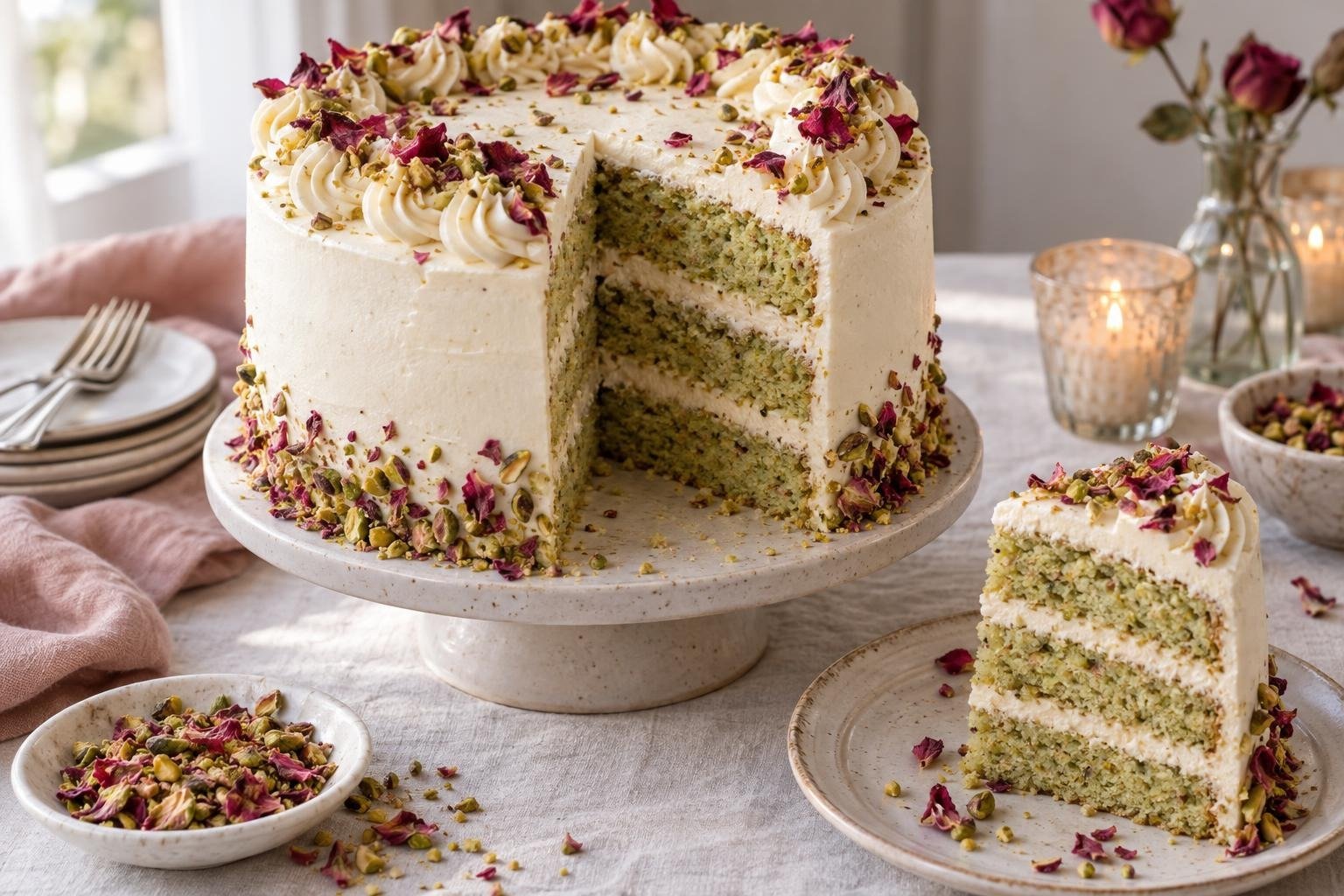
Use a serrated knife to remove any domed tops once the cakes are completely cool. Place the first layer cut side up on an 8-inch cake board and brush it evenly with about 35g rose syrup, stopping before liquid pools at the edges. Spread 180g buttercream over the layer in an even 6mm thickness. Repeat with the second cake, syrup, and buttercream. Brush the cut side of the final layer with another 35g syrup, then place it brushed side down for a flat, crumb-free top.
Apply a thin layer of buttercream over the top and sides with an offset spatula, filling gaps between the cakes as you work. Scrape the coating smooth with a bench scraper, then refrigerate the cake uncovered for 20 minutes until the surface feels firm but not frozen. Cover the chilled cake with most of the remaining buttercream, reserving about 150g for piping. Smooth the sides on a turntable and draw excess frosting inward across the top to create a clean, level edge.
Transfer the reserved buttercream to a piping bag fitted with an open-star tip and pipe evenly spaced rosettes around the top edge. Sprinkle the chopped pistachios and dried culinary rose petals over the rosettes and around the base, pressing lightly where needed so they adhere. Refrigerate the assembled cake for at least 30 minutes to stabilize the layers. Before serving, let it stand at room temperature for 45 to 60 minutes, then cut with a warm, dry knife, wiping the blade between slices.