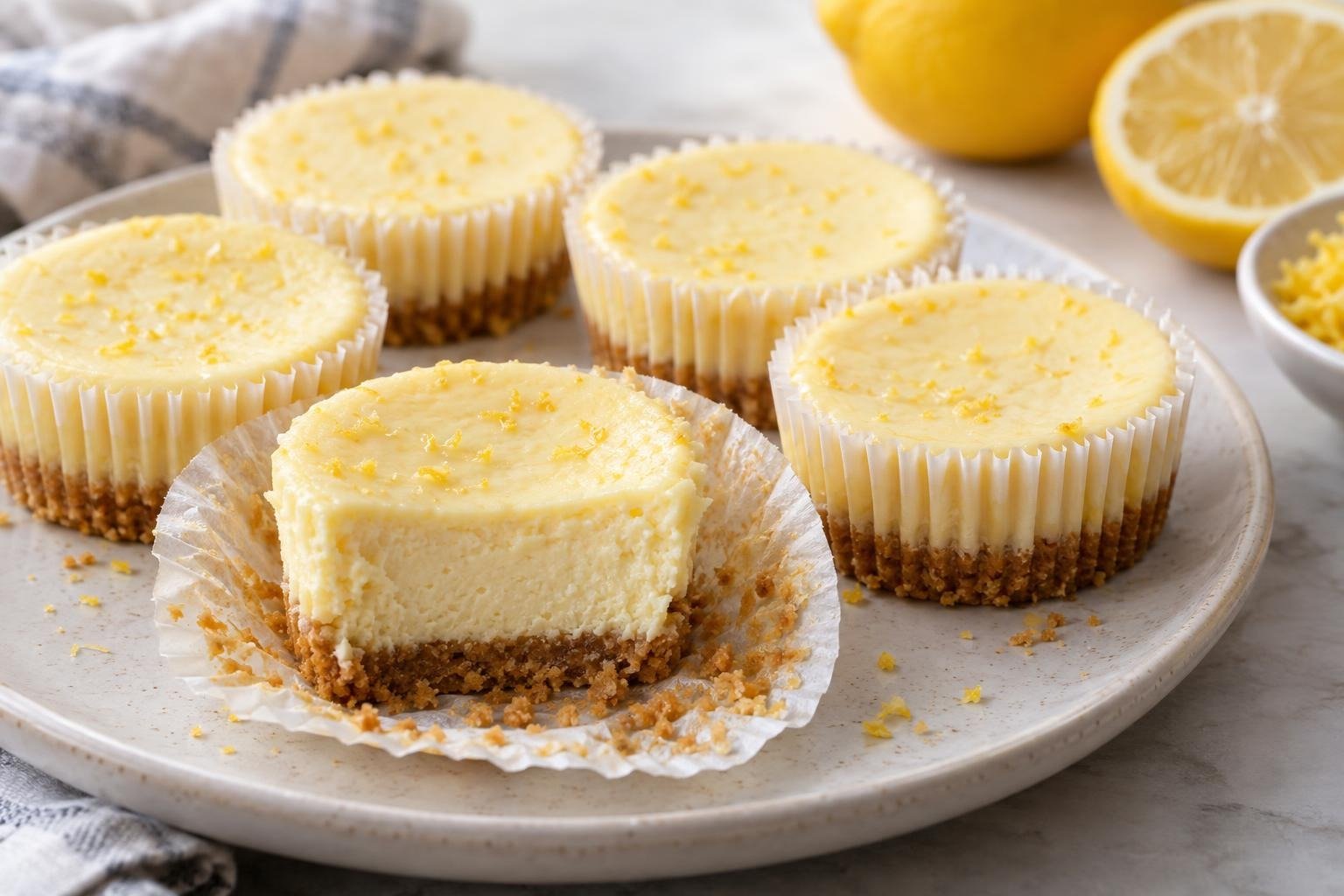
Position a rack in the center of the oven and preheat to 325°F. Line all 12 wells of a standard muffin pan with paper liners. Set the cream cheese, sour cream, and eggs out until they reach cool room temperature, about 68 to 72°F. Properly softened cream cheese should yield to gentle finger pressure but should not look oily or melted. Room-temperature ingredients combine with less mixing, which helps keep excess air out of the batter.
Combine the finely ground graham cracker crumbs and 28 g sugar in a medium bowl. Pour in the melted, slightly cooled butter and stir until every crumb looks evenly moistened and the mixture resembles damp sand. Divide it among the 12 liners, using about 1 packed tablespoon per cup. Press each portion into a level, compact layer with the flat bottom of a small glass or measuring cup, concentrating on the edges so the finished crust does not crumble during unmolding.
Bake the crusts on the center rack for 5 minutes, just until they smell toasted and the surfaces look set rather than wet with butter. Do not wait for deep browning because they will bake again with the filling. Transfer the muffin pan to a wire rack and let the crusts cool for 10 minutes while preparing the filling. Keep the oven at 325°F so the batter enters a stable, fully heated oven.
Place the softened cream cheese in the bowl of a stand mixer fitted with the paddle, or use a large bowl and hand mixer. Beat on low speed for 45 to 60 seconds, stopping once the cheese is smooth. Whisk the 150 g sugar, cornstarch, and salt together separately, then add them to the cream cheese. Mix on low for another 45 seconds. Scrape the bowl and paddle thoroughly; the mixture should be creamy and free of visible lumps, not fluffy or aerated.
Add the room-temperature sour cream, lemon zest, strained lemon juice, and vanilla to the cream cheese mixture. Blend on low speed for 20 to 30 seconds, then scrape the bowl so no dense cream cheese remains at the bottom. Add the eggs one at a time, mixing on low only until each yolk disappears. Finish folding with a flexible spatula. The batter should be glossy, pourable, and uniform, with tiny flecks of zest but no streaks of egg or pockets of cream cheese.
Divide the filling evenly over the cooled crusts, filling each liner almost to the top with about 65 g batter. Tap the pan gently on the counter two or three times to release large air pockets. Bake at 325°F for 17 to 20 minutes. The outer 1/2 inch should look set and slightly puffed, while each center should wobble softly as one piece when the pan is nudged. Continue baking if the centers ripple like liquid or appear wet and glossy.
Place the pan on a wire rack and leave the cheesecakes undisturbed for 45 minutes. They will settle slightly as steam escapes, but the centers should not collapse into wet craters. Cover the pan loosely without touching the tops and refrigerate for at least 4 hours, preferably overnight. Once thoroughly cold, lift each cheesecake out by its liner and peel the paper away gently. Serve chilled, or let the portions stand for 10 minutes for a slightly softer, creamier texture.