Line two light-colored rimmed baking sheets with parchment paper. In a medium bowl, whisk the all-purpose flour, cornstarch, and salt for 30 seconds, breaking up every visible lump. Set the mixture beside the mixer. Stir the blackberry preserves until evenly smooth, then keep them at room temperature without heating. Properly mixed dry ingredients prevent cornstarch pockets, while cool, thick preserves are less likely to soak into the dough or boil over during baking.
Place the softened butter and granulated sugar in the bowl of a stand mixer fitted with the paddle attachment. Mix on medium-low speed for 2 minutes, stopping once to scrape the bowl and paddle. The mixture should look smooth, creamy, and slightly lighter, but not fluffy or warm. Add the egg yolk and vanilla, then mix on low for 30 to 45 seconds until fully emulsified. Scrape the bowl again; no streaks of yolk should remain.
Add the flour mixture to the butter mixture in two additions, mixing on the lowest speed for about 15 seconds after each. Stop when only a few dry streaks remain, then fold with a flexible spatula until the dough forms soft, cohesive clumps. It should hold together when pressed without feeling sticky or greasy. Cover the bowl and refrigerate the dough for 30 minutes, until it feels cool and firm enough to portion but remains pliable when rolled.
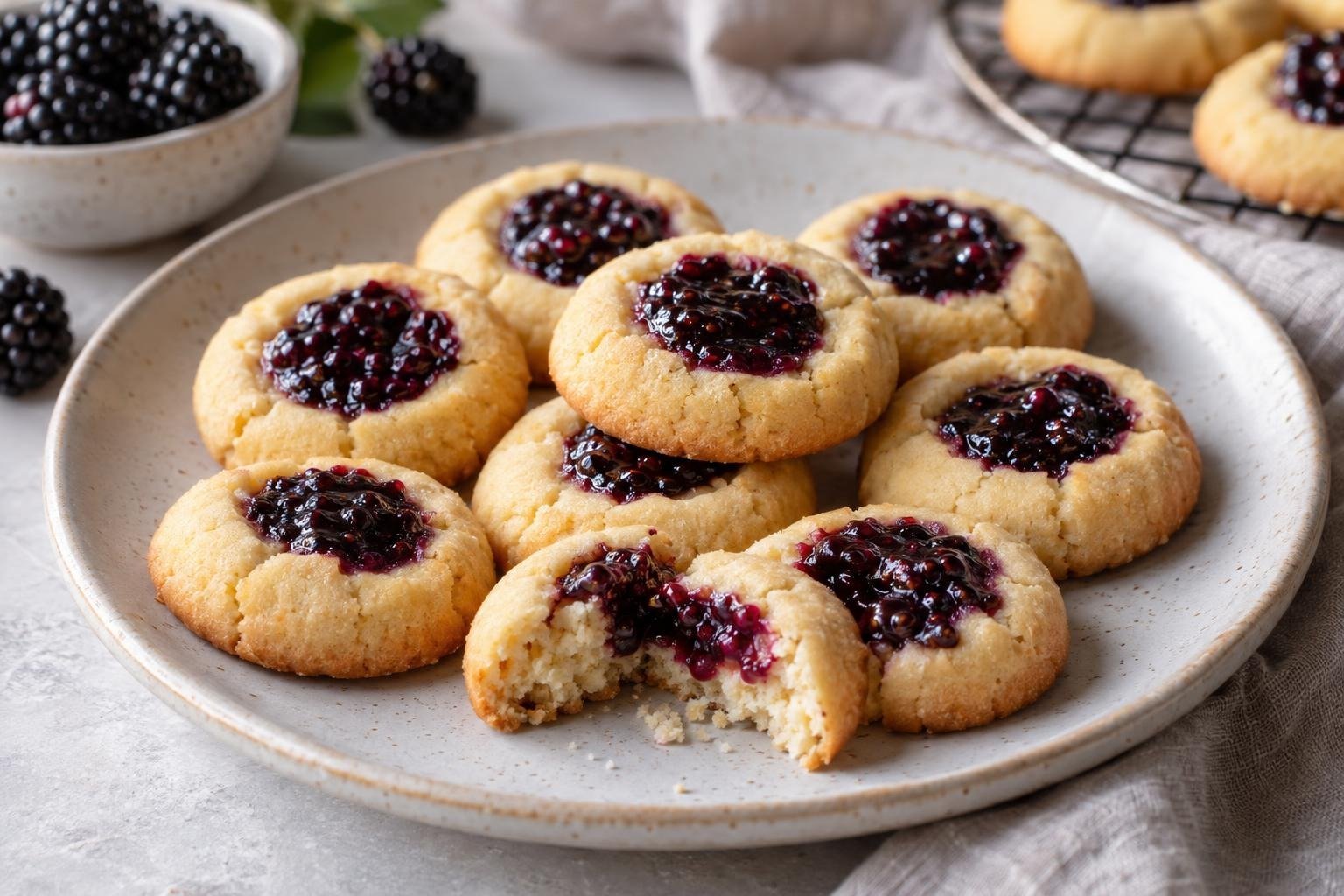
Divide the chilled dough into 24 portions of 22 grams each. Roll every portion between your palms just until smooth, then arrange 12 balls on each prepared baking sheet with about 5 cm between them. Using a rounded 1/2-teaspoon measure or a 2 cm-wide utensil handle, press gradually into the center of each ball, stopping about 6 mm above the bottom. Widen the well to roughly 2 cm. Gently pinch closed any prominent rim cracks while the dough is still pliable.
Refrigerate both trays of shaped cookies for 20 minutes. Meanwhile, position a rack in the center of the oven and preheat to 175°C. If the wells have risen during chilling, redefine them gently without pressing through the base. Spoon one level teaspoon, about 5 grams, of blackberry preserves into each cavity, keeping the filling level rather than mounded. Bake one sheet at a time for 14 to 16 minutes, until the tops are matte and the narrow edges are light golden.
Set the hot baking sheet on a heat-safe surface and leave the cookies undisturbed for 10 minutes. The preserves may bubble gently at the edges when the tray leaves the oven, but they will thicken as they cool. Use a thin spatula to transfer the cookies to a wire rack, keeping them level so the warm centers do not shift. Cool for at least 35 additional minutes before serving or storing; the bases should feel firm and the jam should no longer flow.