Combine the flour, pastry sugar, and salt in a food processor and pulse briefly. Add the cold butter and pulse until most pieces are pea-sized, with a few smaller flakes. Drizzle in the ice water and pulse just until the mixture forms moist clumps when squeezed; it should not become a smooth paste. Turn it onto the counter, press it into a 1-inch-thick disk without kneading, wrap tightly, and refrigerate for at least 60 minutes so the flour hydrates and the butter firms.
On a lightly floured surface, roll the chilled dough from the center outward into a 12-inch circle about 1/8 inch thick, rotating it frequently to prevent sticking. Transfer it to a 9-inch standard pie pan without stretching the pastry, then ease it into the corners. Trim the overhang to 1 inch, fold it underneath, and crimp the rim. Prick the base lightly with a fork, refrigerate for 30 minutes, and position a rack in the lower third of the oven. Heat the oven to 400°F.
Set the chilled shell on a rimmed baking sheet, line it with crumpled parchment, and fill it completely with pie weights so the sides remain supported. Bake at 400°F for 20 minutes, until the rim looks set and lightly golden. Lift out the parchment and weights, brush the base and inner sides thinly with beaten egg white, and return the shell to the oven for 12 to 15 minutes. The base should be dry, crisp, and evenly golden. Cool completely in the pan for about 45 minutes.
Bring the milk and 75 g of the granulated sugar to steaming in a heavy-bottomed saucepan over medium heat, stirring occasionally. In a bowl, whisk the remaining 75 g sugar with the cornstarch, yolks, and custard salt until smooth. Slowly whisk in about one-third of the hot milk, then return everything to the saucepan. Cook over medium heat, whisking constantly and scraping the corners, until thick bubbles break across the surface. Continue bubbling for 1 full minute, then remove from the heat and whisk in the custard butter and 1 1/2 teaspoons vanilla.
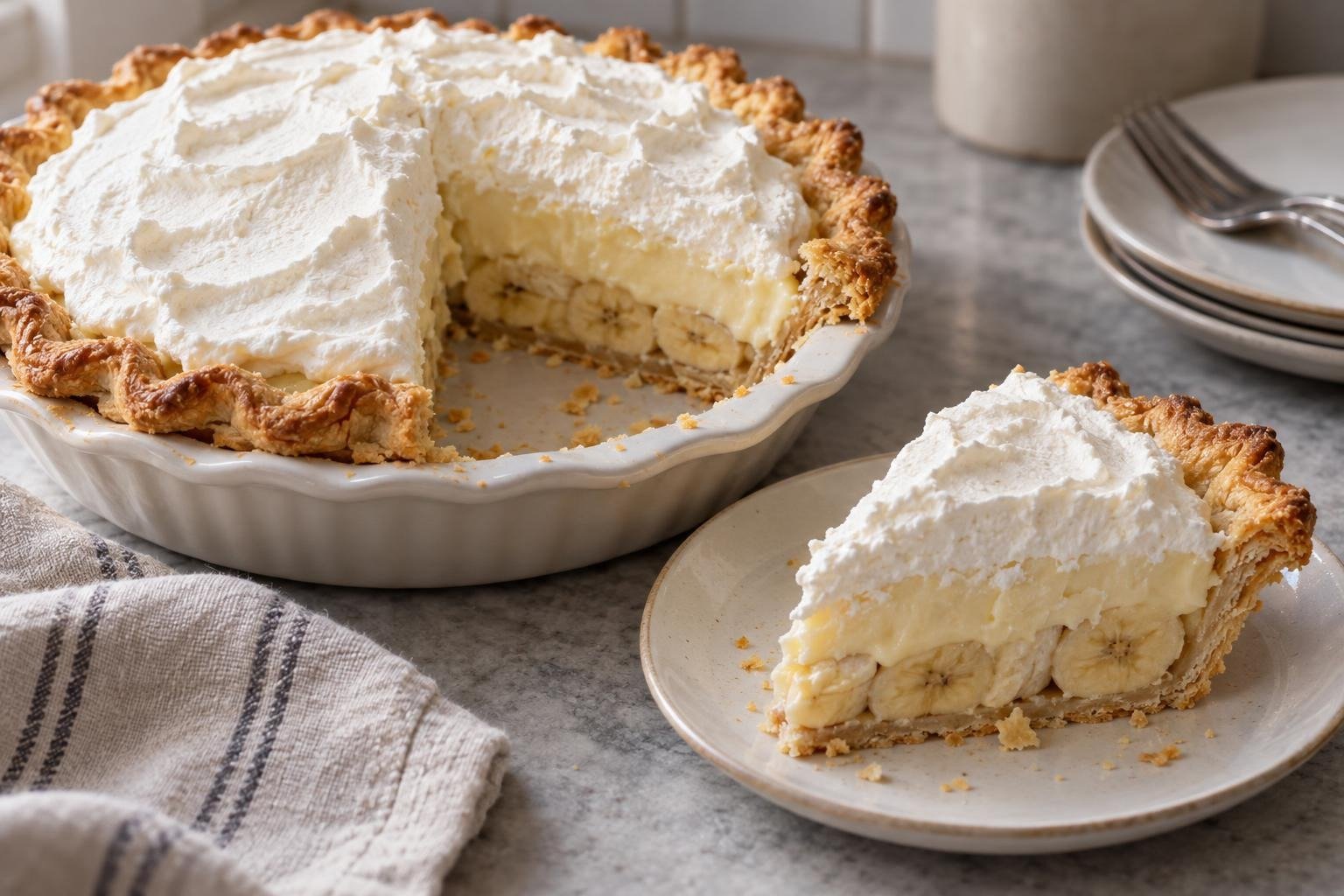
Pour the custard through a fine-mesh sieve into a clean bowl to remove any cooked egg or starch lumps. Set the bowl over a larger bowl of ice water and whisk occasionally for 10 to 15 minutes, until the custard is lukewarm, thick, and still spreadable. Arrange half of the freshly sliced bananas over the completely cooled crust, spread half the custard over them, and repeat with the remaining bananas and custard. Press plastic wrap directly against the surface to prevent a skin from forming.
Refrigerate the assembled pie on a level shelf for at least 4 hours, or up to overnight. Do not rely on a short freezer chill, which can leave the center soft while partially freezing the outer custard. The filling is ready when the center feels firm beneath the plastic and does not ripple when the pan is moved gently. Keep the pie refrigerated while preparing the topping because warm custard will not support clean slices or whipped cream.
Place the cold heavy cream, confectioners' sugar, and remaining 1/2 teaspoon vanilla in a chilled mixing bowl. Whip on medium speed until the cream holds soft to medium peaks that curl slightly at the tip; stop before it looks grainy. Remove the plastic from the cold pie and spread or spoon the cream over the custard, leaving a small border visible. For neat portions, cut with a sharp thin-bladed knife, wiping it clean between cuts, and return the pie to the refrigerator within 2 hours.